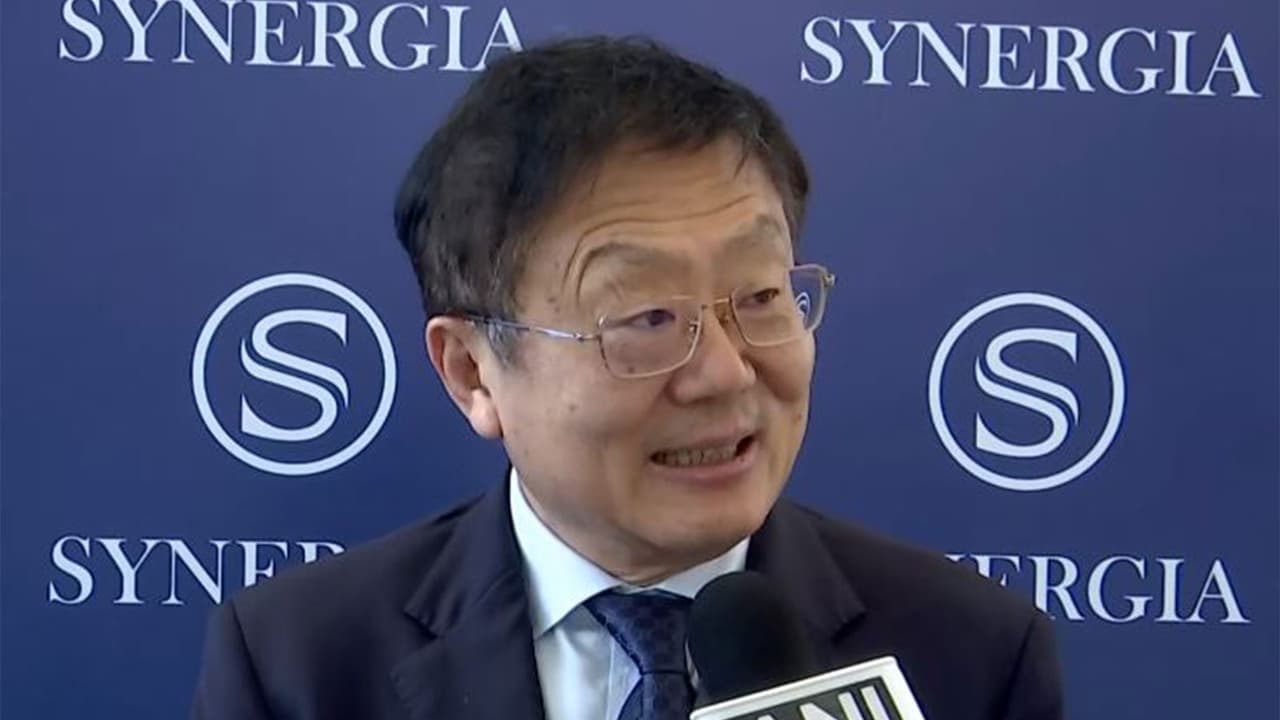
Expert Jing Huang warns the West Asia conflict could escalate, disrupting global energy supplies. He urges major powers like India, China, and Russia to engage diplomatically, highlighting risks to US credibility and energy security for Asia.
Amid the evolving conflict in West Asia, concerns are mounting over rising global oil and gas prices and the risk of a broader regional escalation that could draw in multiple global powers. Jing Huang, Director, Institute of US and Pacific Studies, warns that the instability in the region, combined with growing tensions between Iran, Israel, and the United States, could significantly disrupt global energy supplies and further strain international security dynamics.
Global Powers Urged to Prevent Escalation
Speaking at the Synergia Conclave 2026 here, Huang emphasised the role of major global powers in preventing the conflict from escalating further. “It takes the entire village to solve this issue. Which means the major powers like India and China and Russia should all get engaged… because it matters to all of us.”
Iran’s Potential Strategy
Without broader diplomatic intervention, Huang warned that Iran may attempt to widen the conflict to pressure its adversaries. “Because Iranians, the only way for Iran to prevail in the conflict is, number one, to escalate. Attack not only Israelis and Americans, but all the countries that have military bases,” he said. Such a strategy could dramatically increase pressure on the United States and its regional allies.
“If that is gone, it not only damages US military capability, but essentially what’s damaged is the credibility of the superpower,” Huang added, warning that prolonged instability could undermine Washington’s security commitments across the region.
Critique of Military Response and Strategy
He highlighted that the military response and coordination seen in the current conflict appear limited compared with previous large-scale operations carried out by the United States and its allies. “It’s not very well coordinated. And so there’s not enough ammunition prepared,” he said.
Drawing comparisons with earlier conflicts, Huang pointed to the scale of military mobilisation during the United States’ operations in Afghanistan and Iraq. “For example, in 2001, the United States attacked Afghanistan. It’s a five-carrier battle group with cooperation of NATO over almost 1,000 airplanes. In 2003, I attacked Iraq. It’s a six-battle group with cooperation of NATO,” Huang said.
The current deployment, Huang argued, appears insufficient for a conflict of such magnitude. “By this time, two battle groups. It’s far from enough and for such a big war. Last but not least, no plan B. That’s what really, really hurt Americans,” he added, warning that the lack of a clear alternative strategy could prolong the conflict.
Expert Warns Against Assassination, Highlights Iran’s Resilience
The killing of Iranian Supreme Leader Ayatollah Khomeini was described as a major turning point that could further harden Iran’s stance. “And also now, because the assassination, the killing of Ayatollah Khomeini is a really bad idea,” Huang said, arguing that Iran’s political system is resilient and cannot be destabilised by eliminating individual leaders.
“Because Iran is such a country that all the regime, it just cannot overthrow a third. It’s just about killing one or two or even dozens of the leaders. Because that’s not the way the Iranian government or the Iranian regime is structured. It’s very resilient,” he said.
Jing Huang added that Khamenei’s influence extends far beyond political leadership. “Now the worst thing is that Ayatollah Khamenei is not just a president or general. It’s a living god, basically. So therefore, it’s actually mobilized the Iranian people to fight to the end.”
Severe Impact on Global Energy Security Feared
The conflict has also raised serious concerns about global energy security, particularly regarding shipping routes that supply crude oil to Asia. Huang noted that disruptions in key maritime corridors could severely impact major Asian economies. “Everybody suffers, especially the countries like India, China, Japan, of course, Korea and Taiwan. So all the Asian countries depend on the oil coming from the street. But now it’s in danger,” he said.
Rising tensions could also push insurance costs for shipping dramatically higher. “Because what happens there will skyrocket in the insurance in London. The London insurance company will skyrocket in the US field. Nobody can afford it,” he said.
Conditions for Resolving the Crisis
Apart from role of major global powers in preventing the conflict from escalating further, the expert said resolving the crisis will depend on two more key conditions. “Number one, ceasefire. That’s most important. How to do that needs a lot of coordination, negotiations on the table,” he said.
A second critical element would involve international guarantees for peace. “Iranians’ argument or claim that you attack us when we talk to you. It’s a breach of trust. So we don’t trust you anymore. You have to have an international guarantee to make sure that you don’t attack us like this anymore.”
(Except for the headline, this story has not been edited by Asianet Newsable English staff and is published from a syndicated feed.)