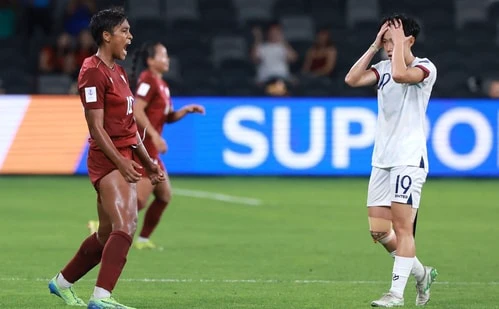
And with that the dream ended, gradually and then suddenly. As the lowest ranked team in the group – and the third lowest of the 2026 AFC Women’s Asian Cup – aspiring for a World Cup berth after qualifying for the first time meant India had to be at their best and hope that Vietnam and Chinese Taipei play below potential.
Neither happened to the extent that it would keep India among the quarter-finalists.
Chanu, Sweety Devi and the other bravehearts
India were brave with goalkeeper Panthoi Chanu Elangbam, one of the eight from IWL champions East Bengal in the squad, leading from the back. She calmed nerves against Vietnam, commanded her area and was excellent in one-on-one situations. Against Chinese Taipei, she won two such duels and it was because she had left her line, Vietnam’s Nguyen Nha could not score.
Elangbam’s club mate and India captain Sweety Devi also showed tremendous courage under pressure. Playing with protection on her knees, the central defender looked visibly uncomfortable especially late in games but it took a severe collision with Elangbam to get her off the pitch. Manisha Kalyan used her strength and size well and scored a goal that will be remembered long after this tournament is won and lost.
Struggle in all areas of the pitch
But if fitness and bravery alone won football matches, it would be a sport for soldiers and ultra-marathoners. The gilded level of Japan was well known – with a club team, assistant-coach Crispin Chhetri had lost by 17 goals. But even in the other matches, India struggled to create from open play. Partly because Kalyan was alright with the ball on her feet but didn’t have enough passing options.
The high line sprang the off-side trap but deliveries behind the defence led to two of the five goals India shipped against Vietnam and Chinese Taipei. India tried being compact in the middle but all three teams managed to break their lines and misfortune always seemed like it was around the corner.
The speed of Pyari Xaxa, Soumya Guguloth and Rimpa Haldar troubled Vietnam and Chinese Taipei but not their ability to find players in the box. India tried hitting on the break but the passes were rushed leading to possession being lost easily. And they could rarely bring the ball out from the back.
 Will Valverde stay?
Of course, the performance of the national team is a function of the standard of its top league. A severely cash-strapped All India Football Federation (AIFF) tried to bridge the gap by funding an exposure trip to Turkiye before India became the first to reach Australia. But not playing against international teams in the preparation may have hurt. An international tournament India were supposed to take part in Turkiye being deferred was cited as the reason. Visa problems had led to an exposure trip being cancelled last year.
The build-up after qualifying last July was also inadequate. The only international teams India played between then and the Asian Cup were against Iran and Nepal. And lost to both.
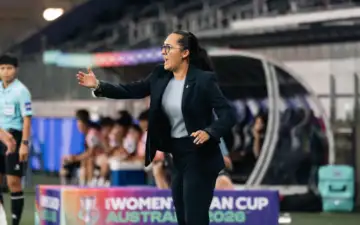
AIFF also got a coach with World Cup experience but Amelia Valverde’s true test will be if she is asked to stay as is likely. That said, some substitutions looked surprising. Why change Guguloth for Haldar against Chinese Taipei? Was she not fit to last the full match? If so, then would she have made a bigger impact as a substitute? Why remove Shilky Devi and not Sangita Basfore, who had an ordinary tournament, in the last match? Why not try Sushmita Lepcha? Also, if players look confused about their roles, shouldn’t it be on the coaching staff? Were there enough conversations, especially because the head coach was new?
Six from Iran squad stay back
The group stage ended with Australia granting asylum to six women from the Iran squad that had been criticised back home for not singing the national anthem in their first match (they did in the next two). Australian officials reached out to the team and, after frantic efforts inside the airport terminal where each woman was taken aside to meet alone with officials who explained through interpreters that they could choose not to return to Iran, six decided not to return home. A seventh had initially agreed but changed her mind, an AP report said.
An Iranian official rejected suggestions that the women weren’t safe to go home. “Iran welcomes its children with open arms and the government guarantees their security,” Iranian first vice-president Mohammad Reza Aref has said. “No one has the right to interfere in the family affairs of the Iranian nation and play the role of a nanny who is kinder than a mother.”
Play of the week