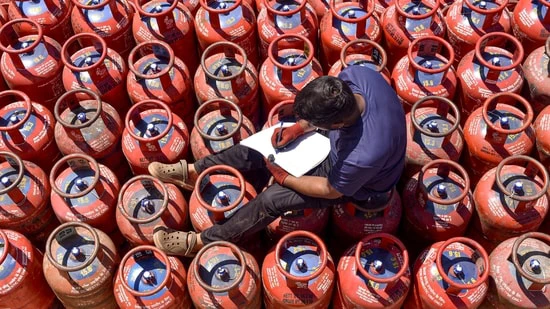
The state assembly’s Wednesday session witnessed verbal crossfire over the prevailing LPG supply shortage amid rising cylinder prices across the country.
During Zero Hour, Congress MLA from Kunigal, HD Ranganath blamed the Centre’s foreign policy for the crisis. “The Union government added insult to injury by hiking LPG prices. A domestic cylinder priced at ₹900 is selling for ₹1,800. A commercial cylinder priced at ₹2,000 is selling for ₹4,000. This is because of Modi’s weak foreign policy,” he alleged.
State minister Priyank Kharge alleged that the Centre misled Parliament about the availability of LPG reserves. ‘On February 9, Parliament was told there was no cause for panic, thanks to reserves that would last 75 days. On March 6, the petroleum minister said there was no shortage. On March 7, cylinder prices were hiked. On March 10, provisions of the Essential Commodities Act were invoked,” he said.
“Where is Modi today? He can wish Rashmika Mandanna (on her wedding), but won’t speak about this crisis,” Kharge said. “Netanyahu (Israeli PM) is Modi’s best friend. They walked on the beach. What happened?” he added.
BJP MLA V Sunil Kumar rejected the criticism and argued that the shortage was linked to global conflicts affecting fuel supplies. “If you want to do politics in this, I can also say that this (Congress) government is unable to resolve several issues, ensure people get sand supply in coastal areas and make medicines available in hospitals even as there’s no crisis,” he said.
The dispute intensified when Leader of Opposition R. Ashoka accused chief minister Siddaramaiah of encouraging restaurant owners to shut their establishments in protest. “There’s no crisis in any other state. Here, we have a chief minister who asked hoteliers to go on a strike,” Ashoka alleged.
Siddaramaiah rejected the claims. “All I said to the press was that the hoteliers’ stand to protest was right. I didn’t incite them,” he said.
Meanwhile, state food and civil supplies minister KH Muniyappa said that the government was working with major oil companies to ensure that each household received at least one cylinder a month. He added that domestic consumers would remain the priority and essential services such as hospitals would receive uninterrupted supply.
He also said provisions of the Essential Commodities Act were being enforced to curb black marketing and ensure fair distribution.
The supply disruptions have already begun affecting Bengaluru’s commercial sector. Gas distributors said a sudden bottleneck from the three public sector oil marketing companies – Indian Oil Corporation, Hindustan Petroleum Corporation and Bharat Petroleum Corporation – sharply reduced the availability of commercial cylinders, adding that they were rationing cylinders and prioritising domestic consumers and essential institutions.
“Our current directives are clear: domestic supply comes first,” the employee said. “Whatever limited commercial stock we receive is being diverted to hospitals and schools. Unfortunately, restaurants and other businesses are currently at the bottom of the priority list.”
For Bengaluru’s hospitality sector, the shortage has arrived at a particularly difficult time, with caterers and bakery owners preparing for a busy wedding and events season. Distributors in areas such as Cubbonpete reported receiving urgent calls from businesses seeking even a small number of cylinders.
The lack of clarity over when supplies might stabilise has also raised concerns about illegal sales. Agency officials said that as shortages deepen, some businesses are turning to unofficial channels where cylinders are sold at sharply inflated prices.
As the crisis continues to affect daily life, some industry voices have suggested measures to reduce fuel consumption. Chandrasekar Cuttackam, vice president at Wells Fargo, urged companies to allow employees to work from home wherever possible in order to reduce commuting and conserve fuel.
“In today’s context, enabling WFH is not just an operational decision; it is a responsible choice,” he wrote, calling it an act of corporate social responsibility during the ongoing fuel shortage.