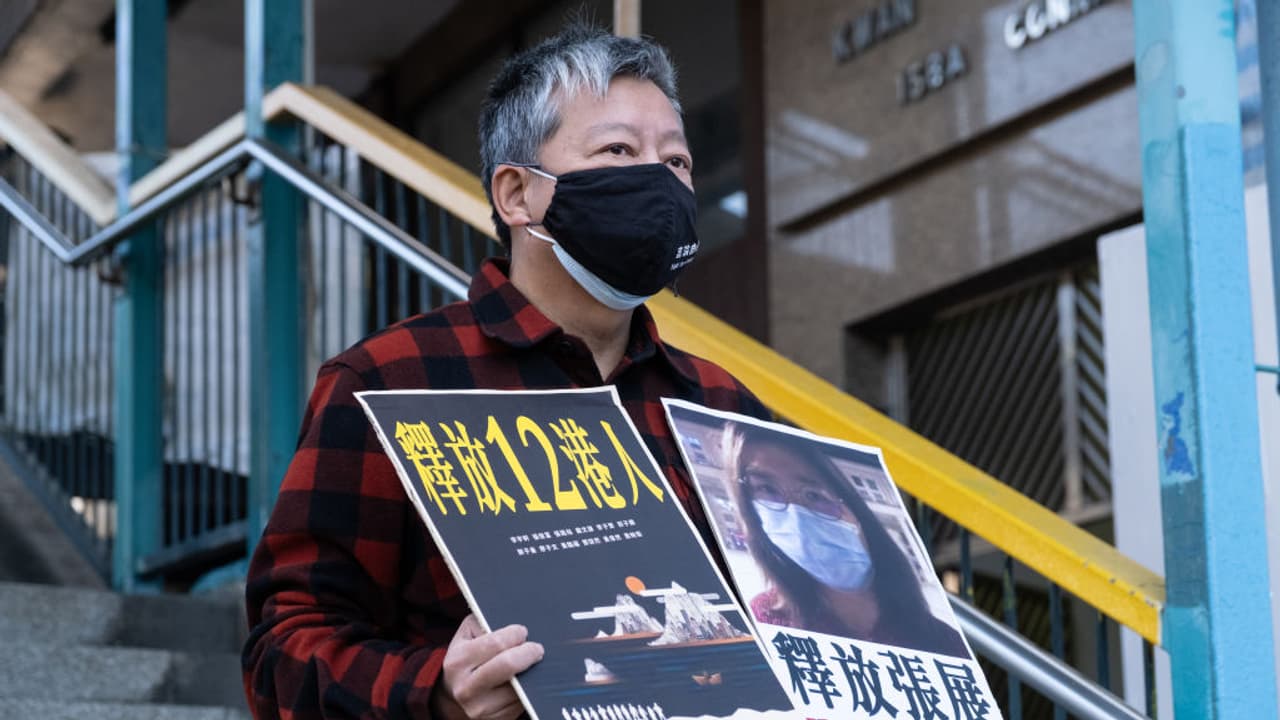
The stories of the Xiao Huamei and Zhang Zhan highlight unresolved injustice in China—from human trafficking and forced marriage to punishment for reporting the truth during the pandemic.
New Delhi: Some stories trend for a week. Then they disappear. The people inside those stories do not. The Xuzhou chained woman (later identified as Xiao Huamei) is still living with what happened to her. Zhang Zhan is still dealing with the consequences of what she chose to document.
International Women’s Day comes every year. Their situations have not resolved.
Eight Children and Years of Captivity
The Xuzhou chained woman came to global attention in early 2022. Videos showing a visibly distressed woman chained inside a run-down structure in Xuzhou, Jiangsu province, spread rapidly online before Chinese censors moved in.
Reports that followed identified her as someone who had been trafficked, forced into marriage, and made to have children against her will. Eight children. Years of this. All while living in conditions that no person should ever have to endure.
When authorities finally responded publicly, the answers they provided were widely seen as incomplete. Local officials were punished to a degree, but the larger questions about how trafficking and forced marriage and repeated childbirth operate in parts of rural China were never seriously taken up. The public was upset. The censors were faster. The conversation ended.
The Xuzhou chained woman did not get justice. She got a story that was closed before anyone finished reading it.
A Citizen Journalist in Wuhan
Zhang Zhan was a lawyer from Shanghai who gave up her practice to report independently. In early 2020, she travelled to Wuhan during the early Covid-19 outbreak and did something straightforward: she showed what she saw. Crowded hospitals. Frightened people.
Officials managing a situation that was clearly worse than what was being officially acknowledged.
For reporting this, she was arrested in May 2020. At trial, she was handed a four-year sentence on charges that human rights groups described as politically motivated.
During her imprisonment, she reportedly refused food at various points to protest her detention. Concerns about her health were raised by international observers repeatedly.
She was released in May 2024. The freedom was conditional in practice. Surveillance continued.
Her ability to speak publicly remained restricted. People who tried to reach her described difficulty making contact. She was later detained again and reportedly sentenced to another prison term.
Why Their Stories Still Matter
The word ‘forgotten’ applies to both of these women not because their stories were never known, but because the systems around them ensured those stories could not grow into the accountability they deserved. One woman survived captivity and forced marriage and repeated childbirth. The other reported a public health crisis and went to prison for it. Both are still dealing with the fallout.
International Women’s Day is supposed to be about honouring women and pushing for the protections they still lack. That push should include names. Specific ones. Not just themes and hashtags but the actual women whose cases remain unresolved.
The Xuzhou chained woman. Zhang Zhan.
Their defiance deserves to be remembered. Their cases deserve to be finished properly.