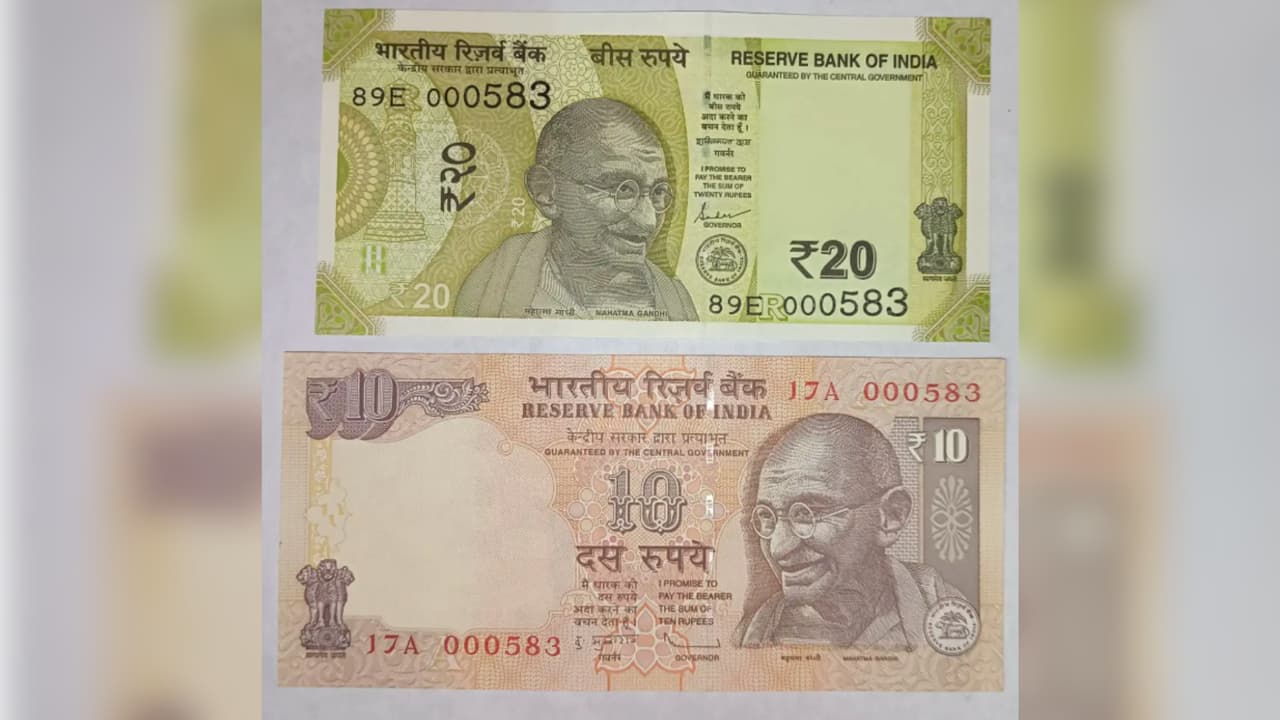
Polymer Notes India: Are plastic Rs 10 and Rs 20 notes coming to India soon? RBI’s note printing company BRBNMPL has started the global tender process for polymer sheets.
Even though the use of UPI has increased rapidly in the era of digital payments, the need for cash in the country is still increasing. Meanwhile, a new initiative by Bharatiya Reserve Bank Note Mudra Private Limited (BRBNMPL), the note printing unit of the Reserve Bank of India (RBI), has intensified the discussion. The company has invited expressions of interest (EOI) from global companies to procure polymer sheets. This is indicating that the plan for plastic or polymer notes is gaining momentum again in India. In the initial phase, Rs 10 and Rs 20 notes can be introduced as a pilot project.
What are polymer notes and why are they special?
Polymer notes are not made from ordinary plastic, but on a special strong plastic film. These notes have transparent security windows and modern security features, making it very difficult to make fake notes.
Their biggest feature is that they are two and a half to four times more durable than paper notes. Water, moisture and dirt have less effect on them. In many studies, less bacteria have also been found on their surface. This is the reason why more than 40 countries including Australia, Canada, Britain, Singapore and New Zealand have already adopted polymer currency.
Also read: 20 years old SBI passbook found while cleaning the house, family shocked after seeing the balance
How far have RBI’s preparations progressed?
The issuance of global EOI for polymer sheets by BRBNMPL is being considered as an initial but important step in this direction. However, this does not mean that plastic notes will hit the market in the next few months.
In the post-monetary policy press conference on June 5, 2026, RBI Governor Sanjay Malhotra had also clarified that the proposal of polymer notes is still under consideration and its pros and cons are being evaluated. This plan has been discussed in India since 2009. Preparations for field trials were also made in 2012 and 2014, but later the project could not move forward.
Will all the notes be changed? Know what will happen next
Experts believe that if the pilot project is approved, then first of all Rs 10 and Rs 20 notes can be converted into polymers, because these are used the most and also get spoiled quickly.
However there are challenges also. Polymer notes have a higher initial cost, ATMs and currency counting machines may need to be upgraded and their performance will also be tested in the Indian climate.
At present EOI is the first stage of the entire process. After this, many stages like tender, technical investigation, safety testing and pilot printing will be completed. Therefore, paper notes are not going to be discontinued yet. But it is certain that the project of polymer note, which was stalled for about 14 years, now seems to be moving forward more seriously than before.
Also read: Great news for Delhiites! Now these free health facilities will be available near home