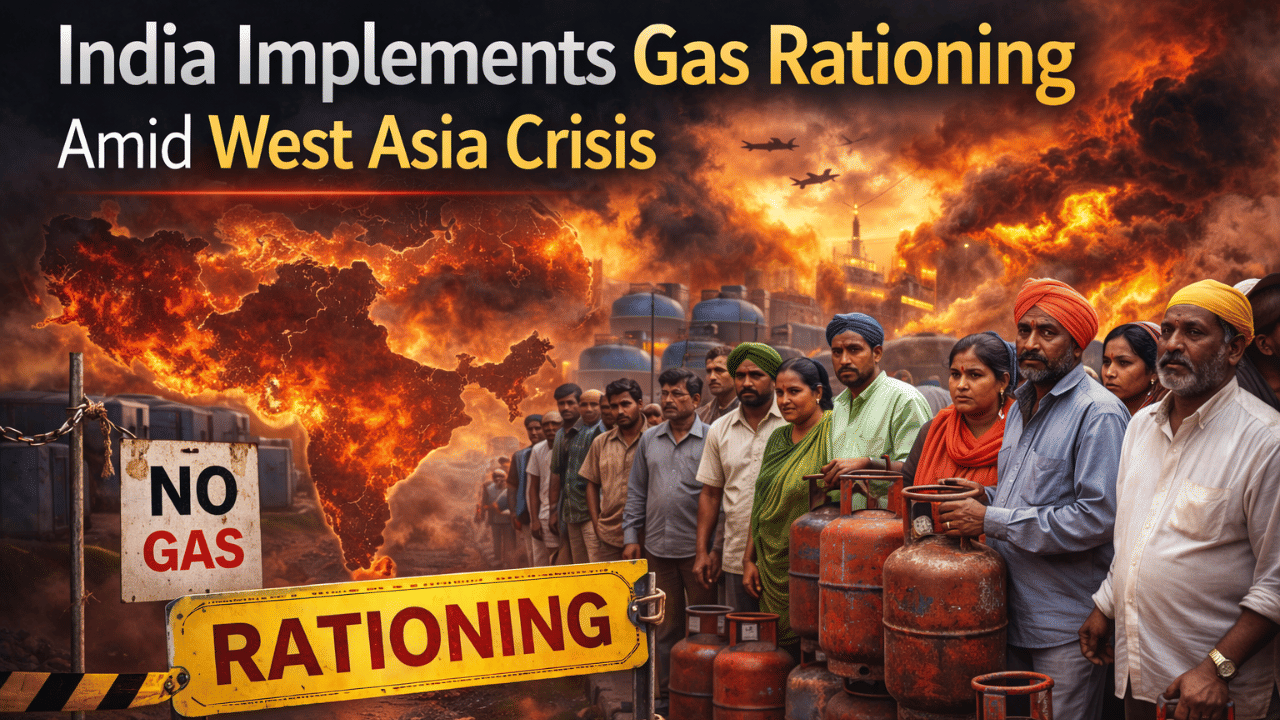
New Delhi: Amid the rising tensions in West Asia, the energy supplies have been hit which has put pressure on the supply of natural gas in India. To tackle the situation, the Centre has taken emergency steps and implemented a strict nationwide natural gas rationing system. The government has implemented the Natural Gas (Supply Regulation) Order, under which limits have been set for gas supply to different sectors so that gas is adequately available for essential services.
India’s Gas Rationing System: Prioritizing Domestic & Essential Energy
The US-Israel and Iran war has forced several international suppliers to invoke the force majeure clause. As a result, LNG supplies coming from these Gulf countries have been affected, increasing pressure on gas availability in India. Taking stock of the situation and in an attempt to stop the situation getting out of control, the government has decided to regulate gas distribution for industries and other sectors.
According to the government order, Gas Authority of India Limited (GAIL) will control the supply of natural gas in the country and implement the new arrangement. Meanwhile, the Petroleum Planning and Analysis Cell (PPAC) has been entruested with the duty to determine the pooled price of gas. This order will also apply to all existing Gas Sale Agreements (GSA) and commercial contracts.
Keeping the public at the forefront of its strategy, the government has given priority to domestic gas and city gas distribution systems. The essential sectors such as PNG, CNG, and LPG production will receive full supply. The new system will ensure that gas is allocated to different sectors based on their average consumption over the last six months.
- Domestic PNG, CNG, LPG production, and pipeline compressor fuel: 100% supply
- Tea industry, manufacturing, and other industrial consumers: 80% supply
- Fertiliser production: 70% supply
- Oil refineries, petrochemical plants, and power plants: 65% supply
The industries which are dependent on such energies have been impacted the most. Several sectors are facing a 20% to 35% cut in gas supply. The ceramic industry in Gujarat has been hit hard as many units have reduced production or are looking for alternative fuels.
Experts are saying that until US-Iran war ends, and energy supplies through the Strait of Hormuz return to normal, pressure on gas supply may continue.
Meanwhile, US natural gas futures declined to around $3.08 per MMBtu on Tuesday. The prices marked a second straight session of losses as supply disruption concerns eased.
Also, G-7 finance ministers signaled readiness to release strategic oil reserves if required. In an important update, US President Donald Trump indicated the ongoing conflict with Iran could be nearing its end.