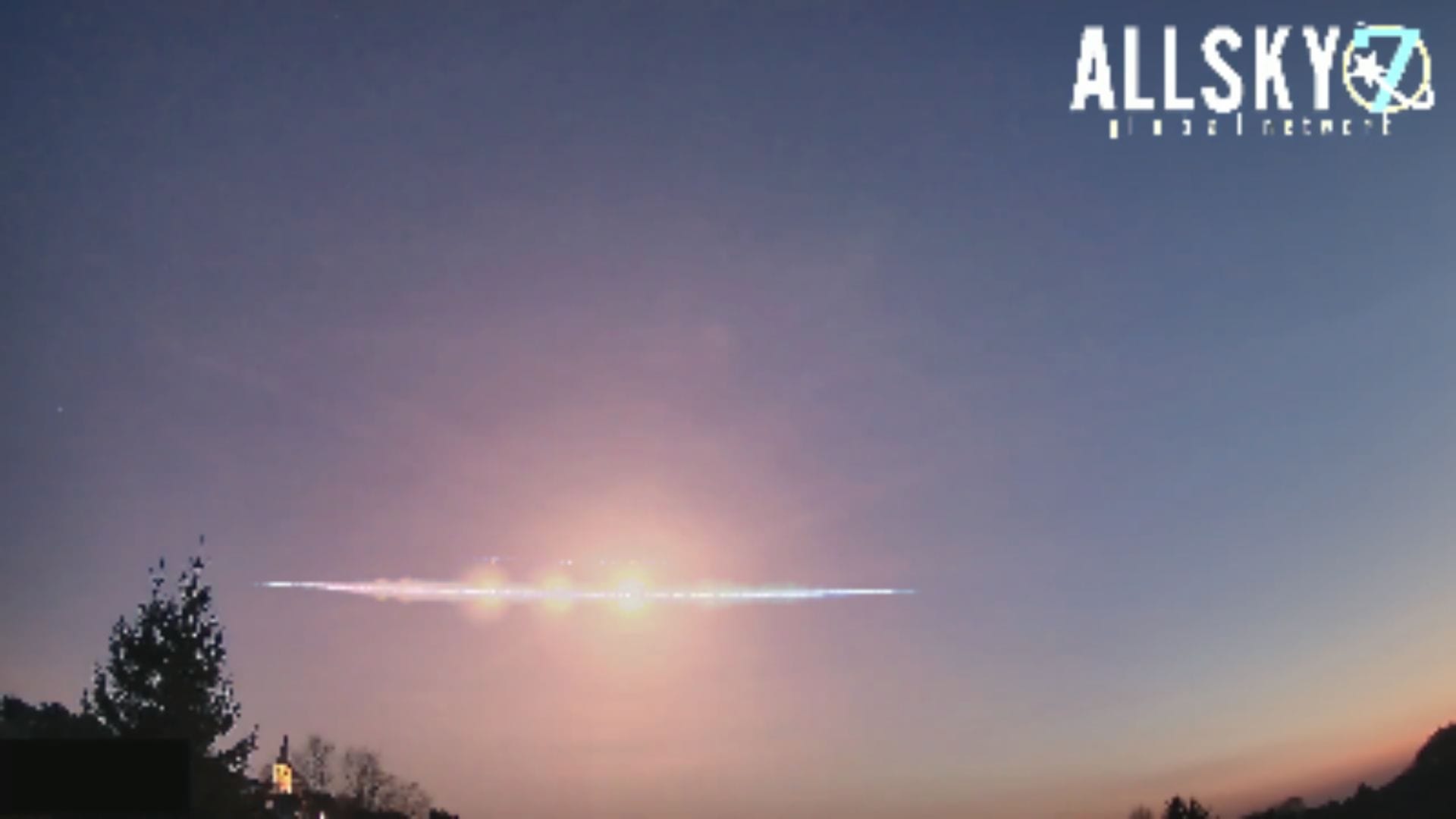
New Delhi: At around 17:55 UTC on 8 March 2026, a fireball was observed moving from the southwest to the northeast across Europe, with reports from Belgium, France, Germany Luxembourg and the Netherlands. The meteor was visible for around six seconds, leaving a visible trail in the sky and fragmenting into pieces. A number of dedicated meteor cameras captured the fireball, including those of the AkkSky7 fireball network. A number of smartphones and other cameras also captured the fireball, with some observers reporting that the airburst was audible from the ground. At least one house in Germany is reported to have been stuck by small pieces of debris, but no one has been injured.
The Planetary Defence team of the Space Safety Programme of the European Space Agency is examining all the available data to estimate the size of the object. Current assessments indicate that it was up to a few metres in diameter. Objects of this size strike the Earth every few weeks, and the fireball is not unusual. The timing and direction of the impact indicates that the object was likely not visible to any of the automated all-sky surveys that continuously monitor for near Earth asteroids.
A need for better early warning systems
Only 11 objects have been detected so far prior to their atmospheric entry. In most cases, the small objects approaching the Earth from the brighter, daytime regions of the sky, are missed in most cases. These includes asteroids that approach at dusk, as was the case this time around. Small asteroids such as this one do not pose a risk, but larger asteroids can cause widespread regional devastation. Most of the near Earth asteroids are detected after they pass the Earth in a close encounter, or near miss. In theory, the sooner humans learn of a potential impactor, the better prepared we can be, and can potentially even fend off an impact with sufficient advance notice. The sudden strike highlights the need for better asteroid surveillance.