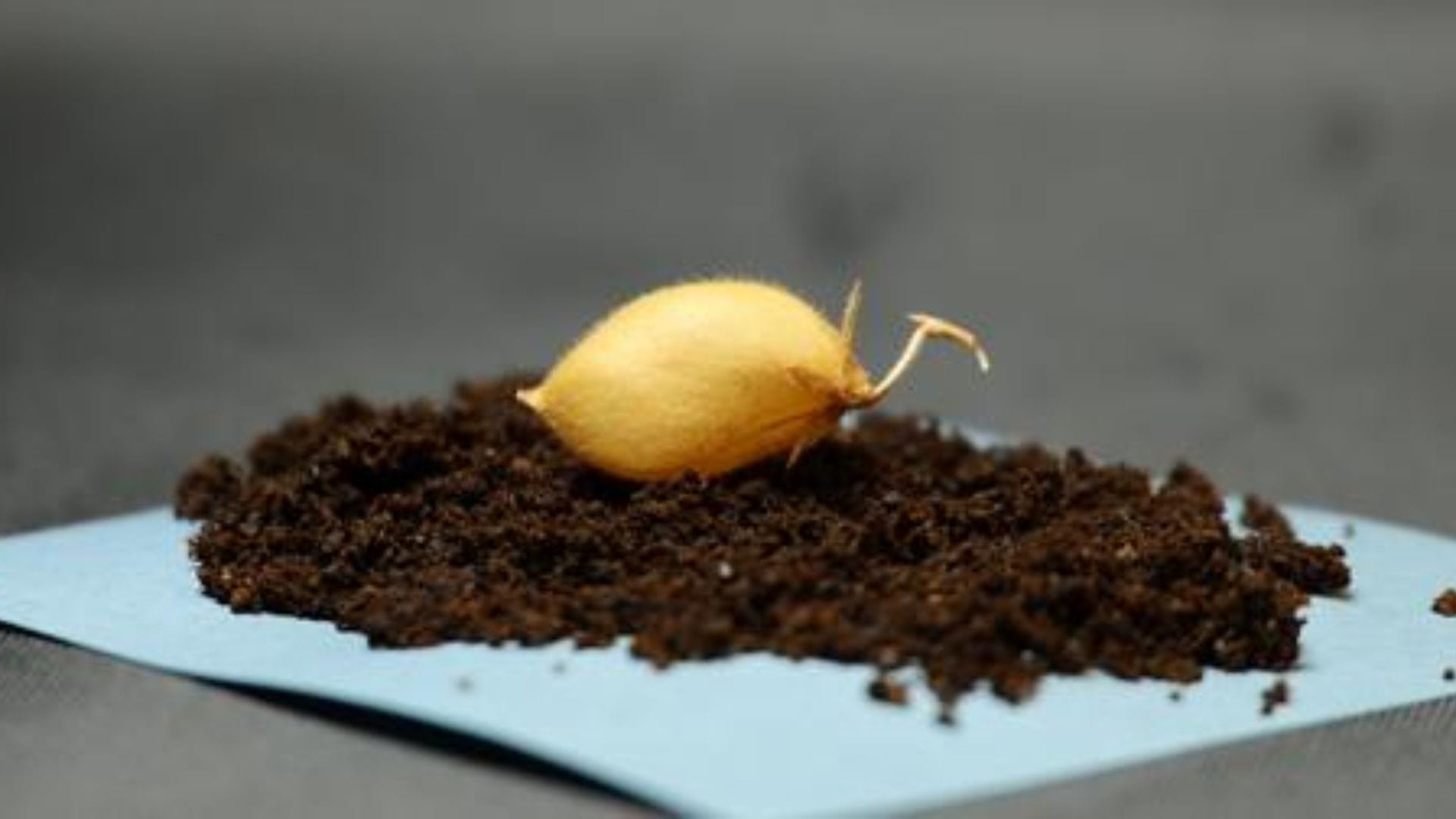
New Delhi: A team of researchers from The University of Texas at Austin have successfully grown and harvested chickpeas from simulated lunar regolith. The researchers used simulated moon dirt from Exolith Labs, that replicates the composition of lunar samples returned during the Apollo missions. Lunar regolith refers to the fine, coarse dust that covers most of the surface of the Moon. It is rich in nutrients and minerals, but can contain heavy metals that are toxic to plans, and lacks microorganisms as well as organic material required for plants to live. The particles are abrasive, flow easily, and are considered a hazard to equipment and crew.
The chickpea plants. (Image Credit: Jessica Atkin).
The scientists added vermicompost to the simulated moon dirt, which is created by earthworms after consuming organic waste. The team coated the chickpeas with symbiotic fungi before planting, with the fungi drawing up essential nutrients while reducing the uptake of heavy metals. The researchers investigated varying proportions of moon dirt and vermicompost and discovered that mixtures of up to 75 per cent moon dirt successfully produced harvestable chickpeas. The plants died out with higher percentages of moon dirt. The researchers also discovered that the fungi were able to colonise and survive in the simulant, indicating that they would need to be introduced only once in a real-world setting.
Growing crops on the Moon
The researchers still need to understand the taste, nutritional content and safety of the chickpeas. A paper describing the research has been published in Scientific Reports. This is the first time that chickpeas have been grown on simulated lunar regolith. Previously, scientists had demonstrated the growth of the thale cress, a model plant in actual lunar regolith samples returned by the Apollo missions, not just simulants. Successful growth requires modifying the lunar regolith with compost, fungi or nutrient additions. Scientists have recently determined that sewage can be used to improve the characteristics of lunar and Martian regolith, making them suitable for crops.