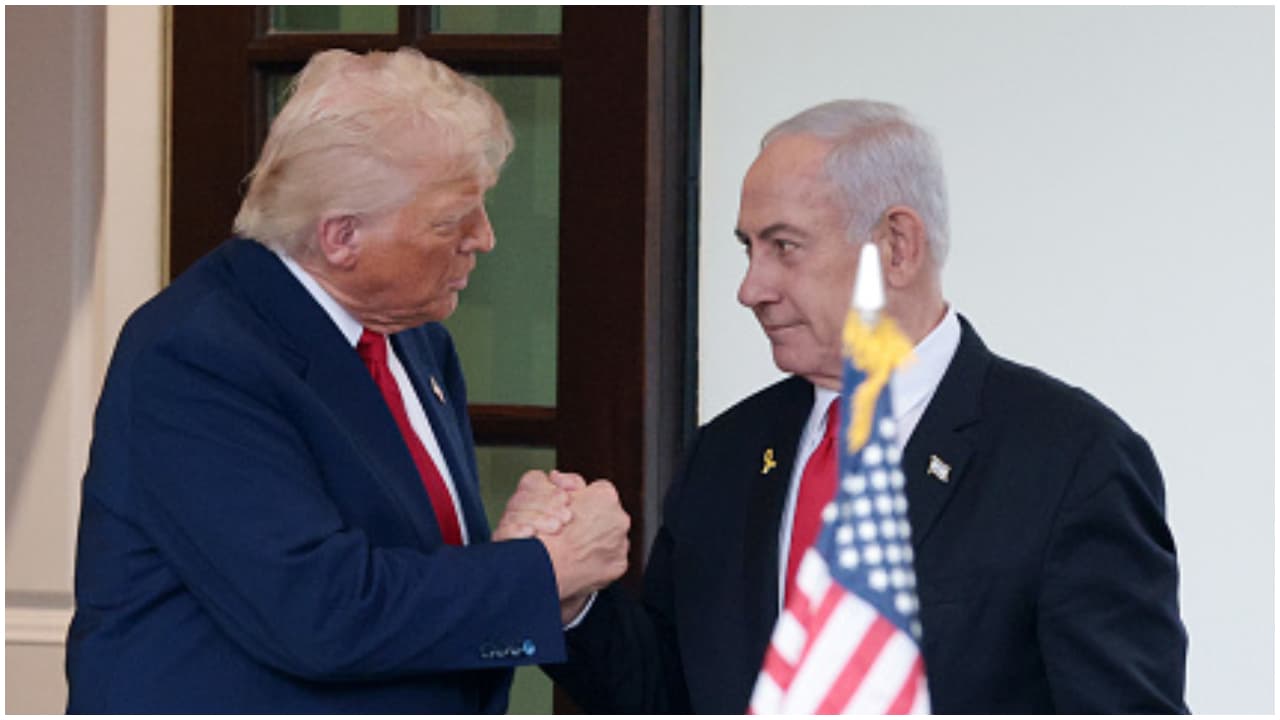
US President Trump stated that ending the ongoing war with Iran will be coordinated with Israeli PM Netanyahu, highlighting their strategic alliance. The conflict began with a joint US-Israel military operation targeting Iran’s infrastructure, leading to escalating missile exchanges.
US President Donald Trump has said the decision on when to end the ongoing war with Iran will be made in coordination with Israeli Prime Minister Benjamin Netanyahu, underscoring the close strategic alignment between Washington and Tel Aviv as the conflict enters a critical phase.
Speaking in an interview with The Times of Israel, Trump explained that any decision to conclude the military campaign would involve consultation with Netanyahu, reflecting the joint nature of the US-Israel operation against Iran. “I think it’s mutual… a little bit. We’ve been talking,” Trump said, adding that he will ultimately make the final decision at the appropriate time after considering all relevant factors.
The remarks come as the Middle East conflict continues to escalate, with missile exchanges and airstrikes reported across the region. The war began after the United States and Israel launched a major military operation targeting Iran’s missile infrastructure, nuclear facilities, and military command centers in an effort to eliminate what they describe as a growing strategic threat.
Also Read: Trump, Netanyahu Agree To Increase Pressure On Iran By Targeting Oil Exports To China: Report
Since the start of the campaign, both sides have carried out repeated strikes. Iran has fired missiles and drones toward Israeli territory and regional bases, while Israel has intensified airstrikes against Iranian military sites and allied groups. Explosions have also been reported across several countries in the Gulf region, highlighting the risk of the conflict expanding beyond the immediate battlefield.
The war has also coincided with a major leadership shift in Tehran. Following the assassination of longtime Supreme Leader Ayatollah Ali Khamenei during an Israeli airstrike in February 2026, his son Mojtaba Khamenei was elevated to the position of Iran’s supreme leader. Analysts say the leadership transition could harden Iran’s stance and further complicate diplomatic efforts to end the conflict.
Trump’s comments suggest that the timing of any ceasefire or negotiated end to hostilities will depend not only on battlefield developments but also on coordination between the United States and Israel. With the war continuing into another week and regional tensions rising, global powers are closely watching whether diplomatic pressure or military momentum will determine how and when the conflict eventually concludes.
Also Read: Trump-Netanyahu Meeting: US Warns Hamas, Iran, Talks ‘Very Productive’