I have always felt that you can tell how firmly a filmmaker has a grip on their story by the way they place the interval.
When that pause becomes less of a shock device and more of an extension of the storytelling, you know you are dealing with someone who is thinking beyond convention.
The new Marathi film Bol Bol Rani is quite unconventional in that sense, even though the marketing material had me believing this would be a typical crime thriller.
Making his feature debut, director Sid Vinsurkar tells a murder mystery that unfolds in the most unexpected ways.
The film’s interval stretch is one of its interesting subversions.
It arrives just after a couple has made love. They are lying on a swing, passing smoking puffs between each other. There is no soaring background score. No dialogue trying to create tension. Just silence, as the swing gently moves back and forth. And then, bam, interval.
The scene lands perfectly because of the way it is staged. The silence communicates itself, as you instinctively know these are two unpredictable people are perfectly capable of doing something terrible. And that’s what happens later on.
This staging is among the film’s strongest qualities.
Vinsurkar drives the story almost like a stage production. Most scenes remain confined within rooms and enclosed spaces, allowing the audience to closely observe the characters more than the plot itself.
Bol Bol Rani: The Plot
The film unfolds in rural Maharashtra, where a murder kicks off a series of questions. A journalist named Aabhas (Subodh Bhave) sets out to figure out what really happened.
There is a wife (Sai Tamhankar). There is a husband (Chinmay Mandlekar). And there is a lover (Sambhaji Sasane). One of them ends up dead.
The murder is recounted in three conflicting ways by a drunkard villager (Dhananjay Sardeshpande), a flower seller (Madhuri Bharati), and a cabbie (Padmanabh Bind).
What follows is a series of conflicting accounts, with each narrator presenting a different version of the same incident.
The setup echoes what Taapsee Pannu’s Rani says in the pulpy romantic thriller Haseen Dillruba: ‘Har kahani ke na bahut pehlu hote hain, farak bas yeh hota hai ke kahani suna kaun raha hai.’
Bol Bol Rani builds its entire identity around that thought. It comes through the Rashomon effect, where every narrator paints the three central characters in a completely different light.
Adapted from Bhalchandra Sule’s Marathi play Aankhi Ek Narayan Nikam, the story by Saurabh Bhave and Himanshu Nimbhorkar carries a strong dramatic flair. Each character seems to have another side waiting to be uncovered.
In our mainstream cinema, we are often conditioned to eagerly look for what happens next. But this film doesn’t chase the next twist or the next answer around the central mystery. It is more interested in examining the psychology of the people involved in it. That is where the film becomes so fascinating.
Instead of treating the whodunit as the destination, director Vinsurkar uses it as means to study its colourful characters that are steering the story.
The rich visual palette by cinematographer Vivian Pullan deserves credit for amplifying the atmospheric effect. It is controlled filmmaking that trusts visual storytelling over explanatory dialogue, something Marathi cinema has increasingly embraced in recent years with examples of Tighee and Toh, Ti Ani Fuji.
Sai Tamhankar Is Immensely Watchable
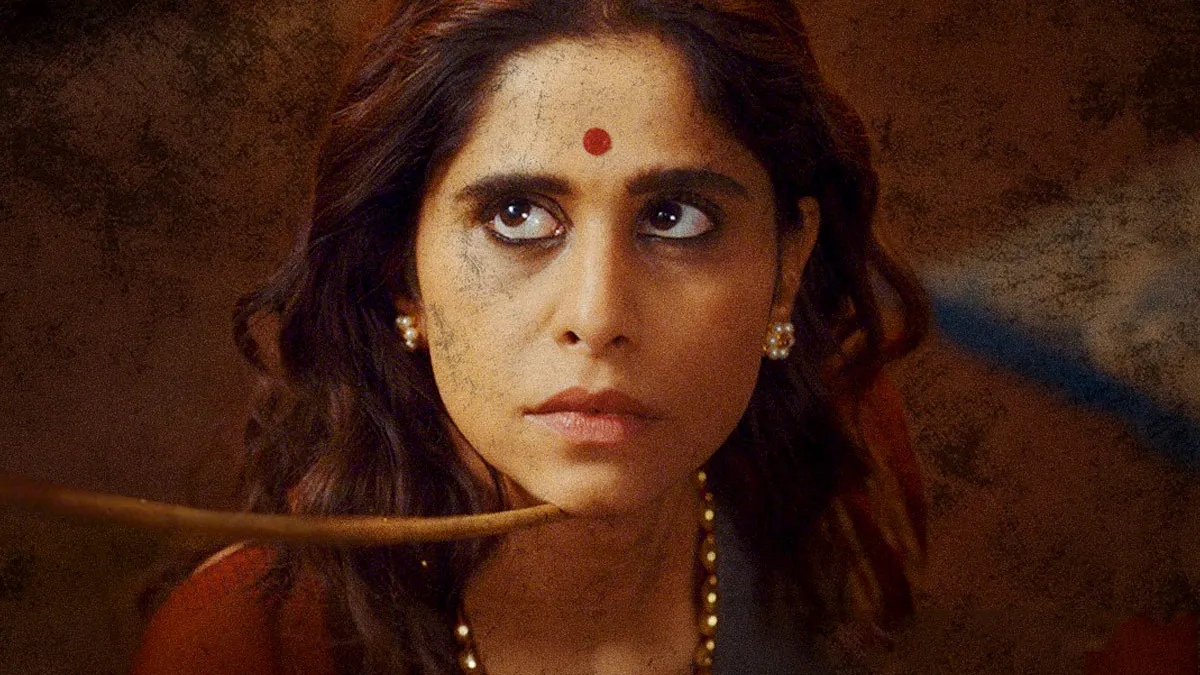
If the narrative belongs to multiple voices, Bol Bol Rani belongs to Sai Tamhankar.
She is the queen of this film, and this is her gambit.
She receives top billing over Subodh Bhave and Chinmay Mandlekar, and deservedly so. This is a performance where she is not merely acting but controlling the rhythm of the film itself.
Her Maya is manipulative but not a caricature, she is vulnerable but not pleading for sympathy, and she is mysterious enough to keep you guessing until the very end. Sai plays all these delicious contradictions in an immensely watchable central performance.
After last month, I didn’t think I would get to see another fabulous performance from her so soon. But she delivers again.
Chinmay Mandlekar lends the nameless husband a kind of menace and unpredictability that keeps every scene exciting.
Sambhaji Sasane, who broke out with the Marathi web show BE Rojgaar, gets a strong big-screen outing here. He gets the opportunity to explore different shades of his character while standing shoulder to shoulder with performers like Tamhankar and Mandlekar.
Subodh Bhave’s journalist works as the glue holding these multiple narratives together. His journalist Aabhas is relying more on his gut instinct than vague impression, which feels fitting given that his name literally means ‘feeling.’
Where The Film Falters
Ironically, the very ambition that makes Bol Bol Rani so engaging also exposes its biggest weakness.
The Rashomon-style structure demands that every perspective deepen our understanding of the central event. Here, the retellings add new perspective without necessarily adding new meaning to the proceeding. The film spends two hours constructing an intricate web, so naturally, you expect the final act to reward that patience, but rather, it ends on a whimper.
There is a difference between complexity and complication, and the film keep mistaking one for the other.
You can almost sense a sharper screenplay buried underneath the version we get. Because until then, the film operates with remarkable confidence. And that is why the rushed resolution feels more disappointing than frustrating.
Even then, Bol Bol Rani remains an interesting experiment. Experiments, after all, are valuable precisely because they refuse familiar grammar of storytelling.
The film may not tie every loose thread into a neat little bow, but maybe that is the point. Truth is rarely complete because it always exists in different versions. As Sai Tamhankar’s Maya puts it: ‘Aaget kai jalala, tey rakhelach mahit (Only the ashes know what burned in the fire)’. Absolutely killer line!