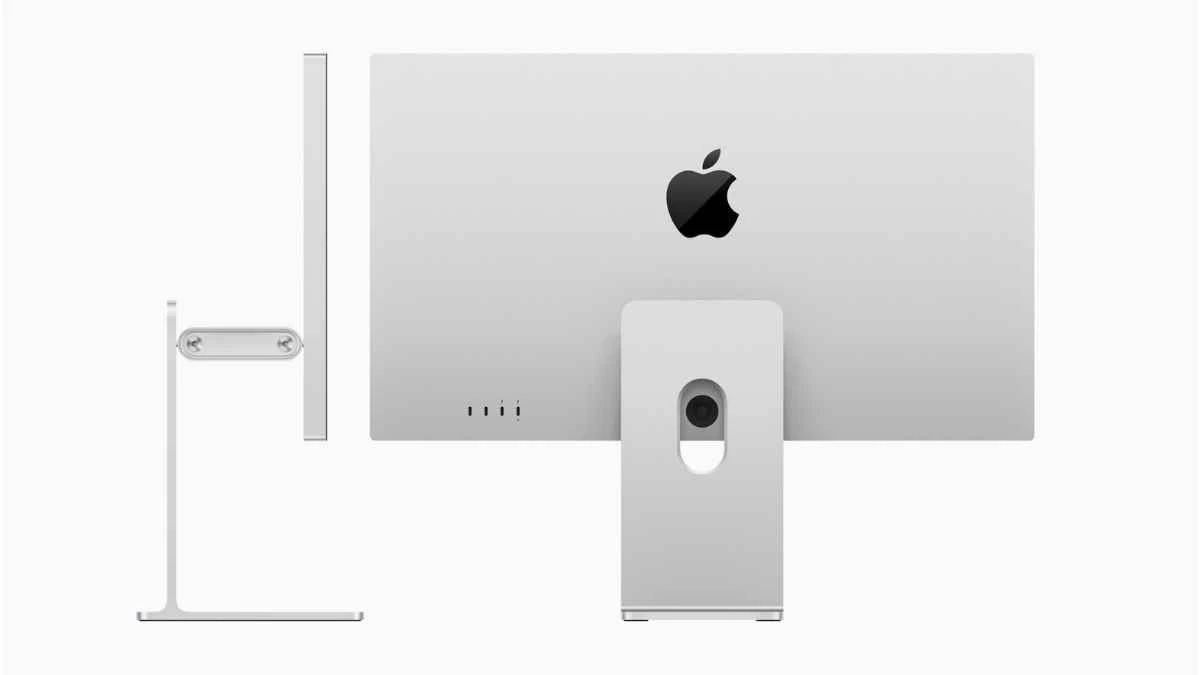
Apple has announced the 2026 versions of the Studio Display and Studio Display XDR, starting at premium price points of Rs 1,89,900 and Rs 3,99,900, respectively.
These are designed primarily for creators, developers, and professionals who use Mac desktops or laptops with high-resolution external displays. However, a big catch is that the new monitors will not support Macs powered by Intel processors. According to Apple’s official compatibility list, the displays only work with Macs running Apple Silicon chips, including the M1 and newer processors released since 2020. The move reflects Apple’s continued transition away from Intel hardware as the company phases out software and accessory support for older Macs.
Studio Display and Studio Display XDR supported Macs
Apple’s compatibility list shows that the new displays support Macs launched from 2020 onwards that use Apple Silicon processors. The following Macs are listed as compatible:
- 13-inch MacBook Air (M1, 2020 and later)
- 13-inch MacBook Pro (M1, 2020 and later)
- Mac mini (2020 and later)
- 16-inch MacBook Pro (2021 and later)
- 14-inch MacBook Pro (2021 and later)
- 24-inch iMac (2021 and later)
- Mac Studio (2022 and later)
- 15-inch MacBook Air (2023 and later)
- Mac Pro (2023 and later)
Ensure these Macs are running on macOS Tahoe 26.3.1 or later. Besides these, Apple’s tech specs page lists some compatible iPads, too.
Notably absent are the older Intel-based Macs, including Intel MacBook Pro, MacBook Air, iMac, and Mac mini models.
Since 2020, Apple has been slowly shifting away from Intel processors for its MacBooks and Macs. Now, it is the turn of the two monitors in its lineup. By restricting compatibility to Apple Silicon Macs, Apple appears to be optimising these displays for newer hardware capabilities. Perhaps this has also to do with the fact that macOS Tahoe will be the last major macOS release for Intel Macs. So, the Intel systems won’t receive macOS 27 and later, and it makes sense from a software support standpoint.
 What’s new on Studio Display and Studio Display XDR 2026
Studio Display
The key upgrades include a 27-inch 5K Retina display with up to 600 nits of brightness and support for the P3 wide colour gamut, improved image quality from the 12MP Center Stage camera with Desk View, improved speaker system with up to 30 percent deeper bass than the previous generation and support for Spatial Audio, a three-microphone array with directional beamforming, and Thunderbolt 5 connectivity with up to 96W charging power, while handling display output and data transfer.
Studio Display XDR
The Studio Display XDR sits above the regular model and replaces the earlier Pro Display XDR. It targets professional users such as filmmakers, designers, photographers, and 3D artists who require extremely high brightness, colour accuracy, and motion performance.
The display features a 27-inch 5K Retina XDR panel with an advanced mini-LED backlight system using 2,304 local dimming zones, up to 1000 nits of sustained SDR brightness, up to 2000 nits of peak HDR brightness, a 1,000,000:1 contrast ratio, support for P3 and Adobe RGB colour gamut, 120Hz refresh rate, Adaptive Sync, a 12MP Centre Stage camera, a three-microphone array, a six-speaker Spatial Audio system, and Thunderbolt 5 connectivity with up to 140W of charging power.
Should you buy one?
For users already running Apple Silicon Macs, the Studio Display and Pro Display XDR remain among the most tightly integrated monitors for macOS. Some of the features, like automatic brightness, centre-stage camera support, spatial audio speakers, and seamless macOS integration, can be key advantages.
However, users still relying on Intel-based Macs may need to factor in the cost of upgrading to an M-series computer before purchasing these displays.
The new Studio Display and Pro Display XDR models are available for pre-order, and sale begins on March 11.