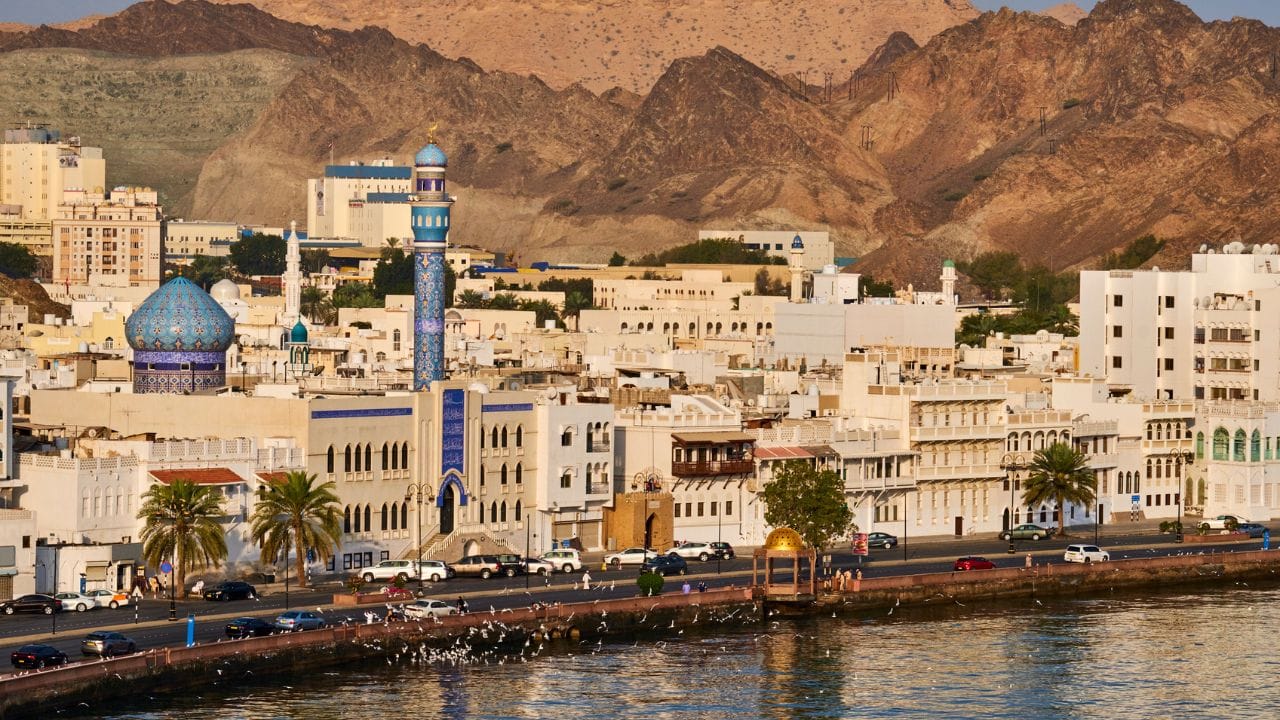
Muscat: The country that once tried to facilitate dialogue between Iran and the United States was Oman. Today, I find myself in its capital, Muscat.
At this moment, people from across the Middle East are rushing here in search of a relatively safer place. Iranian drones have also appeared over Oman in recent days, but for now the country has largely escaped the intensity of Iran’s military campaign that is shaking the rest of the region.
The fire in the Middle East will not die down soon
Over the last four years I have witnessed several wars with my own eyes, from the frozen frontlines of the Russia–Ukraine conflict to the Israel–Hamas war and the Israel–Iran confrontation in June 2025. But the story unfolding now in the Gulf is very different.
This time, almost the entire Middle East seems to be burning simultaneously. And in the middle of this heat, I find myself moving between Muscat and Dubai, watching the region change hour by hour.
Standing at Muscat International Airport, looking at rows of grounded aircraft, one thought struck me strongly: Flights do not operate on technology alone, they run on trust.
And right now that trust is badly shaken. Airports across the Middle East have fallen eerily silent over the past few days. Thousands of flights have been cancelled. Travelers are stranded and anxious. Billions of dollars in economic activity are evaporating each day.
A heavy blow to Dubai’s glitter
Two years ago, while traveling to Israel, I was sitting near the Burj Khalifa in Dubai and thinking how similar the lifestyle of Dubai and Doha felt to Tel Aviv — and how different they seemed from Tehran.
Back then, the idea of a war between Iran and the Gulf states felt almost unimaginable.
Today, the situation is dramatically different. On March 4, the foreign ministry of the United Arab Emirates issued a statement saying that Iran had carried out more than a thousand attacks on the UAE since February 28, more than the number of attacks Iran conducted on all other Middle Eastern countries combined.
The UAE says this happened despite the fact that it did not allow its land, airspace, or waters to be used for attacks on Iran.
Targets have reportedly ranged from Dubai’s airport to areas around Burj Khalifa and the famous Al-Jumeirah hotel.
Drones and missiles have fundamentally changed the nature of warfare. The stability that once defined the Gulf and powered its economic rise is now under serious question.
Iran’s strategy: a long war to pressure America
Iran clearly does not want this war to end quickly. Low-cost drones are challenging extremely expensive air defense systems. A drone that costs only a few thousand dollars can force the use of interceptor missiles worth millions. Over the deserts, drones now hover almost like swarms of mosquitoes.
The strategy is clear: The longer the war continues, the greater the pressure on the American-backed security architecture in the region. Every drone that slips past interception does more than cause physical damage, it also undermines the credibility of the security guarantees provided by the United States.
Fear on the ground, uncertainty in the skies
I spoke to several travelers at the airport. Some say their businesses are stuck. Others are worried about their families. Many simply want to leave as quickly as possible. People arriving from Dubai keep repeating the same line: “At least flights are still operating from Muscat.”
For now Oman appears like an island of relative balance. But it remains part of the same sea where the waves are rising rapidly.
A warning signal for India
This war is not as distant from India as it may appear. More than eight million Indians live and work across Gulf countries. If instability deepens, their employment and safety could be affected, which would also hit the billions of dollars in remittances flowing back to India every year.
If the situation deteriorates further, the Indian government may have to consider a large-scale evacuation operation. a massive logistical and diplomatic challenge.
India also depends heavily on the Gulf for its energy supplies. A prolonged conflict would likely push up global oil prices, increasing inflationary pressure at home. The Middle East is also India’s gateway to Europe and Africa. Any disruption here will inevitably affect trade routes and supply chains.
Muscat: calm in the middle of the storm?
The streets of Muscat are currently seeing an influx of people arriving from Dubai, Riyadh, and other Gulf cities. Ticket prices for flights in and out of Oman are rising rapidly. Markets are bustling an unusual kind of activity that often appears when crisis creates opportunity. Cafés are open. The sea looks calm. But conversations everywhere revolve around the war. Mobile screens are filled with alerts. Maps are constantly being checked.
The war beyond the battlefield
This is not just a war of missiles and drones. It is a battle of prestige, economic influence, and regional power balance. I am in Muscat now, and from here I will travel to different parts of the Middle East to understand the layers of this conflict, listen to the voices of people living through it, and report the reality on the ground. Because wars are not fought only on the battlefield. They are also fought in airports, in markets, and in the anxious heartbeats of ordinary people.