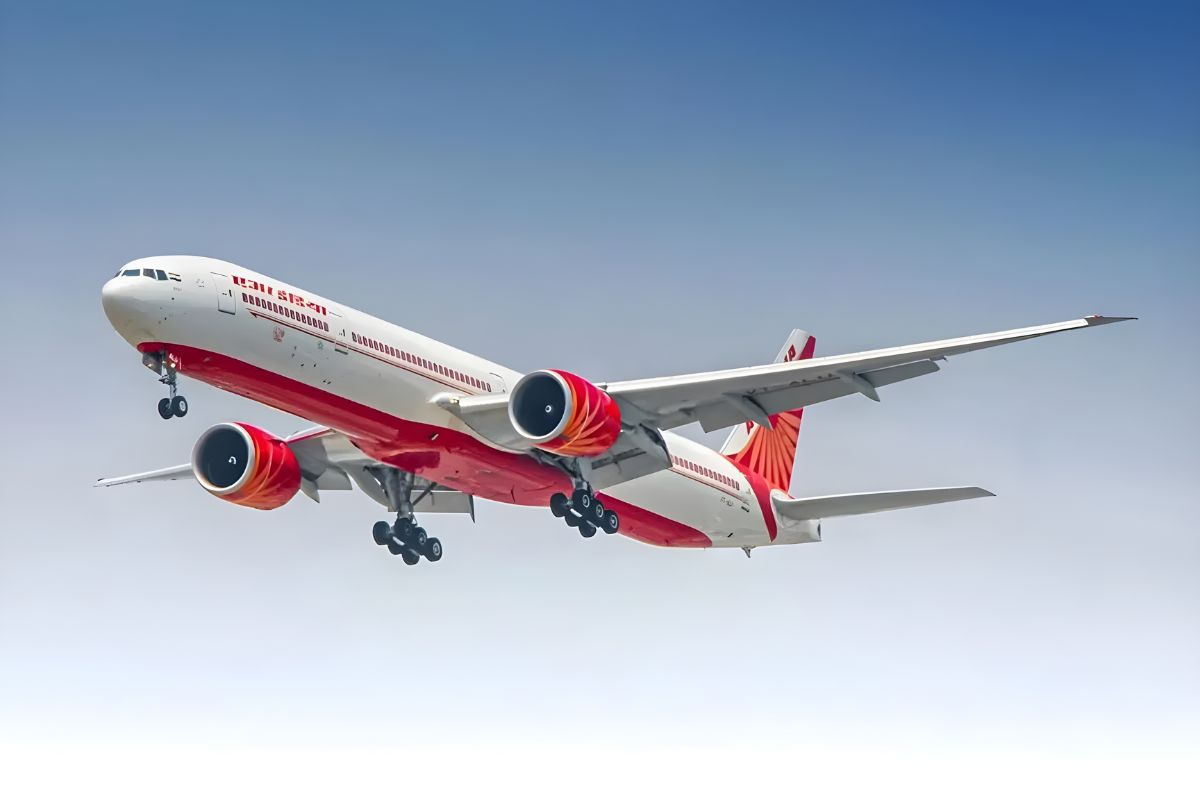
Air India is stepping up capacity on key Middle East routes this week, using larger aircraft to help bring home passengers affected by the ongoing disruption in the region.
If you have been following the situation around airspace closures and flight cancellations, this move makes sense. Thousands of travellers have been left adjusting plans at short notice. Now the airline is adding more seats where they are needed most.
Larger Aircraft Deployed on 3 and 4 March
On 3 March, a Boeing 777 with nearly 350 seats departed Mumbai for Jeddah. That is one of Air India’s biggest long-haul aircraft, typically used on international routes with high demand.
Later the same night, a Boeing 787-9 with around 300 seats was scheduled to leave Delhi for Dubai. In the early hours of 4 March, another Boeing 787-8 with more than 250 seats was set to operate from Mumbai to Dubai.
- Late 3 March: Boeing 787-9 (around 300 seats) scheduled from Delhi to Dubai
- Early 4 March: Boeing 787-8 (over 250 seats) operated from Mumbai to Dubai
In simple terms, Air India is using widebody aircraft instead of smaller planes to carry more passengers in a single trip.
Air India is deploying its widebody aircraft with higher capacity on its services to Jeddah and Dubai on 3 and 4 March to facilitate the return of passengers impacted by the ongoing situation in the Middle East.
A Boeing 777 aircraft with a capacity of close to 350 seats… pic.twitter.com/NosjYSOhUE
— Air India Newsroom (@AirIndia_News) March 3, 2026
Full Flights Expected on Return to India
All three flights are expected to operate at full capacity on their return legs on 4 March, landing back in Mumbai and Delhi.
That tells you how strong the demand is right now. Many passengers who were delayed or stranded are trying to return to India as quickly as possible, especially from cities like Dubai and Jeddah, which are major transit hubs for Indian travellers.
For those tracking Air India Dubai flights or Air India Jeddah services, this is a clear signal that the airline is prioritising repatriation and passenger movement on these sectors.
Why This Matters for Travellers
Here is what this really means if you are travelling to or from the Middle East:
- Airlines may swap aircraft at short notice to handle extra demand
- Flights could be full, especially on return sectors to India
- Flexibility remains important if you are booking in the coming days
Air India says it is closely monitoring developments in the region. Safety remains the priority, both for passengers and crew.
Right now, Air India’s focus is very clear. Get as many people home as possible, as quickly as possible, using every available seat. If you are scheduled to fly on these routes, it is worth checking your flight status regularly and arriving at the airport prepared for busy terminals and full cabins.
Follow and connect with us on Facebook, Twitter, LinkedIn, Instagram and Google News for the latest travel news and updates!