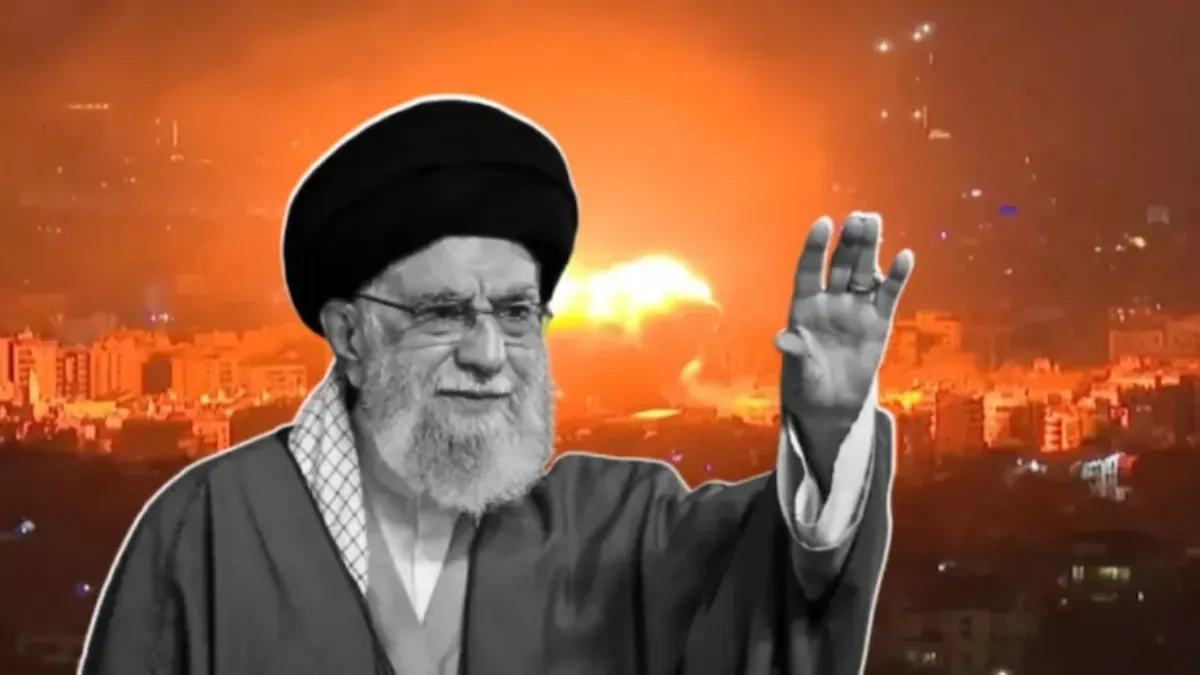
The killing of Iran’s Supreme Leader was not the result of a sudden strike but the culmination of a long running intelligence operation that quietly penetrated the heart of Tehran’s most guarded spaces.
According to an investigation by the Financial Times, years of cyber surveillance, human intelligence and advanced data analysis converged on a single Saturday morning near Pasteur Street, where Ali Khamenei was eliminated in a joint US Israeli operation.
What unfolded that day was the product of meticulous preparation rather than battlefield improvisation.
Inside The Surveillance Web
For years, Israeli intelligence is believed to have accessed traffic camera networks across Tehran. One strategically positioned camera overlooking a section of the leadership compound provided a steady visual feed of routine movements. Officials arriving for meetings, security shifts changing and convoy patterns were all quietly recorded and analysed.
Algorithms processed this stream of information to build detailed profiles of security personnel. These dossiers reportedly contained home addresses, work schedules, commuting routes and the specific officials each guard was assigned to protect. Intelligence analysts constructed what they call a “pattern of life”, mapping predictable rhythms inside a compound designed to resist scrutiny.
Real time traffic data became critical. By studying vehicle flows and timing, Israeli operatives and the CIA could identify when Khamenei would be present and who would be attending meetings with him. Earlier reporting by Reuters indicated that once a high level gathering was detected on Saturday morning, the strike timetable was accelerated.
The CIA, according to the report, confirmed that the supreme leader himself would be at the location.
Blinding The Defences
Beyond surveillance cameras, communications infrastructure around Pasteur Street was reportedly targeted. Select mobile phone towers were disrupted, causing calls to appear engaged and preventing members of Khamenei’s protection detail from receiving potential warnings.
The broader intelligence architecture relied on Israel’s Unit 8200 for signals interception, Mossad’s human sources for on ground confirmation and military intelligence units that sifted through massive quantities of data using social network analysis. An intelligence official was quoted as saying, “We took their eyes first.”
The strike capability matched the depth of the intelligence work. Israeli aircraft deployed variants of the Sparrow missile, designed to hit extremely small targets from distances exceeding 1,000 kilometres, well beyond the effective range of Iranian air defence systems.
The precision echoed last year’s 12 day conflict in which numerous Iranian nuclear scientists and senior military commanders were killed in coordinated operations within minutes of each other.
A Calculated Political Call
Eliminating Khamenei, the successor to Ruhollah Khomeini and only the second supreme leader of the Islamic republic, was described as a strategic political decision rather than simply a display of technological superiority.
Unlike Hassan Nasrallah, who spent years in underground bunkers before being killed in Beirut in 2024, Khamenei did not live in concealment. His public presence remained visible across Iran, and he had previously spoken about the possibility of assassination, downplaying the importance of his own survival.
Intelligence agencies assessed that once open war began, Iranian leaders would disperse to fortified underground facilities that would be far harder to penetrate. Acting before that shift, when a leadership meeting was confirmed for Saturday morning, was seen as the narrowest and most decisive opportunity.
Although negotiations over Iran’s nuclear programme were expected to continue with mediation by Oman, preparations for the operation had reportedly been underway for months. Plans were adjusted only after confirmation that Khamenei and senior officials would gather at the compound.
American intelligence is said to have provided a human source that reinforced signals intercepts and surveillance data, solidifying the timing.
The Strike And Confirmation
Donald Trump authorised the operation shortly after midnight in Washington, aligning with daytime hours in Iran. The decision came two days after inconclusive talks in Geneva.
General Dan Caine, chair of the US joint chiefs of staff, said cyber operations were launched first, disrupting and degrading Iran’s ability to detect and respond to incoming aircraft.
Trump later wrote, “He [Khamenei] was unable to avoid our Intelligence and Highly Sophisticated Tracking Systems and, working closely with Israel, there was not a thing he, or the other leaders that have been killed along with him, could do.”
The Israel Defense Forces stated that approximately 200 fighter jets carried out what it described as the largest flyover in the history of the Israeli Air Force, striking around 500 targets.
Trump told Fox News that Iranian leaders were meeting for breakfast at the time of the strike.
Iranian state television confirmed Khamenei’s death early Sunday, broadcasting archival footage under a black banner. Some operational details remain undisclosed, and officials suggest that certain aspects of the intelligence effort may never be made public in order to protect sources and methods.