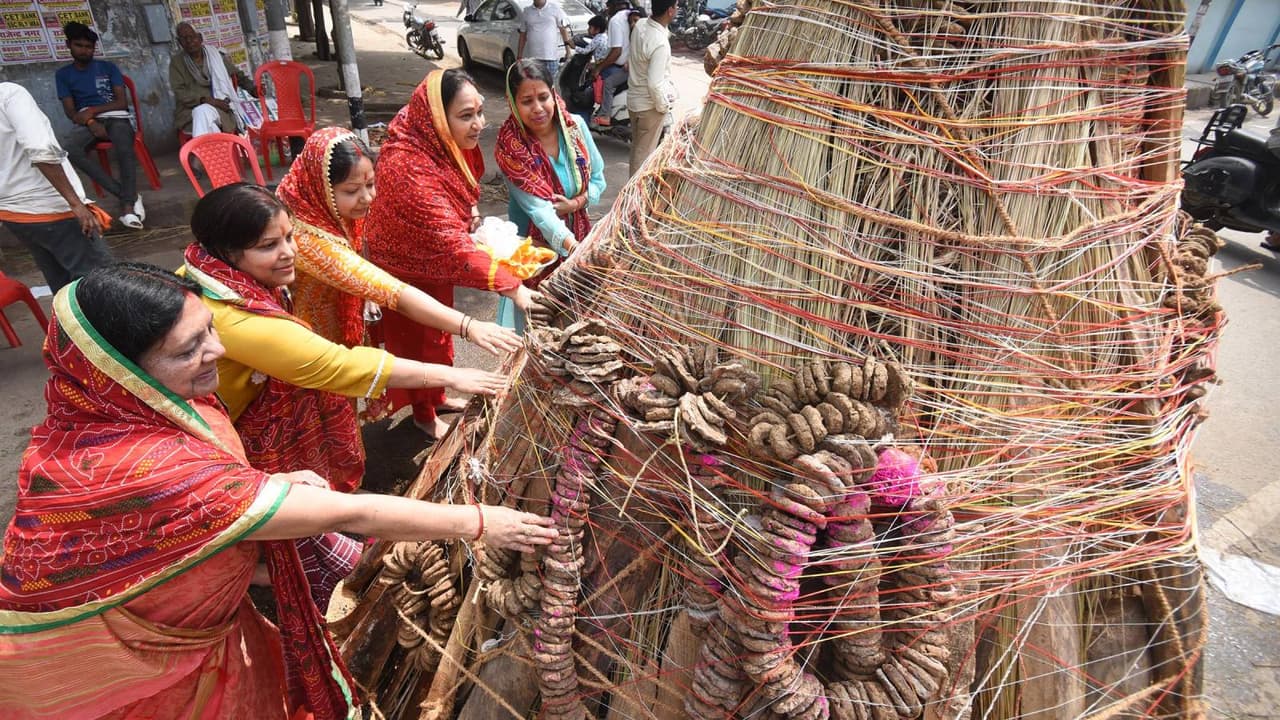
Holika Pujan Samigiri Details: Holika pujan and subsequent burning will be done on Monday, March 2, coinciding with the full moon date of Phalgun month. Many materials are required for Holika puja.
What materials are required during Holi Puja: Holika puja is performed every year on the full moon date of Phalgun month during Pradosh period i.e. in the evening. This time Holika puja will be done on Monday, March 2. It is believed that worshiping Holika brings happiness, peace and prosperity in the house. Besides, bad times also go away. Many things are needed while worshiping Holika. All this material should be collected in one place in advance, so that nothing is left out. Note down the complete details of Holika puja material…
Read this also-
Holi Puja Vidhi: Holika Puja on March 2, know the puja method, mantra, auspicious time, puja material and burning time.
Holika puja material
Incense sticks and lamps, camphor for Aarti, raw cotton, whole moong or gram (soaked), wheat earrings, coconut, jaggery, batasha, roli, kumkum, turmeric, rice, flowers and flower garlands, puri-bhajiya etc., food items, water pot filled with pure water, cow dung cakes), badkule (garland of small cow dung cakes).
Read this also-
Chandra Grahan Streaming: The first lunar eclipse of 2026 will take place on March 3, where to watch live streaming?
Why are ears of wheat offered on Holika?
Ears of wheat are also called umbi. It is especially offered during Holika puja. It is a symbol of new grains. Wheat crop is harvested at this time. To thank God, ears of wheat are offered in the fire of Holika and later they are eaten as Prasad.
Why are cow dung cakes offered on Holika?
On Holika, a garland of small cow dung cakes is also offered which is called Badkule. These are offered as ornaments to Agnidev. There is also a belief that it is more auspicious if this garland of badkuls is made by little girls.
What things should be offered during Holika puja?
During Holika puja, offerings are also made to Lord Narasimha, devotee Prahlad and Holika. On this day, special dishes like Bhajiya, Puri and Malpua etc. are prepared at home and offered. Apart from these, there is also a tradition of offering coconut i.e. quince. Later coconut is also eaten as Prasad.
Disclaimer
The information contained in this article has been taken from religious texts, scholars and astrologers. We are just a medium to deliver this information to you. Users should consider this information as information only.