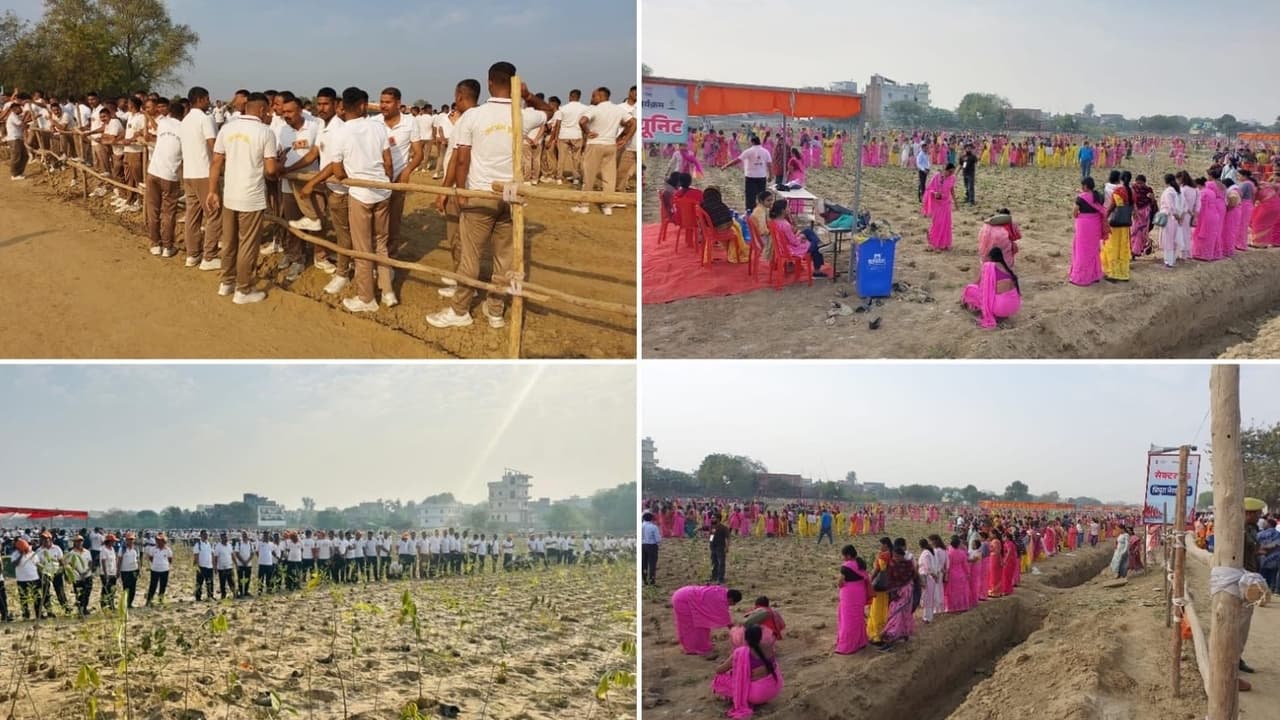
Varanasi Municipal Corporation created a Guinness World Record by planting 2.51 lakh Miyawaki saplings in one hour. ‘NaMo One’ urban forest is being prepared in 350 bigha, which will increase biodiversity and the Municipal Corporation is expected to get revenue worth crores.
Varanasi. A historic initiative has been taken in Varanasi, the parliamentary constituency of Prime Minister Narendra Modi. Varanasi Municipal Corporation created a new world record by planting more than 2.5 lakh saplings in less than an hour. More than 20,000 people took part in this campaign, which is considered a great example of public participation.
Feat recorded in Guinness World Records
This big achievement has been officially recognized by Guinness World Records. On March 01, 2026, 2.51 lakh saplings were planted using Miyawaki method in just one hour. Earlier, there was a record of planting 1.53 lakh saplings in one hour in China, which has now been left behind by Varanasi.
‘NaMo One’ project: Urban forest being built in 350 bighas
A huge urban forest named ‘NaMo Forest’ is being prepared on about 350 bighas of land in Domri area near the Ganga Ghats. A total of 3 lakh saplings are being planted under this project, which includes 2.5 lakh Miyawaki Method saplings, 10 thousand timber trees and 40 thousand fruit trees. This project is being considered a big step towards increasing greenery in the city.
Key features of the project
Not only plantation, but many other facilities will also be developed in ‘NaMo Forest’. It includes a 4 kilometer long walkway, meditation and yoga plaza, 4 hectare flower park, 2 hectare herbal park, play zone for children and open gym plaza. There is also a plan to build Naturopathy Plaza here in future.
Economy will become stronger with environment
This urban forest will help in increasing bio-diversity as well as strengthen the banks of river Ganga. This will improve the ecological balance of the area. The Municipal Corporation expects that this project will generate annual revenue of about Rs 2 crore from the third year, which can increase to about Rs 7 crore by the seventh year.