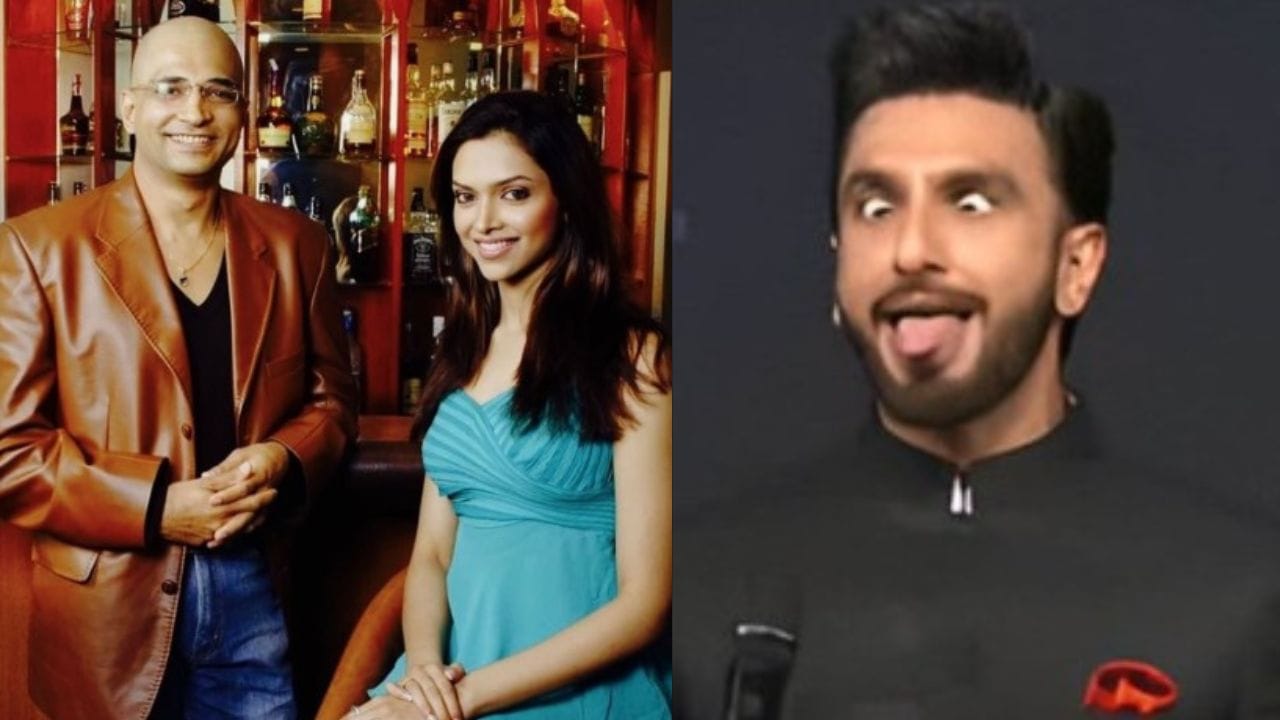
With Jai Hind Jai Sindh – A love story set against the emotional backdrop of Partition, the director returns to the national stage with a film rooted in unity, identity and belonging. He is known for spotting talent early, having launched Deepika Padukone in the Kannada film Aishwarya (2006). His political thriller Lankesh Patrike (2003) also marked singer-actress Vasundhara Das’s debut in Kannada films. The filmmaker is once again introducing new faces, which clearly bet on story over star power.
In this candid conversation, he speaks about why he refuses to make agenda-driven cinema, calls the Ranveer Singh–Rishab Shetty episode ‘naive’, praises Yash’s box-office fearlessness in clashing with bigger Hindi releases and reflects on Kannada cinema’s global moment.
Blunt, political, nostalgic, fiercely regional and yet unapologetically national, Lankesh says it like it is.
Why did you choose to set your film during the days of Partition?
There’s more to the subject than just the backdrop of Sindh and partition. At its core, it’s a love story about bringing India together – about integrity, unity and diversity. The heart of the film is this love story that unites people across cultures.
Is it inspired by or based on true events?
Of course, it is. My producer, Sammy Nanwani, who is also my friend, has a personal connection with the partition. His father was a migrant from Sindh. While the partition forms the backdrop, the love story, on the forefront, unfolds through a man who has experienced different cultures and brings people together. It carries a strong message of harmony, peace and co-existence – of unity in diversity!
When the mood of the nation leans towards Pakistan-bashing films, what is your take?
I’m not in that bracket. I’m Gauri Lankesh’s brother, and I love my country. I have always believed in unity in diversity. I love this country for its different cultures and languages in different regions. That’s the beauty of India. Today, people not only want jobs and infrastructure, but they also want love, affection and peace.
Dhurandhar has been labelled an agenda film. Do you see Jai Hind Jai Sindh in that space?
I loved Dhurandhar and the way the director (Aditya Dhar) told the story. I’m not making an agenda-driven film, nor do I think that Dhurandhar is an agenda film. I think the director didn’t let his film be defined by any kind of agenda; he simply told the story he wanted to tell and let the audience decide that. Had it truly been an agenda film, it wouldn’t have become the success it is today. People don’t want constant Pakistan-bashing, they just want to watch a good story.
With the growing dominance of pan-India films and language politics resurfacing, how do you see the Hindi–Kannada clash playing out in cinema today?
We love our language. There’s a history of that fight for language. If you look at the linguistic movements in South India, including the Tamil language movement, identity has always been deeply emotional. In the 1980s, my father P. Lankesh, was among those who fought for the Kannada language and for it to be recognised as a primary language in our education system. It was part of the Ekikarana movement, when states were organised on linguistic lines and parts of Karnataka were divided among neighbouring states like Andhra Pradesh, Kerala, and Maharashtra.
We have always been fighting for our language and identity, but we are also people of harmony and peace. Bengaluru is one of the most cosmopolitan and peaceful cities in India. We welcome everyone, but we also stand firm about who we are.
When colleges did not include Kannada in their three-language system in the 80s, P. Lankesh, U.R. Ananthamurthy and Girish Karnad took to the streets demanding its reinstatement as the main language, and they succeeded. Today, you see Kannada cinema on the national map with films like Kantara (2022) and KGF (2018). We are making noise and we’re making a point.
The Ranveer Singh-Rishab Shetty moment at IFFI last year generated strong reactions online. How do you interpret what happened?
Knowing Ranveer Singh, it was naïve. He was simply trying to be nice to Rishab Shetty and complimenting him on his performance in the film by mimicking him. But the way it was viewed and perceived by people was blown out of proportion. And in a way, it worked for Dhurandhar because after that incident, he kept silent, and the film worked. Having said that, in today’s social media age, everyone is a journalist, and everyone wants to make a point.
From Lankesh Patrike to Shakeela and now Jai Hind Jai Sindh, how would you describe the different phases of your career? What drives you to keep nurturing fresh faces?
I have always introduced new talents. I introduced my son, Samarjit Lankesh, who recently won a Filmfare Award. I haven’t directed a Hindi film after Shakeela (2020). At the end of the day, it’s all about the story. Since the story of my new film is about the partition with Sindh as the backdrop, I felt it deserved to be told on the national platform.
Tell us about Shakeela and why you chose Richa Chadha for the lead role?
I’m a big fan of Masaan (2015), where I found Richa Chadha to be a fantastic actress. Also, Pankaj Tripathi – what a fantastic journey he has had, coming from a small village in Bihar to where he is now. We were on the same page as far as the choice of films is concerned. I would love to work with him again.
Shakeela was released during COVID, but it performed well on OTT. It was an experimental film. But Jai Hind Jai Sindh is a bigger film with a bigger canvas and an ensemble cast.
I’m not bothered about the star cast and star power. For me, it’s always the story. I’ve always believed in nurturing new talent from Karnataka, whether it was Deepika or Vasundhara Das. I was supposed to introduce Yash long time ago. We’re neighbours, actually. I’m in awe of what he has achieved today.
What do you think of the controversy around Yash releasing Toxic on the same day as Dhurandar 2?
The teaser made news. Yash is an intelligent man and knows exactly what he’s doing, otherwise he wouldn’t have been where he is today. KGF Chapter 1 was released alongside Shah Rukh Khan’s Zero (2018), and it became a big hit. Now, Toxic is releasing alongside Dhurandhar sequel. He must have something up his sleeve. He’s not making this film only for India, he is aiming for the global stage. It is one of the most anticipated films. I’m proud of Yash. From being a bus driver’s son to performing on the world stage is a huge achievement.
Of course, Dhurandhar has got its own share of goodwill, so it will be tough competition. I hope both films do well.
Both Rishab Shetty and Yash have preferred to make films in Kannada and dub it in Hindi instead of moving to Mumbai.
Post-COVID, it’s no longer about the language; it’s about the story. Kantara can’t be told in Hindi. It has to be told in Kannada and then dubbed. The same is true for Toxic. These films are not about Hindi versus Kannada, they are about reaching the world stage. If it becomes successful, and I hope it does, it will be revolutionary. For the first time, a Kannada boy and filmmaker attempting a project of this scale for a truly global audience.
Tell us more about Jai Hind Jai Sindh?
The film is inspired by my friend and producer Sammy Nanwani’s experience. His father suffered a lot during Partition. At 18, Sammy went to Japan, later to the US and is now back in India. I think, as an NRI, he misses India more than we do. The ones living in India take a lot of things for granted here – our country, our culture, our language, our love. I’m proud of Sammy for making this story, and my responsibility is to tell it well.
The film has an ensemble cast, featuring Mahesh Manjrekar, Jaya Prada, Zarina Wahab, Upasana Singh, Chhaya Kadam and Vikram Kochhar, along with new faces. Manjrekar particularly has a challenging role, and the story largely revolves around the character. I’ll be introducing some new talents again. Most of the new talents I have introduced so far have gone on to become big names like Deepika Padukone. The new boy in this film has already signed a film with Dharmatic Entertainment.
How do you look at Deepika’s journey?
I am proud of her. I don’t think there’s another pan-Indian face and actress quite like Deepika. A lot of people have tried to finish her, but she has stood tall. She has fought her battles with dignity and resilience. She has swum against the tide and remains irreplaceable. I am super proud of her.