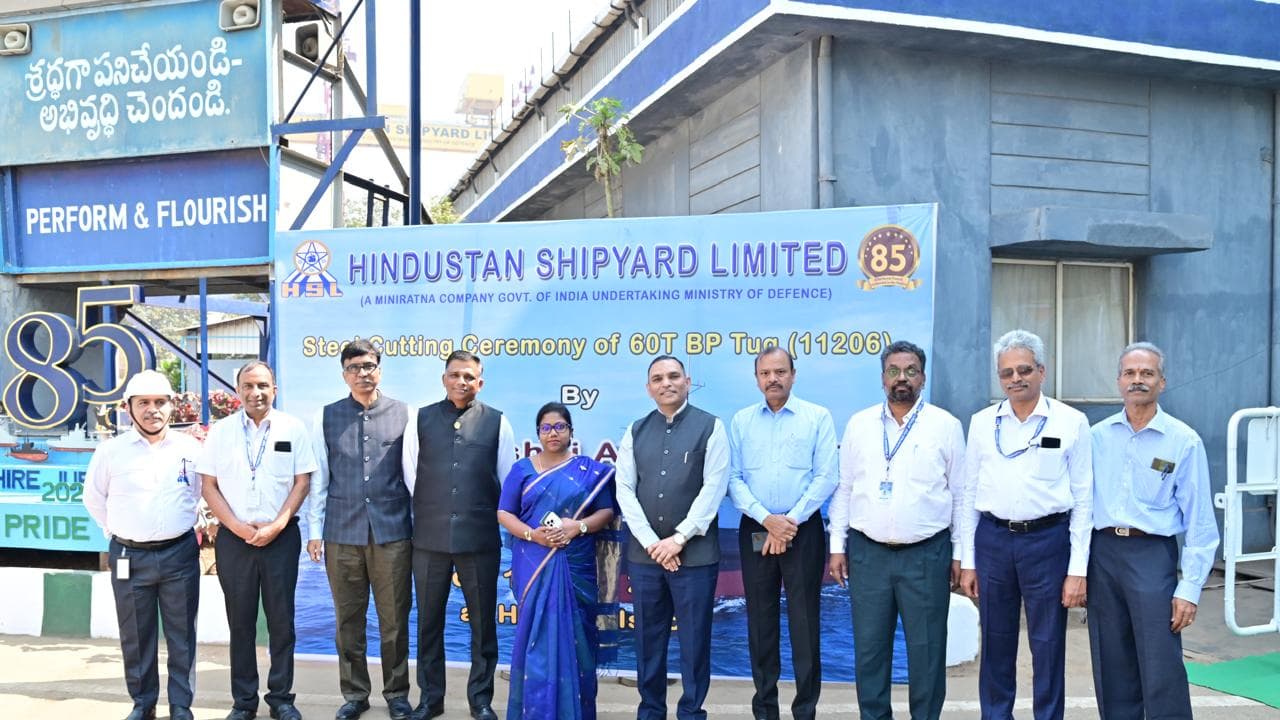
Hindustan Shipyard Ltd, the miniratna DPSU on the waterfront, is constructing the tugboats that will one day guide cargo ships past that same waterfront.
New Delhi: Hindustan Shipyard Ltd, the miniratna DPSU on the waterfront, is constructing the tugboats that will one day guide cargo ships past that same waterfront. It is a loop that is easy to overlook in the language of contracts and ceremonies — but it says something important about where India’s maritime industrial story is headed.
When K. Roshni Aparanji, IAS, Deputy Chairperson of Visakhapatnam Port Authority, pressed the button to begin steel cutting for the second 60-tonne Bollard Pull Tug at HSL’s hull shop last week, she was not just inaugurating a shipbuilding project. She was, in a sense, placing an order with her own city.
That is the understated ambition embedded in both Maritime India Vision 2030 and the Aatmanirbhar Bharat initiative — not just that India should build more ships, but that Indian ports should be served by vessels made on Indian soil, by Indian hands, using Indian supply chains.
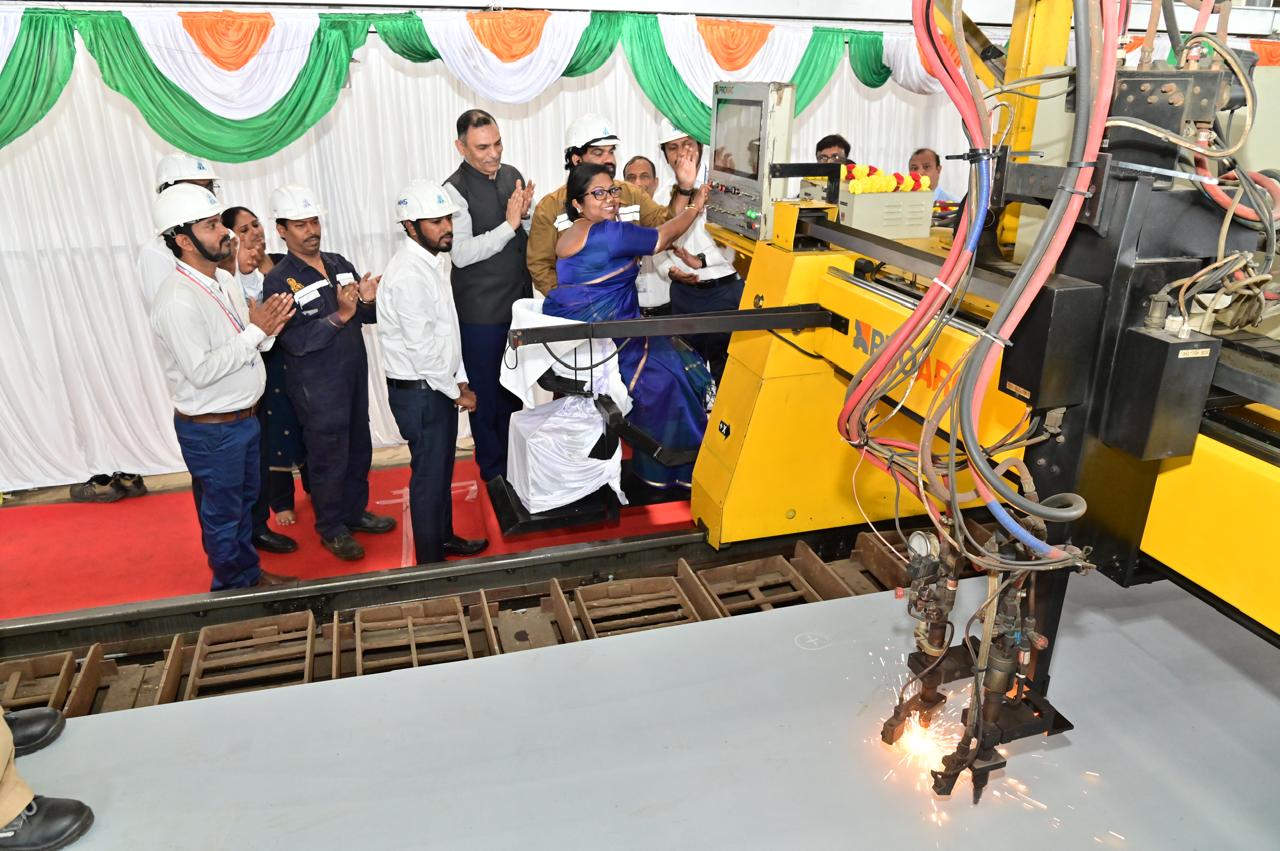
HSL is doing exactly that. The shipyard, a Miniratna Defence Public Sector Undertaking already stretched across demanding national programmes including Fleet Support Ships for the Navy, took on the VPA contract and moved to steel cutting in under two months of signing. That speed matters because it reflects something beyond efficiency — it reflects institutional confidence. The shipyard knew what it was doing before the ink dried.
Capt. G. Venkateswarlu, IN (Retd), CMD of HSL, pointed to the people behind that confidence. “A nation is not just its soil, but its people,” he said.
“It is the skilled hands of HSL’s workforce, MSME partners and the trust of VPA that will give life to this vessel.” It was a pointed reminder that what looks like an industrial milestone is, at its core, a story about labour — welders, fabricators, engineers, and the small manufacturers across the MSME ecosystem who supply components and expertise that rarely receive public acknowledgement.
Aparanji, for her part, used the occasion to speak about stewardship. She underscored the importance of precision, integrity, and continuous technology upgradation — then turned to Visakhapatnam’s marine ecosystem and urged stakeholders to protect and elevate the city’s maritime reputation. The subtext was clear: a port city’s identity is inseparable from the quality of what it builds and how it operates.
The two 32-metre tugs, once complete, will join VPA’s fleet to handle growing vessel traffic, improve turnaround times, and strengthen emergency response on the water. They will do their work quietly, far from public view, in the gap between a ship arriving offshore and a ship safely berthed.
But before any of that, they make a statement that Visakhapatnam does not need to look elsewhere to equip itself. The expertise, the workforce, and the will to build are already here, on the same waterfront the tugs will one day serve.