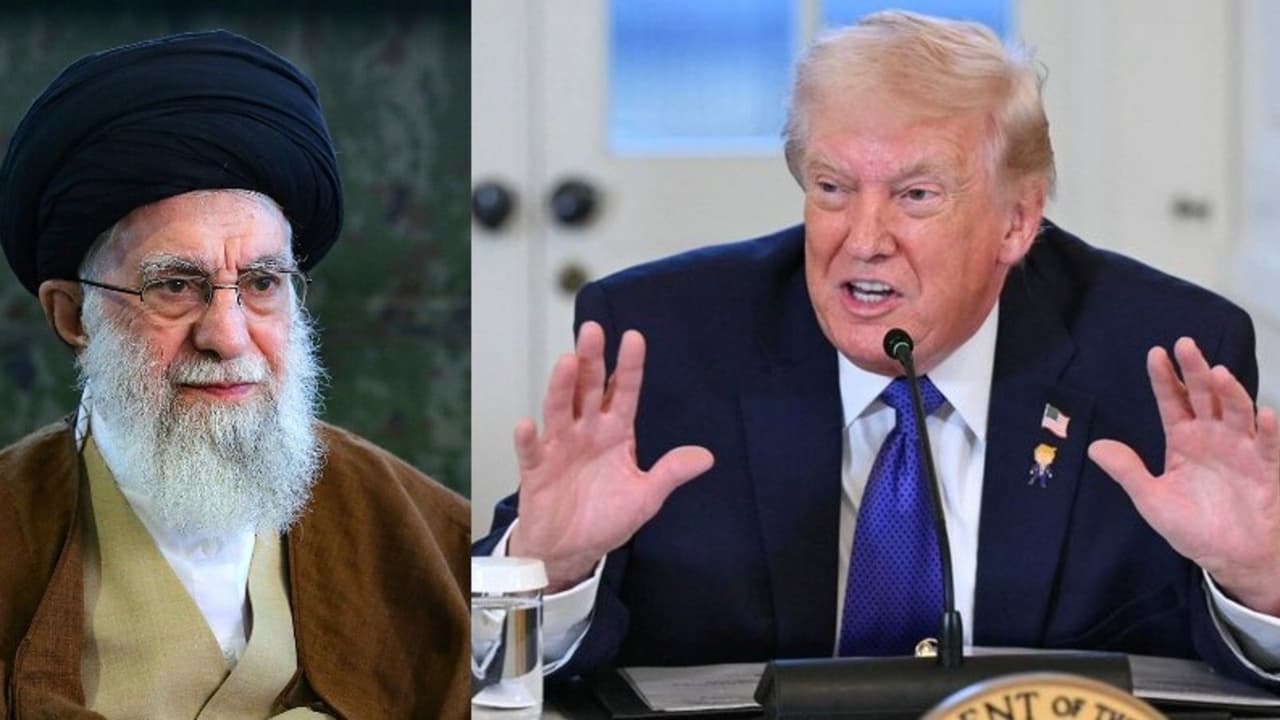
US-Iran relations have been full of mistrust and crises for 4 decades. The rivalry, which began with the 1979 hostage crisis, has been exacerbated by sanctions, the nuclear dispute and recent military operations.
For more than four decades, relations between America and Iran have been fraught with mistrust, conflict, and recurring crises. The story that began with the shock of the Islamic Revolution of 1979 has today turned into a protracted hostility involving sanctions, military actions and failed diplomatic efforts. The latest case in this series is of February 28, 2026, when US President Donald Trump announced the launch of a “major military operation” against Iran. During this time, Israel also attacked Iran. The move followed weeks of rising tensions and stalled talks, adding yet another new chapter to the world’s oldest geopolitical standoff. Let’s take a look at key moments that shaped the deep animosity between Washington and Tehran.
1979: The mortgage crisis that changed everything
The conflict began on November 4, 1979, when student activists stormed the US Embassy in Tehran. They were demanding the extradition of Iran’s deposed ruler Mohammad Reza Pahlavi, who was undergoing treatment in the US at the time. This incident occurred just months after the establishment of the Islamic Republic in Iran. A total of 52 Americans were held hostage for 444 days during this crisis. This incident shocked the world and spoiled the diplomatic relations between the two countries forever. In April 1980, Washington broke diplomatic relations with Iran and imposed trade and travel restrictions. The crisis ended nine months later when the last hostages were released.
Sanctions, accusations of extremism and the “axis of evil”
Tensions deepened in the 1990s and early 2000s, as the US accused Iran of supporting extremist groups in the Middle East. On April 30, 1995, then US President Bill Clinton announced a complete embargo on trade and investment with Iran, accusing it of supporting “terrorism”. Washington cited Iran’s alleged support to regional groups such as Hezbollah, Hamas and Palestinian Islamic Jihad. These sanctions were also imposed on foreign companies investing in Iran’s oil and gas sector.
The rhetoric became more acute in 2002, when US President George W. Bush declared that Iran, along with Iraq and North Korea, formed an “axis of evil” supporting “terrorism”. Years later, in April 2019, Washington declared Iran’s elite military unit, the Islamic Revolutionary Guard Corps, a “terrorist organization”, further straining relations.
The nuclear dispute and the breakdown of a historic agreement
Concerns about Iran’s nuclear ambitions emerged in the early 2000s, when its undeclared nuclear sites were discovered. Tehran has repeatedly denied building nuclear weapons and insists its program is for civilian purposes. A 2011 report by the International Atomic Energy Agency (IAEA) stated that Iran had conducted “activities related to the development of nuclear explosive devices” at least until 2003. The report described it as broadly reliable intelligence. In 2005, Iranian President Mahmoud Ahmadinejad ended the moratorium on uranium enrichment, raising concerns from Washington and its allies.
A decade later, a major breakthrough was made in Vienna, where Iran reached an agreement with six world powers – China, France, Germany, Russia, the United Kingdom and the United States – on its nuclear program. Under this deal, Iran was given relief from heavy sanctions in exchange for a guarantee of not making a nuclear bomb. This was also approved by the United Nations.
But this agreement broke in 2018 when Trump took America out of this agreement and again imposed strict sanctions on Iran and its related companies. A year later, Iran also began to withdraw from some of its commitments under the agreement. Diplomatic efforts to get the deal back on track struggled for years. Ultimately, UN sanctions were reimposed on September 28, 2025, and the agreement formally expired the following month.
2020: assassination of Qasim Sulemani
Tensions escalated dramatically on January 3, 2020, when the US killed top Iranian general Qassem Soleimani in an attack in Baghdad. Trump had said that Soleimani was planning an “immediate” attack on US diplomats and troops in Iraq. Iran retaliated soon after with missile attacks on bases hosting US troops in Iraq, bringing the two countries to the brink of a major war.
2025: Nuclear bases targeted
The conflict escalated again in 2025 during the 12-Day War between Israel and Iran. On June 21, the US struck three major Iranian nuclear sites. Trump said these facilities had been “obliterated”, although the true scale of the damage was unclear at the time.
2026: Naval build-up and new military operations
By early 2026, tensions had once again escalated. Trump threatened to attack Iran in response to a violent crackdown on a major protest movement that began in late December 2025. However, the focus of American pressure soon shifted back to Iran’s nuclear program. Washington deployed a US “armada” to the region, while indirect talks between the two countries resumed in early February 2026, brokered by Oman.
The talks revealed deep differences. The US urged Iran to negotiate a comprehensive agreement to refrain from attacks, while Tehran insisted that discussions should be limited to the nuclear issue only. On February 19, Trump warned that he was giving “10, 15 days, at most” to reach an agreement, adding that “otherwise bad things will happen”.
Nine days later, on February 28, he announced the beginning of “major military operations” as Israel also attacked Iran – the latest escalation in a rivalry that has shaped Middle East geopolitics for four decades.