New Delhi: The registration plates for trucks in India are often hand painted, with unstandardised lettering that throws off conventional automatic number plate recognition (ANPR) systems that are designed for standardised license plates. ANPR systems are essential in modern governance, allowing authorities to monitor traffic, enforce regulations, prevent illegal transport and improve public safety. ANPR systems allow for realtime vehicle tracking without manual checks. The Telangana IT Department approached IIIT Hyderabad looking for an ANPR solution for the Telangana Mineral Development Corporation (TGMDC), with requirements that were very different from typical commercial use cases. The TGMDC was looking for a cost-effective, robust solution tailored for monitoring sand mining trucks, to curb illegal mining and transport.

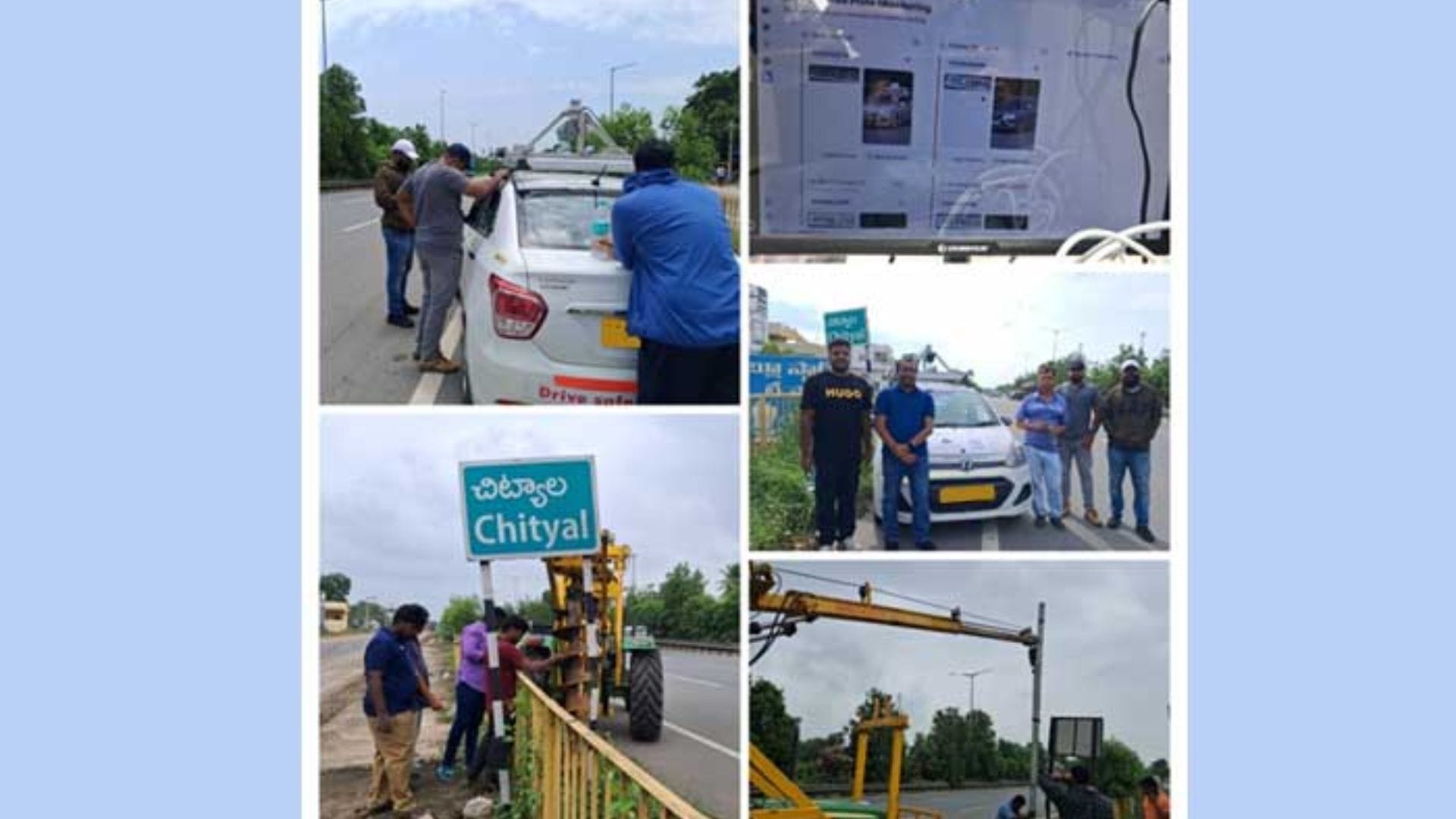
A screenshot of the system at work. (Image Credit: IIIT-Hyderabad).
The commercial systems are expensive, with per-camera costs for licensing and maintenance, and can run into tens of lakhs. Ravikiran Sarvadevbhatla’s team from the Centre for Visual Information Technology at IIIT-Hyderabad had already developed a prototype licence palate recognition system, that was taken into real-world development. The researchers studied the workflow and rebuilt and strengthened the handwritten character recognition component. The analytics was integrated as a plug-in to an open source platform, allowing the tech to be integrated into any platform. The solution is named Vahan Eye and was piloted at Chityal on the Vijaywada-Hyderabad highway, where the team installed cameras, laid cables and deployed the end-to-end system.
Goal is to make the tech accessible
The deployment tracks the movement of trucks and cross-checks them against a whitelist of 40,000 approved vehicles. The tech was tweaked according to the needs of the TGMDC, with custom dashboards. The solution has been running continuously since September. The algorithm has proven robust, tackled challenges such as low-lighting conditions and garlands covering licence plates during festivals, and is continuously improving with live data. The goal here is to make the tech accessible at a fraction of commercial costs, allowing for scalable adoption across government departments.