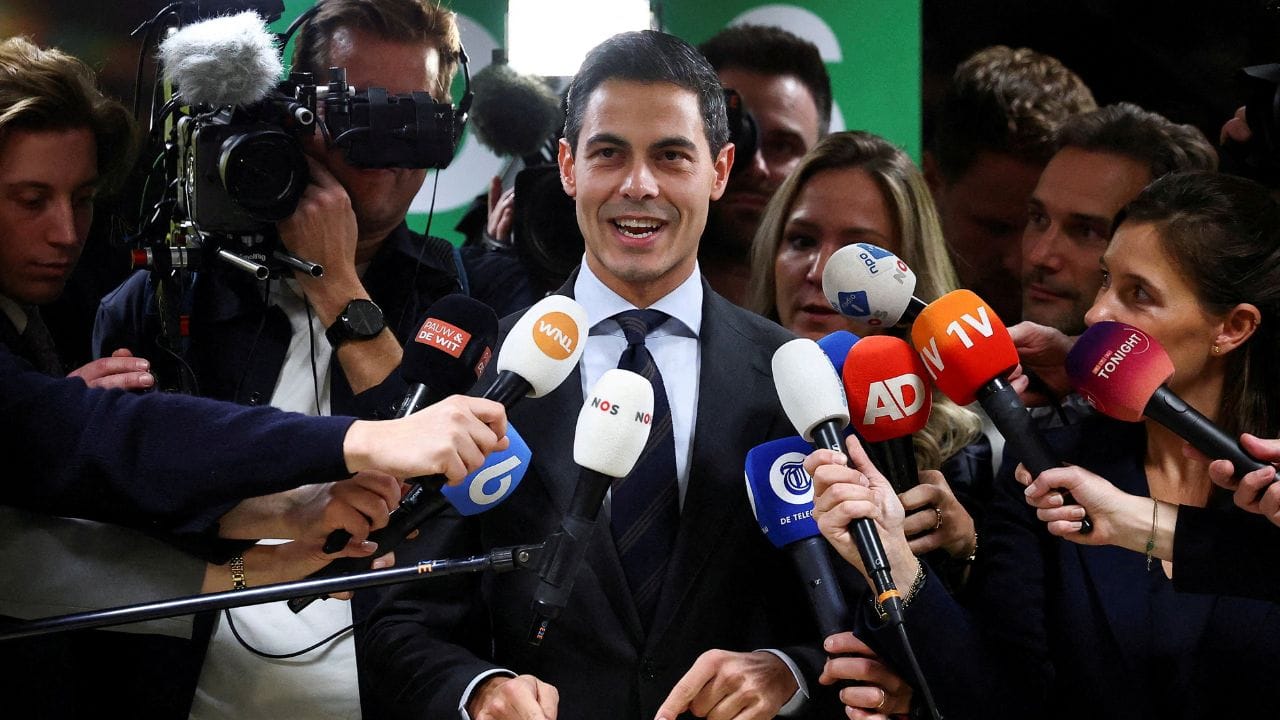
New Delhi: The Netherlands is set for a political milestone on Monday as 38-year-old Rob Jetten is set to become the country’s youngest-ever prime minister and the first openly gay leader.
Jetten’s rise has been swift, and to many it’s even unexpected. Just months ago, few would have predicted he would be heading the next Dutch government. But the October elections changed the picture. In a tightly fought race, his centrist party managed to edge past the far-right Freedom Party (PVV) led by Geert Wilders by the narrowest of margins.
After the results were declared, Jetten struck an upbeat tone. He said the election showed that populist movements can be beaten but only with a hopeful and positive message about the country’s future.
A snap election and a narrow win
The vote was triggered after the PVV pulled out of the previous coalition government, which had been described as the most right-wing administration in Dutch history. That coalition lasted for just 11 months before collapsing, forcing the country back to the polls.
Jetten’s campaign focused on stability and cooperation as he called out to bring the Netherlands back to the heart of Europe because without European cooperation, we are nowhere. His campaign had campaign a positive message for the country that helped his party at a time when Dutch politics had grown increasingly fragmented.
While Wilders’ PVV had entered the race as a strong contender but the final count delivered a surprise. Jetten’s party overtook the far-right bloc in the closing stretch, securing enough support to lead coalition talks. Still, the numbers underline how divided the electorate remains.
The margin of victory was slim, reflecting a country split between sharply different political visions. The parties required 117 days to form a coalition, but still, that was much less than the 233 days taken by the previous government.
Coalition maths and challenges ahead
To form a government, Jetten’s party joined hands with the centre-right CDA and the liberal WD. Together, the three parties hold 66 seats in parliament, just nine short of a clear majority. That means the new administration will need support from outside its coalition to pass key legislation.
The arrangement now points to what could be a delicate balancing act in the months ahead. Now governing without a clear majority, he will be required to compromise, negotiate carefully and provide steady leadership.
Still, Monday’s swearing-in carries symbolic weight. Jetten’s appointment marks a generational shift in Dutch politics and will also send a strong signal about representation at the highest level of government.
For many supporters, his victory marks more than just party politics. It reflects a broader debate about the direction of the Netherlands politics going forward, as to whether it will lean toward nationalist rhetoric or embrace a more inclusive and centrist path.
Now, as he is set to be sworn in on Monday, along with his cabinet, by King Willem-Alexander at the Huis Ten Bosch in The Hague, the focus now shifts from campaigning to governing. The expectations are quite high, and the real test begins once the oath is taken.