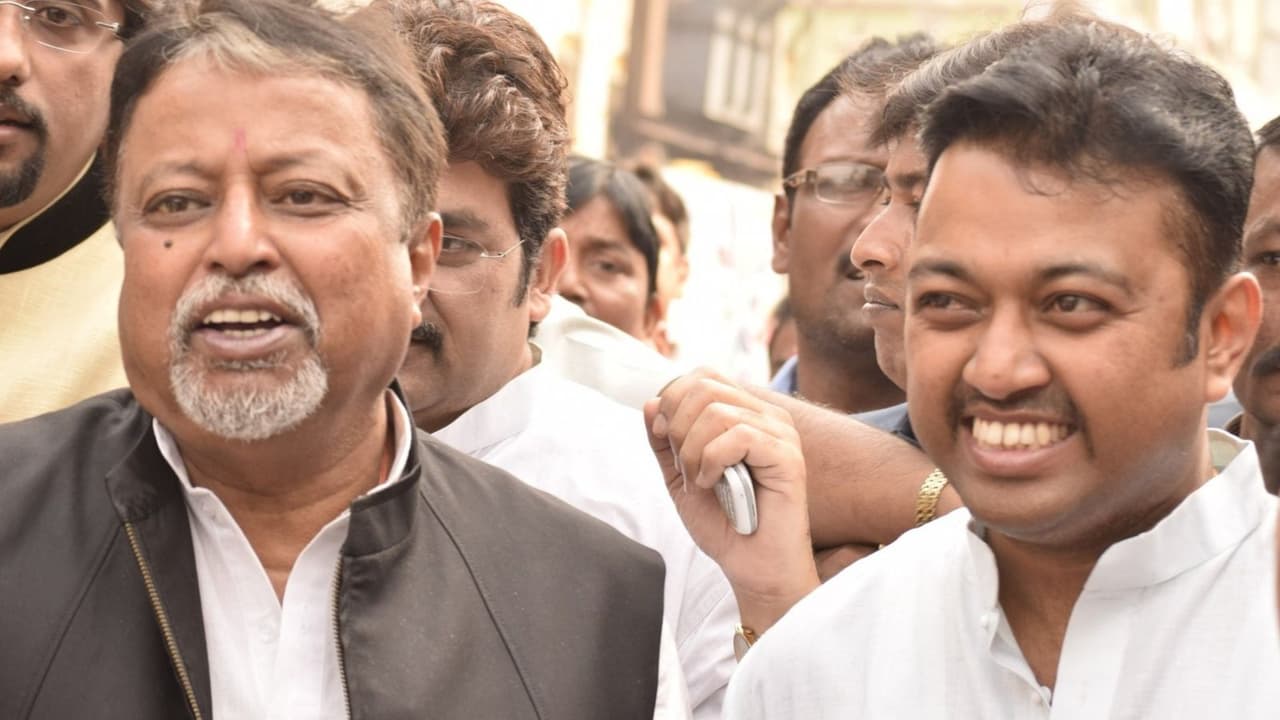
Mukul Roy, a veteran politician and key founder of the TMC, has passed away in Kolkata following a prolonged illness. A master strategist, he was instrumental in building the party’s grassroots network and served as a Union Minister.
Mukul Roy, a veteran politician and one of the key architects behind the rise of the Trinamool Congress (TMC), passed away on February 23, 2026, in Kolkata at the age of 71. His death marks the end of a long and influential political journey that helped reshape West Bengal’s political landscape. In his final years, Roy battled prolonged health issues, including Parkinson’s disease, and remained largely inactive, reportedly spending his last phase in a coma.
Roy’s personal life was marked by both strength and tragedy. His wife, Krishna Roy, passed away in July 2021 following cardiac complications after prolonged illness and a kidney transplant. The couple’s son, Subhrangshu Roy, is also active in politics and has served as a TMC MLA, placing him in a position where he could potentially carry forward his father’s legacy.
Often regarded as Mamata Banerjee’s trusted aide and once the party’s second-in-command, Mukul Roy was among the founding members of the TMC. His organisational skills and political acumen played a crucial role in building the party’s grassroots network and expanding its influence beyond West Bengal. At the national level, he served as a Union Minister of State in the Shipping Ministry and later held responsibilities in the Ministry of Railways.
However, Roy’s political career was not without controversy. After years in the TMC, he switched to the Bharatiya Janata Party (BJP) in 2017 and became its national vice-president, before making a dramatic return to the TMC in 2021. These shifts reflected both his strategic importance and the evolving dynamics of Indian politics.
With his passing, attention now turns to whether his political legacy will continue through his son. While Subhrangshu Roy has had his own political journey, stepping into the shadow of a leader as influential as Mukul Roy comes with both opportunity and pressure.
Mukul Roy leaves behind a complex but undeniable legacy—as a master strategist, a party builder, and a figure who significantly influenced West Bengal’s political narrative. Whether that legacy endures through the next generation remains a question that only time will answer.