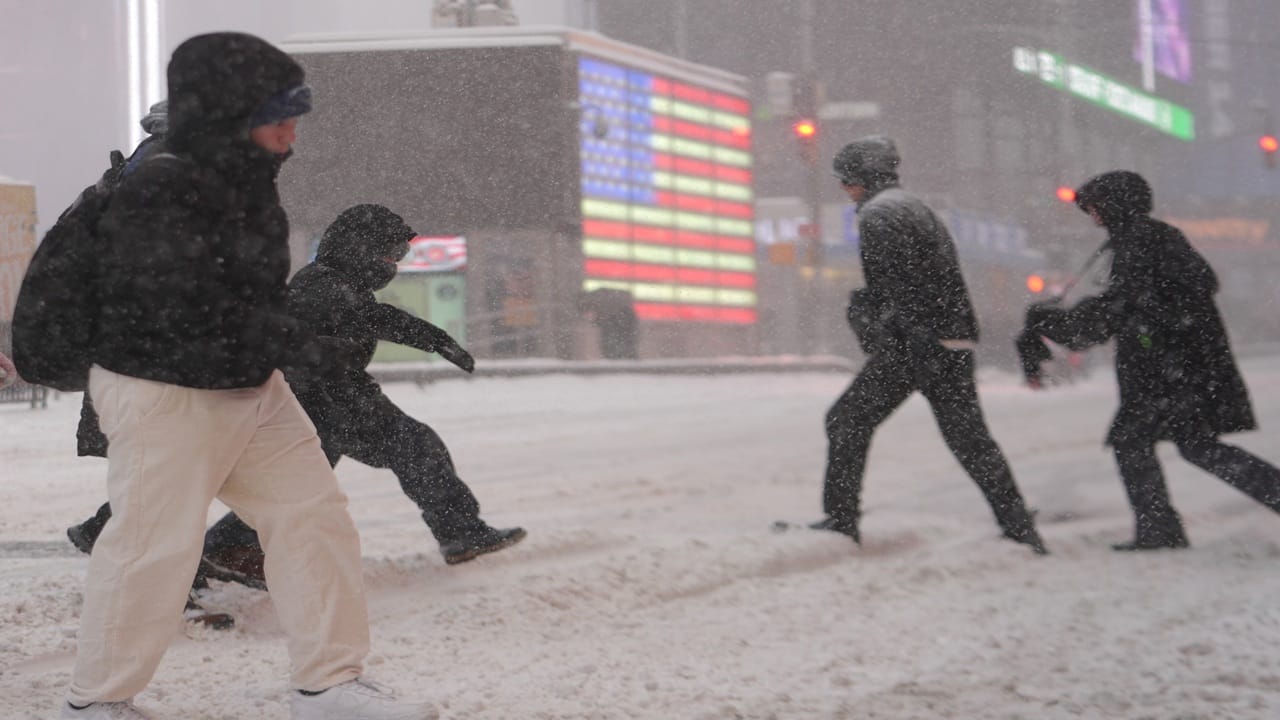
New Delhi: Millions in the United States are bracing for severe blizzard conditions as a rapidly intensifying winter storm threatens the East Coast. The effect is expected to be felt from the Mid-Atlantic to New England.
As part of this, weather warnings have been issued for major regions like New York City, Long Island, Boston, and surrounding coastal communities. Public safety officials have urged residents to prepare for heavy snow, strong winds and dangerous travel starting Sunday and continuing into Monday.
Climate warnings
The storm system has strengthened more quickly than forecasters initially expected and as a result of this the National Weather Service was forced to raise its severity projections just days before the worst conditions hit. Blizzard warnings now cover much of the densely populated corridor from Washington, D.C. northward, with forecasts calling for 30 to 61 cm of snow in many places and snowfall rates occasionally exceeding 5 cm per hour during the peak of the storm. Along with the snow, coastal flooding is also a concern as a result of the accompanying strong onshore winds.
Meteorologists describe this system as a strong norteaster, a type of storm that forms when cold Arctic air collides with moist air over the Atlantic. As the low-pressure system tracks northward along the coast, it draws in abundant moisture and intensifies, creating the conditions for heavy snow and high winds.
As of now the impacts are already being felt in the US. Major airlines have cancelled hundreds of flights, public transit agencies are revising schedules and emergency officials are activating response plans in several cities. Schools and other institutions have come out with advisories as have local authorities, urging residents to stay off roads at the height of the storm.
Scientists and climate analysts noted that while individual storms are routine weather events, climate change and accompanying global warming is resulting in major changes in even the routine behaviour of winters. A warmer atmosphere can hold more moisture, which leads to heavier precipitation as the air’s capacity to carry water vapor increases. Thus cold air settles over populated regions and storms dump more snow than earlier, intensifying impacts. Thus like for many other weather activities today, while climate change might not be the principal instigator, it is today becoming the factor that is exacerbating the intensity of many earlier seen climate events.