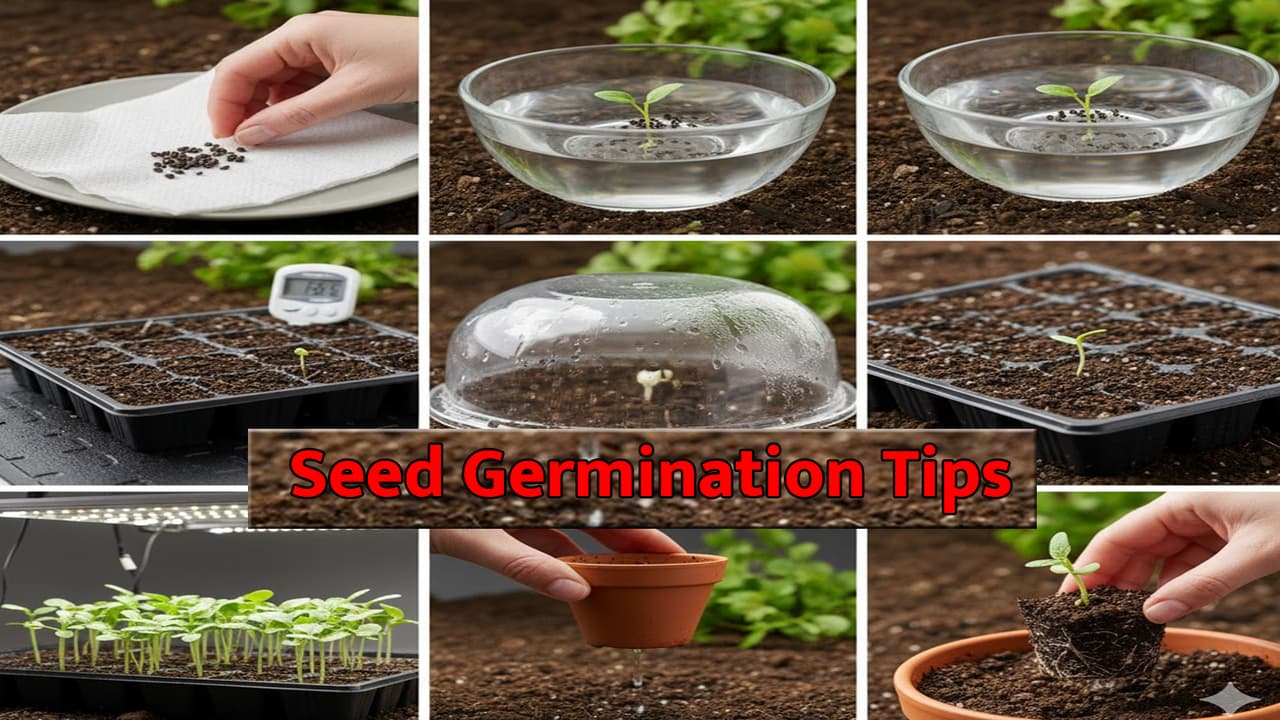
Seed Germination Guide: Plants will emerge from seeds quickly, know 7 super effective tips. Seed Germination 7 Tips Gardening Guide

Fast Germination Hacks: To get fast and successful germination of seeds in spring, proper soaking, scarification, light soil, proper light, right temperature and balanced moisture are necessary. With these 7 easy gardening tips, plants will become strong and healthy.

Spring season is coming and also the right time for sowing seeds. Every gardener wants his seeds to germinate quickly and healthily. Good germination is the strong start to a successful garden. Whether you’re sowing seeds indoors, outdoors, or both—by adopting a few simple habits you can increase both the speed and success rate of germination. Let us know 7 important tips.

Pre-Soak (Soak the seeds first)

Many seeds germinate quickly by soaking them in water before sowing. This process is similar to natural conditions, when snow melts after winter and rain provides moisture to the seeds. All seeds need moisture. Soak the seeds in water for 6-24 hours. If the seeds are very small, do not soak them, they may stick. Soaking for too long can cause lack of oxygen, so be careful.

Scarification (scrape off the hard peel lightly)

The outer peel of some seeds is very hard, due to which water cannot penetrate inside. Scrape such seeds lightly. This process is called scarification. Due to this, water reaches directly inside the seeds and the process of germination speeds up. This method is especially effective for large and hard-coated seeds.

3. Use High-Quality Seed Starting Mix

A light and draining seed starting mix is ​​better than ordinary garden soil. Roots spread rapidly in light soil. Too much fertilizer or nutrients can harm small plants. Good drainage prevents fungal infections and root rot. To make soil, mix perlite, vermiculite, peat moss and coco coir. Prepare a light and airy mix and fill it in the pot.

ensure correct lighting

Every seed needs different light to germinate. Some seeds need light and some need darkness. While sowing seeds, read the information given on the packet. Use of grow lights can be beneficial in indoor gardening.

check soil temperature

Soil temperature is very important for germination. Most seeds germinate rapidly between 20–30°C (68–86°F). Every seed has an ideal temperature. Use a heating mat for indoor seeds, this speeds up germination.

Read more: Vine Flower Plants: Plant 5 flower vine plants in summer, will give a stunning look to the balcony.

Indoor and Outdoor, start wisely

Not every plant can tolerate transplant. Therefore, get information about this also. You can transplant plants like tomato, chilli. Whereas it is better to sow plants like carrot, radish directly in the ground. Starting in the right place makes plants stronger.

Keep moisture, but do not allow water accumulation

Keep the soil moist after sowing the seeds. Do not allow excess water to accumulate. These can rot the seeds. Excess moisture can cause fungal infections.

Also read: Gudhal Plant Growing Tips: Grow hibiscus plant from just one branch, you will get full flowers in 5 months.

Leave a Comment

Seed Germination Guide: Plants will emerge from seeds quickly, know 7 super effective tips. Seed Germination 7 Tips Gardening Guide

Fast Germination Hacks: To get fast and successful germination of seeds in spring, proper soaking, scarification, light soil, proper light, right temperature and balanced moisture are necessary. With these 7 easy gardening tips, plants will become strong and healthy.

Spring season is coming and also the right time for sowing seeds. Every gardener wants his seeds to germinate quickly and healthily. Good germination is the strong start to a successful garden. Whether you’re sowing seeds indoors, outdoors, or both—by adopting a few simple habits you can increase both the speed and success rate of germination. Let us know 7 important tips.

Pre-Soak (Soak the seeds first)

Many seeds germinate quickly by soaking them in water before sowing. This process is similar to natural conditions, when snow melts after winter and rain provides moisture to the seeds. All seeds need moisture. Soak the seeds in water for 6-24 hours. If the seeds are very small, do not soak them, they may stick. Soaking for too long can cause lack of oxygen, so be careful.

Scarification (scrape off the hard peel lightly)

The outer peel of some seeds is very hard, due to which water cannot penetrate inside. Scrape such seeds lightly. This process is called scarification. Due to this, water reaches directly inside the seeds and the process of germination speeds up. This method is especially effective for large and hard-coated seeds.

3. Use High-Quality Seed Starting Mix

A light and draining seed starting mix is ​​better than ordinary garden soil. Roots spread rapidly in light soil. Too much fertilizer or nutrients can harm small plants. Good drainage prevents fungal infections and root rot. To make soil, mix perlite, vermiculite, peat moss and coco coir. Prepare a light and airy mix and fill it in the pot.

ensure correct lighting

Every seed needs different light to germinate. Some seeds need light and some need darkness. While sowing seeds, read the information given on the packet. Use of grow lights can be beneficial in indoor gardening.

check soil temperature

Soil temperature is very important for germination. Most seeds germinate rapidly between 20–30°C (68–86°F). Every seed has an ideal temperature. Use a heating mat for indoor seeds, this speeds up germination.

Read more: Vine Flower Plants: Plant 5 flower vine plants in summer, will give a stunning look to the balcony.

Indoor and Outdoor, start wisely

Not every plant can tolerate transplant. Therefore, get information about this also. You can transplant plants like tomato, chilli. Whereas it is better to sow plants like carrot, radish directly in the ground. Starting in the right place makes plants stronger.

Keep moisture, but do not allow water accumulation

Keep the soil moist after sowing the seeds. Do not allow excess water to accumulate. These can rot the seeds. Excess moisture can cause fungal infections.

Also read: Gudhal Plant Growing Tips: Grow hibiscus plant from just one branch, you will get full flowers in 5 months.

Leave a Comment