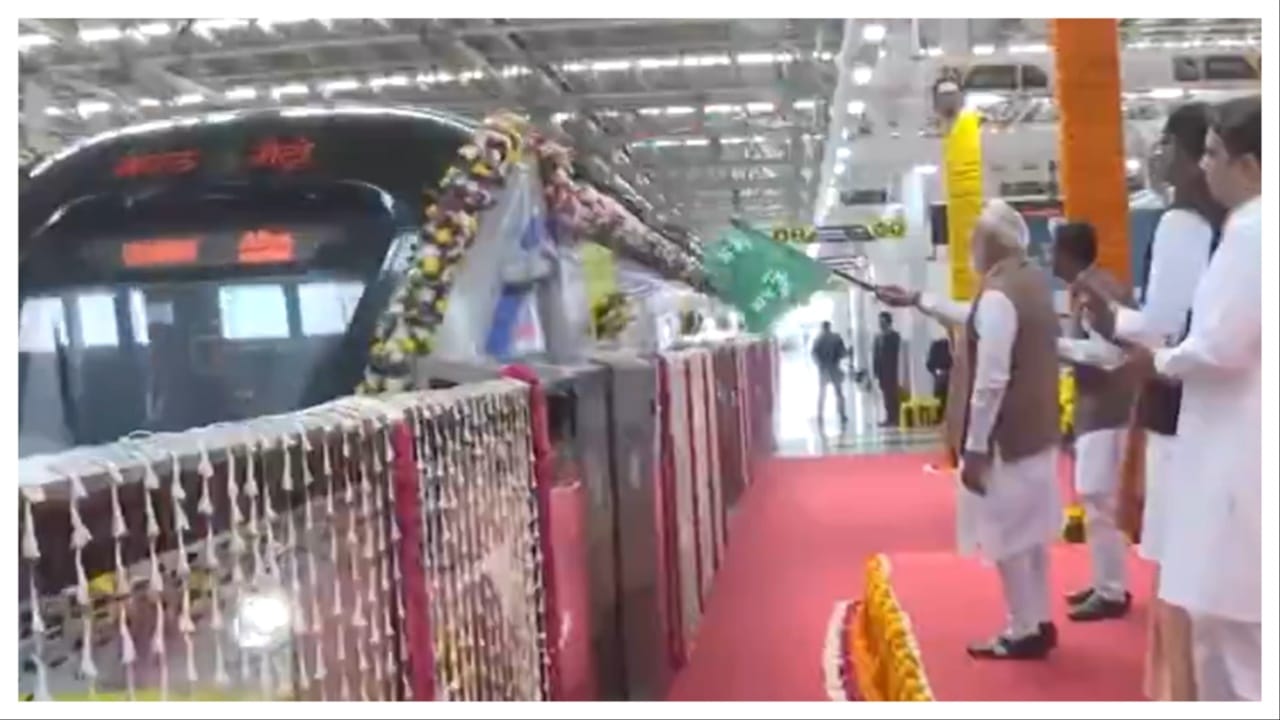
New Delhi: Prime Minister Narendra Modi inaugurated the full Delhi–Meerut Namo Bharat Corridor to the nation at a public event in Meerut on February 22. The inauguration marked the completion of the 82-kilometre high-speed stretch connecting the national capital with western Uttar Pradesh. The project has been closely watched since work began back in 2019.
With the final leg opening for passengers, the train will now run seamlessly from Sarai Kale Khan in Delhi to Modipuram in Meerut. The journey, which often used to take over two hours by road during peak traffic hours, is now expected to be covered in roughly 55 minutes. For thousands who commute daily between the two cities, this shift alone could change the routine and save time.
The Prime Minister is also scheduled to flag off the Meerut Metro which is an urban transit system developed alongside the regional rapid rail corridor.
#WATCH | Meerut, Uttar Pradesh: Prime Minister Narendra Modi flags off Meerut Metro and Namo Bharat Train at Shatabdi Nagar Namo Bharat Station.
From here, PM Modi will undertake a Metro Ride till Meerut South Station. Later, the Prime Minister will inaugurate and dedicate to… pic.twitter.com/uYw8pxetwD
— ANI (@ANI) February 22, 2026
Full corridor ready for commuters
The remaining sections, including the New Ashok Nagar to Sarai Kale Khan stretch in Delhi and the Meerut South to Modipuram station, are set to open completely with this launch. In total, the corridor spans just over 82 kilometres with nearly 70 kilometres elevated and around 12 kilometres underground.
The project is estimated to have cost more than Rs 30,000 crore and aims to ease traffic congestion on the Delhi-Meerut Expressway and surrounding highways. The expected fare for the full journey is around Rs 213, calculated at roughly Rs 2.60 per kilometre.
The Prime Minister laid the foundation stone for the rapid rail project in March 2019. A 17-kilometre priority stretch became operational in October 2023 and the corridor has since been extended in phases until reaching full completion.
Meerut Metro to boost city travel
Alongside the rapid rail, the Meerut Metro corridor between Meerut South and Modipuram will also begin operations. The 23-kilometre route includes 13 stations and is designed for a top speed of 120 kmph, making it one of the fastest metro systems in the country.
Each train is set to have three coaches with a seating capacity of 173 passengers and space for around 700 commuters in total. A common ticketing system will allow passengers to switch between Namo Bharat and the Metro within the city without hassle, as both services share infrastructure in certain stretches.
With modern features such as platform screen doors, emergency alarms and seats reserved for women and senior citizens. The stations also have space marked for stretchers and wheelchairs, along with elevators to make access easy for senior citizens. The new network is expected to make travelling easier for working professionals and businesses alike.