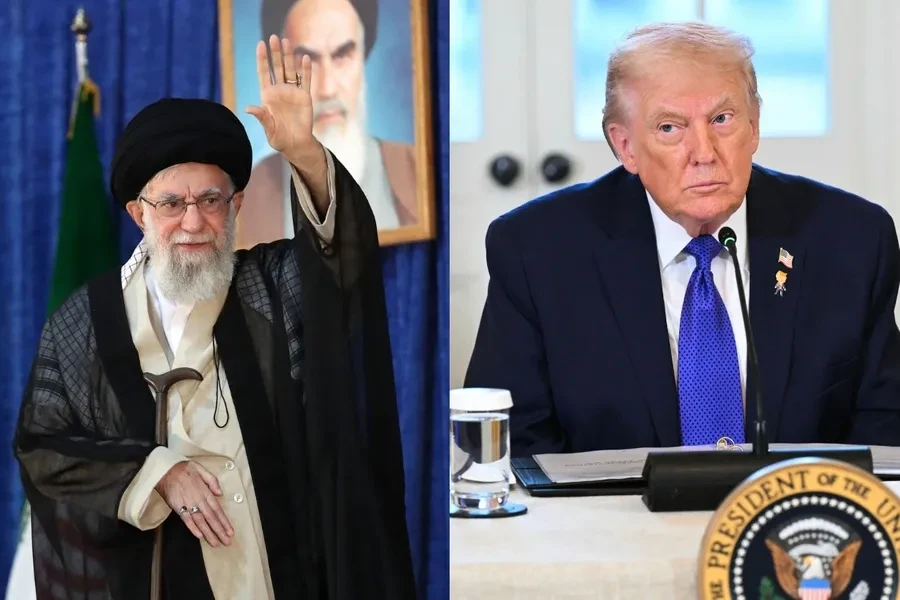
A new report says US president Donald Trump was presented with military options that included targeting Ayatollah Ali Khamenei and his son, Mojtaba, if Tehran refused to restrict its nuclear activity and avert armed confrontation.
According to the Axios, the proposal emerged alongside discussions suggesting the US might allow nto maintain limited nuclear enrichment, if the Iranian government ensured there would be “no possible path” to a weaponised programme.
High-stakes choices set before Trump
The Axios report, citing US officials, described an internal push to set stringent requirements for any future nuclear arrangement. Officials insisted Iran would need to convince sceptics within Washington and across the region that it would permanently abandon warhead development.
One senior official was quoted as saying: “President Trump will be ready to accept a deal that would be substantive and that he can sell politically at home. If the Iranians want to prevent an attack, they should give us an offer we can’t refuse. The Iranians keep missing the window. If they play games, there won’t be a lot of patience.”
Advisers told the outlet that the Pentagon compiled multiple military scenarios should diplomacy fail. One plan reportedly included eliminating the supreme leader, his son, and other members of Iran’s clerical hierarchy. The idea was brought to Trump several weeks earlier, the report said.
Fears of imminent military action
Tensions in the Gulf have escalated sharply, with officials and diplomats warning that both Iran and the are edging closer to conflict. Regional governments, including Iran’s neighbours and US ally Israel, have allegedly concluded that a clash is now more likely than a breakthrough in negotiations. Israel is said to be preparing for the possibility of joint operations with Washington.
US media previously reported that American forces were positioned to strike Iran as early as last weekend, though Trump has yet to decide on any offensive action. One adviser told Axios, “Trump is keeping his options open. He could decide on an attack at any moment.”
Tehran insists nuclear efforts remain peaceful
Talks between Washington and Tehran have stalled, with both capitals disagreeing over enrichment limits, missile activity and sanctions. Iranian Foreign Minister Abbas Araghchi said the two sides had identified overarching “guiding principles”, though the White House insisted significant gaps remain.
Iran is preparing to submit a written proposal, with Araghchi saying a counter-draft would be ready within days. Speaking to MS NOW’s “Morning Joe”, he rejected claims that the US had demanded “zero enrichment” and denied Iran had offered a temporary freeze.
Araghchi said negotiations were focused on ensuring Iran’s atomic programme “is peaceful and would remain peaceful forever”, emphasising that Tehran would take “confidence-building measures” in return for sanctions easing.
He also noted the involvement of Rafael Grossi of the UN nuclear watchdog, who suggested technical steps to guarantee the programme could not be diverted. Those measures may include enhanced inspections and dealing with Iran’s stockpile of highly enriched uranium, some of which had been buried in facilities struck by US and Israeli bombs in previous operations.
Washington demands detailed compliance
US officials stressed that any Iranian proposal must be exhaustive and verifiable. “We will see what he gives us in writing. Based on that, we will see how serious they are. The ball is in their court,” one official told Axios.
Trump has recently signalled openness to political change in Iran, calling such an outcome the “best thing” for the region. His remarks followed comments from Secretary of State Marco Rubio, who warned that a transition of power in Tehran would be more complicated than Washington’s failed bid to unseat Venezuelan leader Nicolás Maduro.
Major US naval deployment in the region
Amid rising tensions, the US has dispatched a substantial to the Middle East. The deployment includes aircraft carriers USS Abraham Lincoln and USS Gerald R. Ford, as well as several guided-missile destroyers – USS Frank E. Peterson Jr., USS Spruance, USS Mitscher and USS McFaul – alongside littoral combat ships USS Santa Barbara and USS Canberra.