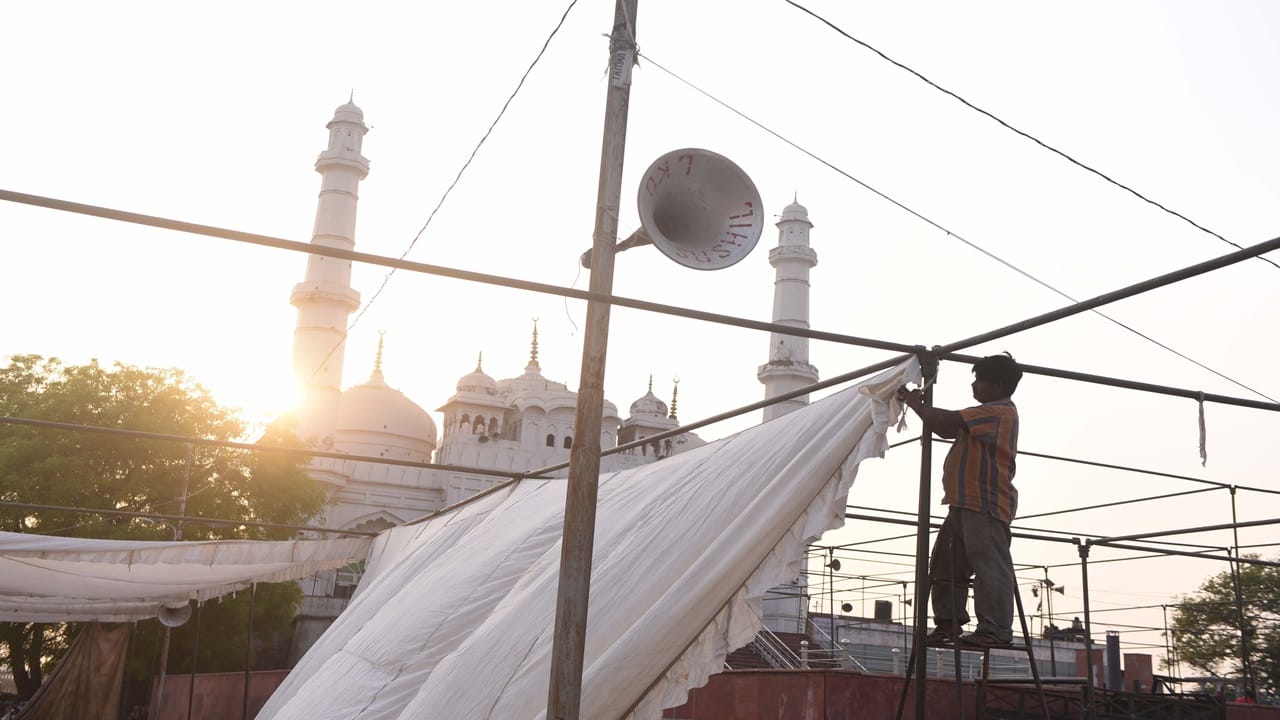
New Delhi: The holy month of Ramzan has begun, with the dawn-to-dusk fasting and special prayers being performed. Amid the observance of religious rituals, the Uttar Pradesh government has reiterated its stand on the use of loudspeakers at mosques during the month. It has clarified that the existing Supreme Court ruling on caps on sound will remain applicable.
What did Samajwadi Party member say
News agency PTI reported that the issue on sound restrictions was raised by Samajwadi Party member Kamal Akhtar in the state Assembly during Zero Hour. He requested the government to permit mosques to make announcements for ‘sehri’ and ‘iftar’.
Akhtar underlined that festivals of all faiths — such as Holi, Diwali, Dussehra, the Kanwar Yatra, along with Christian and Sikh celebrations — are observed across the state, and mosques too should be permitted to use loudspeakers during Ramzan.
He added that only brief announcements are traditionally made from mosques to inform fasting people about the timings of ‘sehri’ (pre-dawn meal) and ‘iftar’ (meal to break the fast).
Akhtar alleged that the government had recently removed loudspeakers from most religious places, and urged the authorities to permit mosque announcements during Ramzan to offer relief to the community.
SC directive highlighted
In a response, Finance and Parliamentary Affairs Minister Suresh Kumar Khanna said the Supreme Court has distinctly directed that loudspeakers must not be used after 10 pm.
The Supreme Court bans the use of loudspeakers, public address systems, and sound-producing instruments from 10 pm to 6 am, except in closed premises such as auditoriums, conference rooms, and banquet halls for internal communication.
Khanna underlined that even during weddings, the police intervene to ensure compliance if complaints are received about loudspeakers being used beyond the prescribed time.
Talking about mosque announcements for ‘sehri’ and ‘iftar’, Khanna said the practice originated at a time when clocks were not widely available and people depended on the position of the sun to estimate the hour.
He added: “Today, almost every person – whether a rickshaw puller, street vendor or vegetable seller – has a mobile phone that shows time. So the necessity is no longer there.”
Khanna pointed out that while the government does not interfere in anyone’s religious beliefs, the rules for the use of loudspeakers have been laid down by the Supreme Court, and “it is not our order”.
However, Akhtar argued that the top court’s order concerned the sound levels and did not ban the use of loudspeakers, and urged the minister to allow the announcements during the holy month.