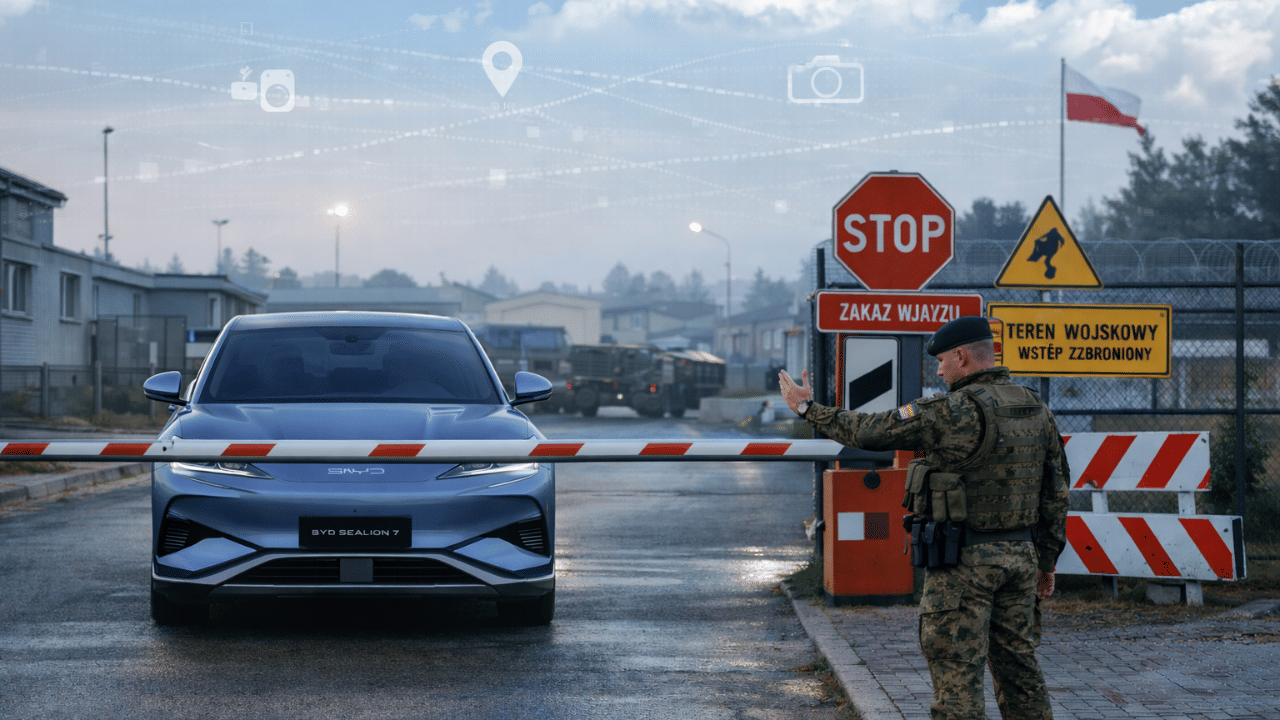
New Delhi: Poland has stopped Chinese-made cars from entering its military bases. The decision was announced by the Chief of the General Staff of the Polish Armed Forces after a review of the risks linked to modern vehicles and their digital systems. Officials said, “uncontrolled acquisition and use of data by these systems.” The step is meant to lower the chances of sensitive data being collected or misused.
The restriction comes as cars are increasingly fitted with cameras, microphones, GPS trackers and internet-connected systems. Polish authorities believe such features could pose a security risk inside defence facilities if not properly controlled.
Chinese cars restricted over data concerns
According to the Polish army, the ban applies to vehicles made in the People’s Republic of China. Government employees have also forbidden “connecting official phones to infotainment systems in motor vehicles manufactured in the People’s Republic of China.”
Colonel Marek Pietrzak said in a blog post that the move is aimed at reducing the risk of uncontrolled data access through vehicle systems. He explained that the rules also cover other vehicles equipped with devices capable of recording position, sound or images. However, such vehicles may still enter protected military areas if certain features are switched off and security measures are followed in line with base regulations.
Commanders and unit heads have been asked, where possible, to arrange separate parking spaces outside military sites for vehicles that fall under the restriction.
The army clarified that the rules will not apply to military facilities open to the public, such as clinics, hospitals, libraries, prosecutors’ offices and garrison clubs. Official military vehicles and equipment are also excluded. The restrictions will not apply during rescue missions or when state and local authorities are carrying out official duties.
Wider security review underway
The Chief of the General Staff has also asked senior authorities to work on legal and technical steps that would allow car manufacturers with advanced monitoring systems to receive information security clearance. The idea is to create clear and fair checks to assess whether vehicles sold in Poland meet security standards needed to protect critical infrastructure.
Pietrzak said the measures are preventive and align with security practices followed by NATO countries and other allies. He added that modern vehicles can collect and transmit data through built-in communication systems and sensors, which makes proper rules necessary when they enter protected zones.
The army described the move as part of a broader update of security procedures in response to changing technology and the need to protect key national infrastructure.