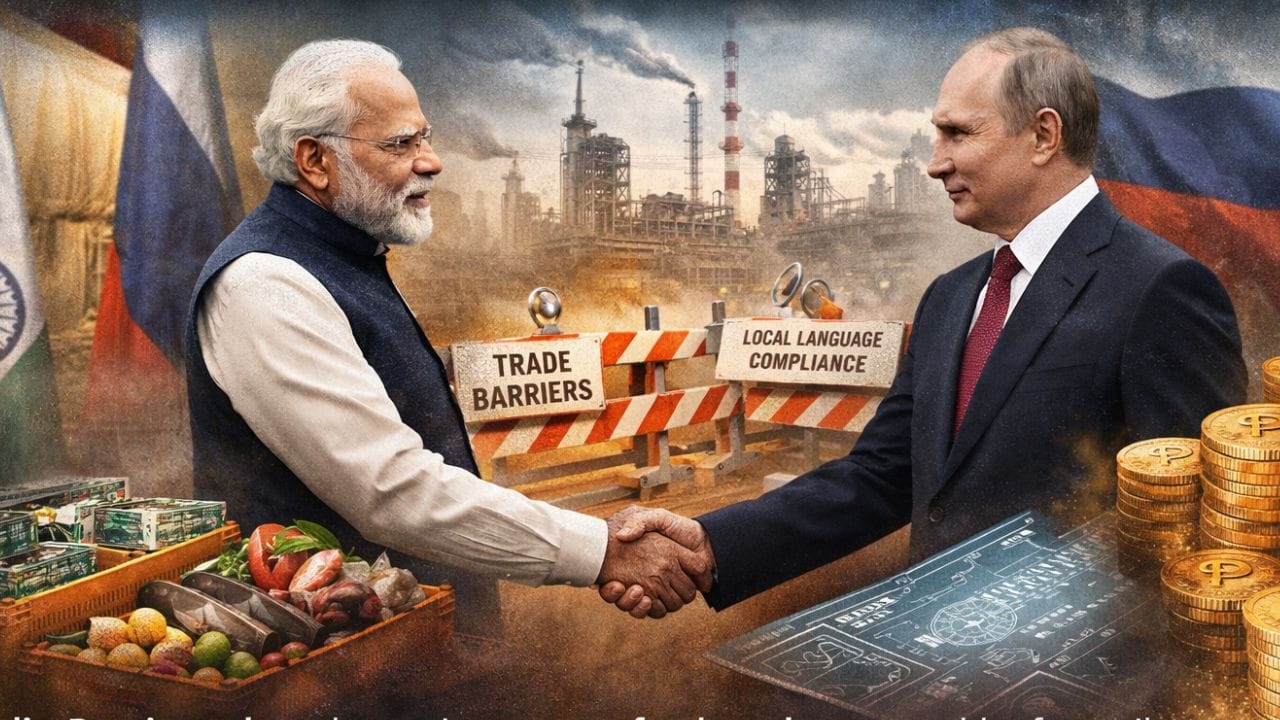
New Delhi: A high-stakes diplomatic tug-of-war over global energy markets intensified on Wednesday as Russia’s Foreign Ministry flatly dismissed assertions from the United States that India has agreed to sever its energy ties with Moscow.
In a sharp rebuttal to recent statements from the Trump administration, Moscow maintained that its oil trade with New Delhi remains a cornerstone of “mutual benefit” and a vital stabilising force for the international economy.
How did the friction start?
The friction centres on a series of bold claims from Washington. Following a pivotal phone call between US President Donald Trump and Prime Minister Narendra Modi, the White House announced a significant trade breakthrough between the two countries. According to the trade deal announced by the White House, US tariffs on Indian goods would be slashed from 50 per cent to 18 per cent.
Crucially, this deal included the removal of a 25 per cent punitive duty that Trump had slapped on India last August, specifically to penalise its consumption of Russian crude. Both President Trump and Secretary of State Marco Rubio have since asserted that, as part of this deal, India committed to a total halt of Russian oil imports.
India’s continued purchase of Russian hydrocarbons
Moscow, however, isn’t buying the American narrative. During a weekly briefing, Russian Foreign Ministry spokesperson Maria Zakharova characterised the US claims as an attempt to “dictate” terms to a sovereign nation. “We have no reason to believe that India has changed its position,” Zakharova stated, according to news agency PTI. She argued that India’s continued purchase of Russian hydrocarbons serves the national interests of both countries and prevents volatility in the global energy sector.
“There is nothing new in the claims of US President Donald Trump, as well as US Secretary of State Marco Rubio, who have grabbed the right to dictate to independent nations,” Zakharova said.
Washington is relying on “coercive” tools
Zakharova did not mince words regarding the US leadership, accusing President Trump and Secretary Rubio of overstepping their bounds. She alleged that Washington is relying on “coercive” tools, including the very tariffs and sanctions recently negotiated, to block independent nations from making their own energy choices. In a broader geopolitical jab, she also criticised Ukraine’s European allies, claiming they are obstructing a peaceful resolution to the ongoing conflict.
New Delhi has maintained a strategic silence
Caught in the middle of this rhetorical crossfire, New Delhi has maintained a strategic silence. While the US celebrates a supposed pivot, India has neither officially confirmed nor denied Washington’s version of the agreement. Instead, Indian officials have reiterated a consistent mantra, i.e, “national interests” will remain the sole “guiding factor” in how the country procures its energy.