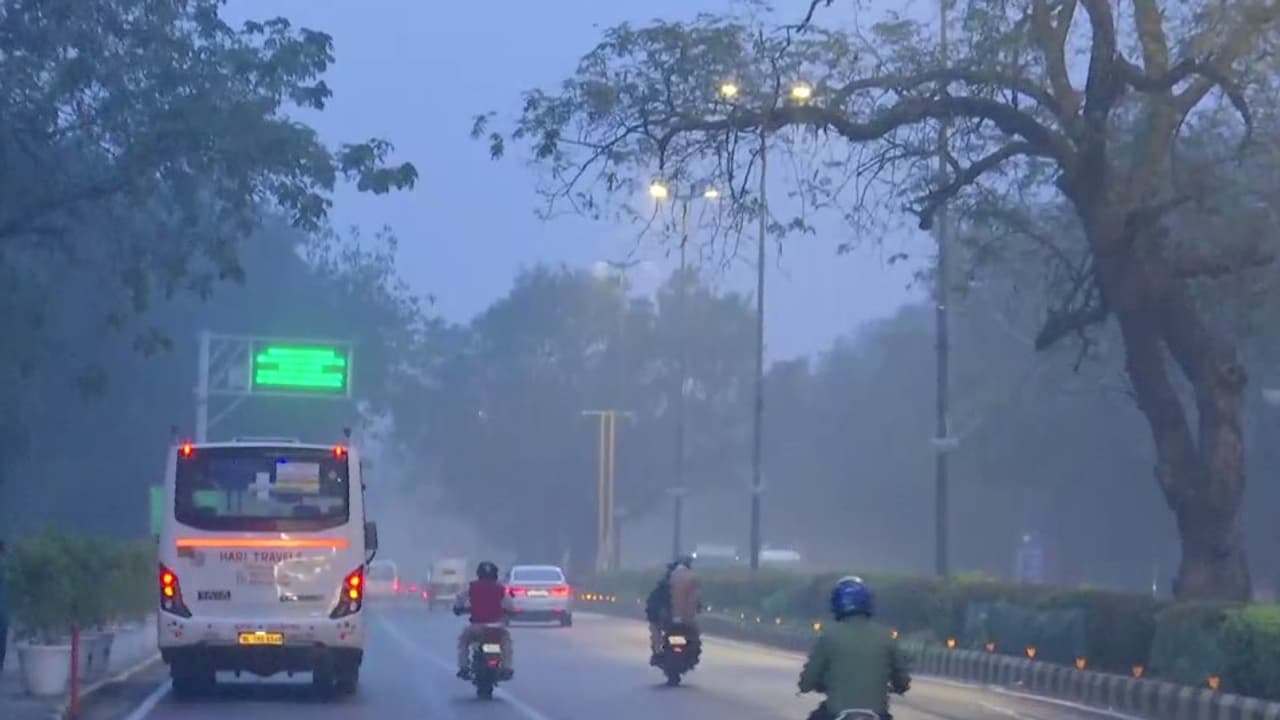
The CAQM has revoked Stage II GRAP measures in Delhi-NCR as air quality improved to the ‘poor’ category with an AQI of 214. The decision was based on favourable weather, and Stage I restrictions will remain to prevent further deterioration.
The Commission for Air Quality Management (CAQM) in NCR and adjoining areas on Wednesday issued an order revoking actions under Stage II (‘Very Poor’ Air Quality) of the existing Graded Response Action Plan (GRAP). However, the notice clarified that measures under Stage I of the GRAP will continue across the National Capital Region (NCR) to ensure that air quality does not deteriorate further.
CAQM Sub-Committee on GRAP revokes Stage-II of the extant schedule of #GRAP in the entire #NCR, with immediate effect. For more details, visit:https://t.co/A7NNwgCN4M#CAQM #GoGreenBreatheClean pic.twitter.com/5cePuPQo5J — Commission for Air Quality Management (@CAQM_Official) February 18, 2026
Review Cites Improved AQI and Favourable Forecast
The announcement followed a review by the Sub-Committee on GRAP, which examined the current air quality and the meteorological forecast for the region. The committee noted that the Air Quality Index (AQI) in Delhi improved due to favourable meteorological conditions, with a reading of 214 at 4 PM today, remaining in the ‘poor’ category. Furthermore, forecasts from the India Meteorological Department and the Indian Institute of Tropical Meteorology indicate that AQI is likely to remain in the poor to moderate category over the coming days.
AQI Readings Across Delhi
The latest reading showed a marginal improvement today after rainfall, compared with the previous day, when the AQI was recorded at 249 at 4 PM. According to data from the Central Pollution Control Board (CPCB), several monitoring stations across Delhi reported AQI between moderate and poor categories. These areas included Pusa (164), Shadipur (259), IGI T3 (165), Lodhi Road (157), DTU (207), Anand Vihar (270), Bawana (247), Sirifort (237), among others.
Understanding AQI Categories
According to CPCB, the AQI, which ranges from 0 to 500, is divided into six categories, each reflecting the level of pollution and associated health risks. An AQI between 0 and 50 is classified as “Good”, indicating minimal or no health impact.
AQI levels from 51 to 100 fall into the “Satisfactory” category, where air quality remains acceptable, though sensitive groups such as children, the elderly, and those with respiratory issues may experience slight discomfort.
The “Moderate” category, ranging from 101 to 200, indicates rising pollution levels that can trigger respiratory difficulties for people with asthma, lung conditions, or heart disease. An AQI between 201 and 300 is considered “Poor”, a range in which prolonged exposure can cause breathing discomfort to most people, not just those with pre-existing health issues. Levels between 301 and 400 are classified as “Very Poor” and pose a risk of respiratory illness, even for healthy individuals, when exposure continues for extended periods. The most hazardous category, “Severe,” includes AQI values from 401 to 500. At this stage, air quality becomes dangerous for everyone. (ANI)
(Except for the headline, this story has not been edited by Asianet Newsable English staff and is published from a syndicated feed.)