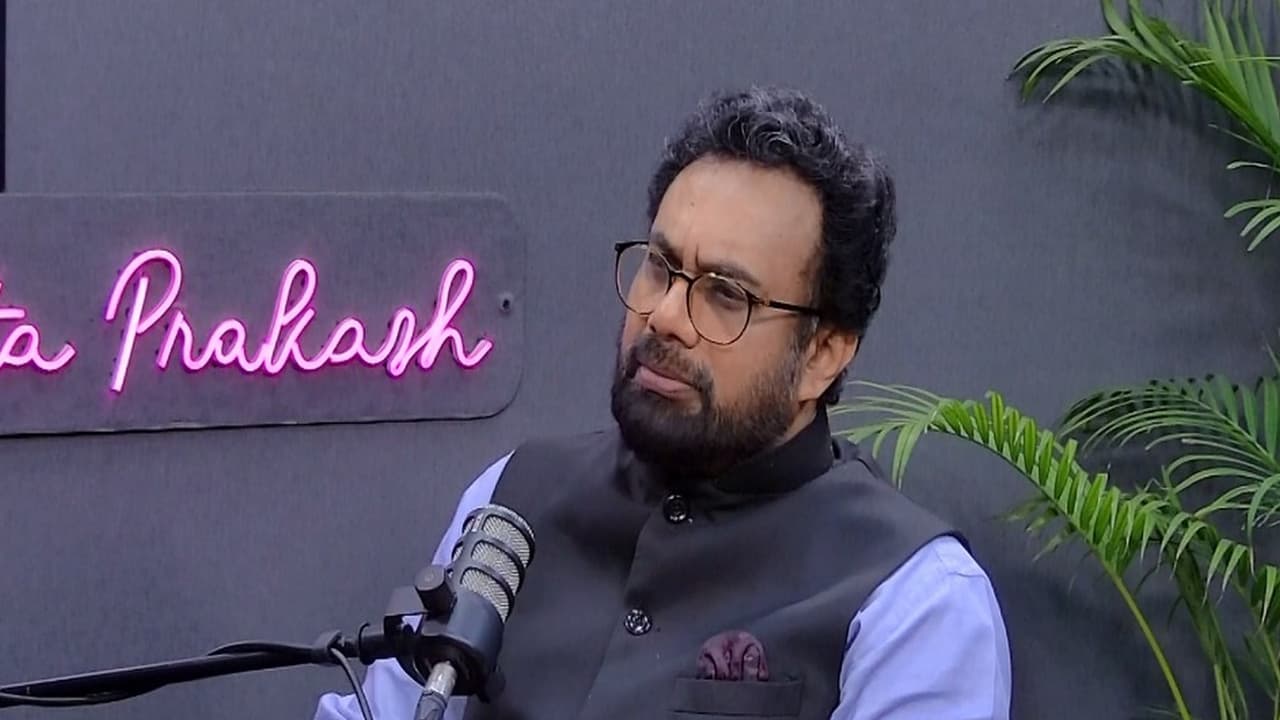
CPI(M) MP John Brittas says mass migration from Kerala is a historical global trend, not a governance failure. He highlights how remittances form one-third of the state’s economy and praises Kerala’s unique social model and values.
CPI(M) Rajya Sabha MP John Brittas has highlighted that the mass migration from Kerala should be understood within the context of global labour patterns rather than as a specific failure of governance in Kerala. Responding to the humorous saying “Even on the moon you’ll find a Malayali tea shop,” which encapsulates how widely Malayalis have migrated across the world, Brittas in an interview to ANI noted that the State’s development has historically been driven by migration and that it’s not a new phenomenon.
“Kerala has become Kerala because of the migration,” said the Communist Party of India (Marxist) MP who hails from Pulikurumba, Naduvil in the Kannur district of the South Indian State. Brittas jokes that Dubai has practically become Kerala’s “15th district” stating that Malayalis have consistently ventured beyond their homeland in search of new horizons ranging from Colombo to Malaysia and countless other destinations.
“I am telling you. Malayaliss have always been moving. If you see the statistics, you will be surprised. One among three and a half Malayalis always move out of Kerala. Either to Delhi or to Mumbai, to Bangalore or to Dubai, Gulf. And we have 14 districts moving. Our 15th district is Dubai. Okay. So it’s not a new thing. I’m not actually worried about people migrating. “Keralites don’t love to be in Kerala. They want to move out. We have been always moving out. Honestly speaking. It’s not a new phenomenon. See, migration has been one of the verticals of Kerala society. We have moved to Colombo. Srilanka, Malaysia, everywhere,” he said.
Economic Backbone of Migration
Further, he said that “undoubtedly one third of Kerala’s economy is remittances from expatriates.” Brittas has argued that the remittances sent home by expatriates from Kerala are not just vital for the State, but also significantly strengthen India’s overall economy. He pointed out that money earned by Malayalis abroad contributes to India’s foreign exchange reserves and enhances the country’s global economic standing. In his view, Kerala’s migrant workforce plays a disproportionate role in India’s remittance inflows, making their contribution both regional and national in impact.
Brittas also emphasized the economic backbone of migration. “One-third of Kerala’s economy comes from expatriates. Around 2 lakh crore rupees, 20-25% of India’s remittances, come from Malayalis abroad. But it’s not luck — it’s skill. We impart education, training, and resilience. If a Malayali succeeds in the US or anywhere else, it’s because of what we’ve built here at home.”
The Kerala Model: Social Capital and Governance
Kerala is a social experiment that has stood the test of time, he said. “Our social indices are a model to the world,” Brittas said. “We have always been moving out — trading with Europeans, Arabs, and Chinese for over 2,000 years. Yet wherever Malayalis go, there is a confluence of cultures, a blending that carries our values with us.”
When asked whether Malayalis carry the political ideology of the Left abroad, Brittas is clear: “It’s not about whether someone is a Communist Party member. What matters is the sense of solidarity and brotherhood we instill in people, whether Christian, Hindu, or Muslim. There is no religious divide – this value system guides Kerala, and it’s part of our social capital, something we are proud of. No other state in India has it today.”
He credits Kerala’s resilience to an enlightened electorate, educated and aware of social and political issues, which ensures influence across all parties. Kerala, he said has “experimented with governance,” starting with land reforms, then education and health reforms, even when critics said they were wasting money on schools and hospitals. That’s why Brittas explains the State has not fallen into traps of state coercion or bureaucratic rigidity. “Our governance style is unique, unlike Cuba or China, where systems are entirely different,” he said.
The Kerala Model, as he frames it, is about social harmony, governance that empowers, and a culture of skill and solidarity. Despite neighbouring States like Karnataka and Tamil Nadu, Kerala has maintained its own path, refusing to reject the Left while constantly innovating to meet the needs of its people. Brittas sums it as “This is the value system of Kerala. It’s why we are proud of our social capital, and why the world should pay attention.”
He further claimed that his party is not opposed to “any good things,” highlighting their significant investments in Kerala’s schools and health centres as proof of their constructive governance. Brittas, who is also a journalist and holds degrees in political science and law, noted that Kerala has a long history of social harmony with relatively peaceful coexistence of diverse religious and social groups. This he said is a core strength that underpins social stability and is integral to its development story.
Debunking ‘Andolan’ Stereotypes
Debunking the stereotype that the Left only indulges in andolans (protests), Brittas asserted that while there is a necessary role for protesting against injustice, it is a global phenomenon that should not be looked down upon. “See, there is a stereotyping of the Left…See, of course, we need to protest against injustice. Undoubtedly, it’s a fact. And protests are not only in our country, in every country. You go to even Western democracies, there are agitations, strikes and protests happening like that. Even in Manhattan, you will see a protest. Sure. So… We shouldn’t be looking down at protest at all,” said Brittas.
“Actually, that’s part of the life. We need to protest against injustice wherever it is happening. That is the culture of our nation, culture of humanity. Now, coming to Kerala, see, when we are in a governing position, We should be bothered about governing the people also. We should bring in such reforms and decisions which would make drastic impact on the life and livelihood of the people, which we do in Kerala. And please don’t have an illusion that we are against all the good things which you say, good house. I mean, we want more, better facilities for the people. We are one party which feels that the workers should be paid more. Everyone should get their own wages, better wages, better remuneration, better facilities, housing, schools, hospitals. Why did we invest hugely in Kerala for having schools and health centres? Wherever you go to Kerala, you have a health hospital there. You have a school there,” he said.
When asked whether Malayalis carry the political ideology of the Left abroad, Brittas was quick to clarify that it’s not about party membership. “Don’t focus on whether someone is a Communist Party member,” he said. “What matters is the sense of solidarity and brotherhood we nurture — a value we want to instill in people, whether they are Christian, Hindu, or Muslim. There is no religious divide in these identities.” He emphasized that this value system is at the heart of Kerala, forming the state’s social capital — a legacy the people take pride in. “No other state in India has this,” he added, highlighting how Kerala’s cohesion and inclusive culture continue to distinguish it both at home and in the diaspora.
Political Landscape: Congress remains the main adversary
Meanwhile, commenting on the political challenge mounted by the BJP in Kerala, Brittas claimed that the party is not a major force in the State and will not make a significant difference in the near future. He asserted that Congress remains their primary adversary in the State’s political arena.
“I don’t think that BJP is a major force in Kerala. And please don’t go by the media rhetoric of people. The BJP will not make any difference in Kerala politics in the near future. I do feel so. Our main adversary opponent is the Congress only,” added Brittas.
Kerala heads into Assembly elections later this year.(ANI)
(Except for the headline, this story has not been edited by Asianet Newsable English staff and is published from a syndicated feed.)