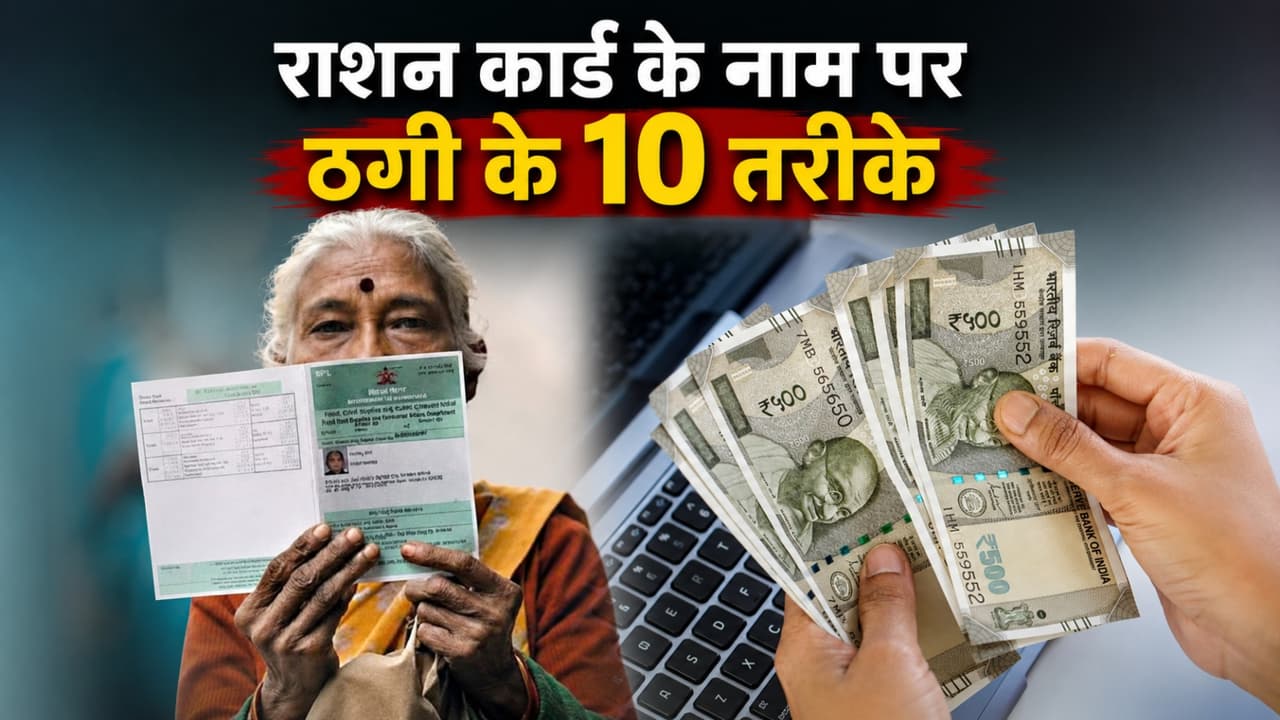
Ration Card Scam: Beware of OTP, fake link and KYC scams happening in the name of ration card. Know 10 common cyber frauds and easy ways to avoid them.
Ration Card Cyber Fraud: If you have received SMS or WhatsApp messages on your mobile like “Get ration card e-KYC done immediately”, “Ration card is about to close”, “Update by clicking on the link”, then be careful. Cyber thugs are now targeting people in the name of government schemes. Especially attempts are being made to defraud ration card holders through OTP scam, fake KYC link and fake calls. In such cases, even a small carelessness can put your bank account at risk. Therefore, before trusting any message, it is very important to know its truth.
10 ways of fraud in the name of ration card, due to which you should be alert
1. Fake link in the name of e-KYC update
By sending a link on SMS or WhatsApp it is said that e-KYC has not been done. On opening the link, your information is asked on the fake website.
2. Fraud asking for OTP
Calling is done asking whether the ration card needs to be updated or verified. Then you are asked to provide OTP. As soon as OTP is received, an attempt is made to access banking or other accounts.
3. Fake government website
Fraudsters create fake websites that look like government websites, where Aadhaar, mobile number or other information is filled.
4. WhatsApp KYC Scam
By sending PDF, APK file or link on WhatsApp, it is asked to download it to save the ration card from being closed. Installing APK files can be especially risky.
5. Fraud through remote access app
You are asked to download remote access apps like AnyDesk, TeamViewer, QuickSupport, etc. in order to gain access to your phone under the pretext of “helping.”
6. Cheating by posing as CSC agent
Some people pretend to be employees of Public Service Center (CSC) and ask for money or personal information in the name of getting KYC done at home.
7. Fake Helpline Number Scam
Fake helpline numbers are posted on Google searches or social media. People call for assistance and are asked for bank or personal information.
8. Panic scam of “ration card will be closed”
Threatening messages are sent – “Card will be closed in 24 hours”, “Update now” so that people open the link without thinking.
9. Processing Fee Scam
It is said that for re-activation of ration card, making a new card or e-KYC, pay the fee online. Then money is defrauded through UPI or QR Code.
10. Personal Data Collection Scam
On the pretext of ration card update, personal information like Aadhaar number, date of birth, mobile number, family information is collected, which can later be misused in identity fraud or other cyber crimes.
Identify fake messages with these 5 signs
- Receiving messages from an unknown mobile number or private WhatsApp account.
- To put pressure on the message to take immediate action.
- Asking to click on a short or suspicious link.
- Asking for OTP, bank details, complete Aadhaar information or PIN.
- Spelling mistakes or use of unusual words in language.
- If any of these signs appear, consider such a message suspicious.
Never share this information
Never share OTP, bank account information, ATM PIN, UPI PIN, CVV, net banking password or screen share of any app with anyone in the name of ration card update or e-KYC. Government departments do not call and ask for such confidential information in the normal process.
What to do if you have given OTP by mistake?
If you have shared OTP or bank related information with any suspicious person, contact your bank without any delay and take necessary security steps. Also check your UPI and internet banking activity. If financial fraud has occurred, immediately report to the National Cyber Crime Helpline 1930 or file an online complaint on the National Cyber Crime Reporting Portal.
If you want to update ration card then follow the right method.
To update e-KYC, name, address or other information in the ration card, use only the official portal of the State Food and Civil Supplies Department, Authorized Public Service Center (CSC) or the office of the concerned department. Avoid entering information through any unknown link found on social media, WhatsApp or SMS.