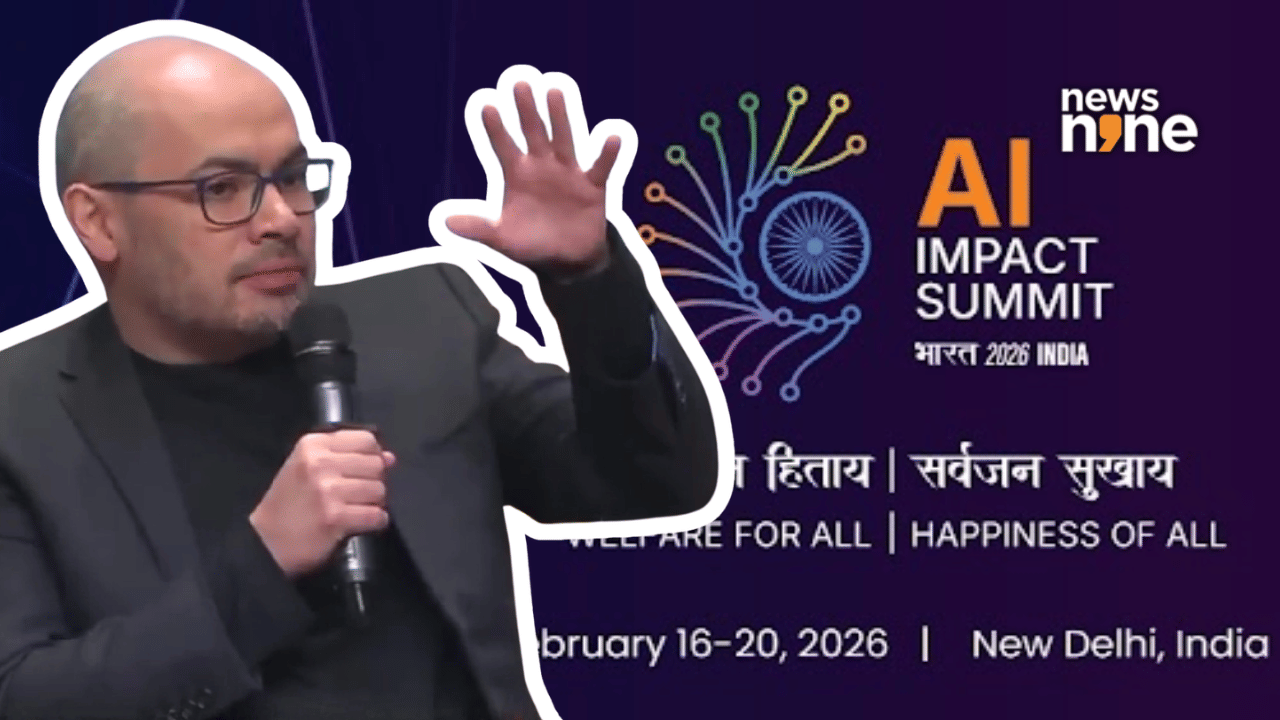
New Delhi: The India AI Impact Summit 2026 is bringing together leading minds in artificial intelligence. Discussions centered on the future trajectory of AI, with a particular focus on bridging the gap between current systems and true general intelligence. Experts explored the essential elements needed to elevate AI to a new level of capability and understanding.
A highlight of the summit was the insightful address by Demis Hassabis, CEO of DeepMind Technologies. His remarks offered a candid assessment of contemporary AI, pinpointing key areas where present technologies fall short of mimicking human-like intelligence.
#WATCH | Delhi: At the #IndiaAIImpactSummit2026, CEO of DeepMind Technologies Demis Hassabis says, “When I look at the current systems and what’s missing from them being a kind of general intelligence, I would say things like continual learning, so learning after they’ve been… pic.twitter.com/aSiN7PZDxB
— ANI (@ANI) February 18, 2026
What’s missing in today’s AI
Demis Hassabis highlighted several critical limitations in current AI systems that prevent them from achieving general intelligence. He pointed out the static nature of most deployed AI. “When I look at the current systems and what’s missing from them being a kind of general intelligence, I would say things like continual learning, so learning after they’ve been trained and put out into the world. In today’s systems, we train them, we do various different types of training on them, and then they’re kind of frozen and then put out into the world.”
The need for online learning and personalisation
Hassabis emphasised that AI should adapt and learn continuously from its environment. He elaborated, “But what you’d like is for those systems to continually learn online from experience to learn from the context they’re in, maybe personalised to the situation and the task that you have for them, and today’s systems don’t do that.” This continuous learning would allow AI to remain relevant and effective in dynamic real-world scenarios.
Challenges with long-term planning
Another significant hurdle identified was AI’s inability to formulate and execute complex, long-term plans. Hassabis noted, “Also, they have difficulty with things like doing long-term coherent plans. They can plan over the short term, but over the longer term, as the way that we plan can plan over years, they don’t really have that capability at the moment.” This limitation restricts AI’s utility in strategic decision-making and project management that requires foresight spanning extended periods.
The problem of jagged intelligences
Perhaps one of the most striking points made by Hassabis was the inconsistency in current AI performance, which he termed “jagged intelligences.” He explained, “I think probably one of the biggest issues is what I would call consistency. So today’s systems are kind of like jagged intelligences. They’re very good at certain things, but they’re very poor at other things, including sometimes the same things.” He provided a compelling example to illustrate this point. “So for example, today’s systems can get gold medals in the International Maths Olympiad, really hard problems, but sometimes can still make mistakes on elementary maths if you pose the question in a certain way. A true general intelligence system shouldn’t have that kind of jaggedness.” This inconsistency reveals a fundamental gap in how current AI generalizes knowledge and applies it across different contexts, even within the same domain.
The discussions at the India AI Impact Summit 2026 clearly set the stage for future advancements, highlighting that the journey to true general artificial intelligence involves overcoming these critical challenges in learning, planning, and consistency.