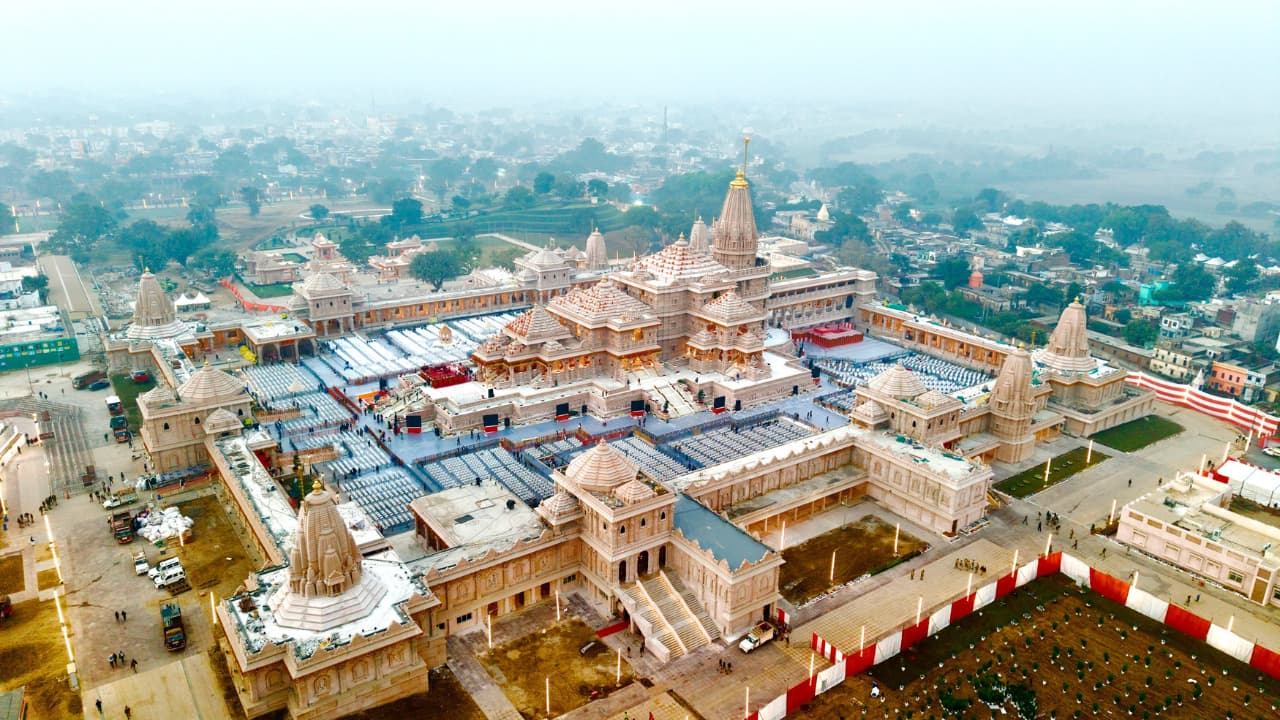
Ayodhya Temple Economy Model: The report of IIM Lucknow has analyzed the major changes in the economy of Ayodhya after Shri Ram Temple. Big claims have been made in the report regarding tourism, investment, hotel industry and employment. Read full report
Ayodhya was once known only as a faith-centered pilgrimage city. Narrow streets, limited markets and seasonal business, this was its economic identity. But after the construction of Ram temple and consecration in January 2024, the picture of the city has changed rapidly. Now this change has also got an educational basis. The latest study report “Economic Renaissance of Ayodhya” by the Indian Institute of Management, Lucknow (IIM Lucknow) has underlined this transformation with data and comparative analysis.
According to the report, religious infrastructure, if combined with well-considered policy, investment and administrative commitment, can act as a catalyst for the regional economy. The ‘Temple Economy Model’ developed under the guidance of Prime Minister Narendra Modi and the leadership of Chief Minister Yogi Adityanath has been seen in this perspective.
Also read: These 7 expressways of UP will be connected to each other, now direct connectivity from north to south.
Economic situation before the temple
The IIM study states that before the construction of the temple, the number of annual visitors to Ayodhya was around 1.7 lakh. The average daily income of local shopkeepers ranged between ₹400–₹500. The presence of national level hotel chains was negligible, railway station infrastructure was limited and the absence of an airport affected connectivity.
Migration of youth was a common trend due to limited employment opportunities. Revenue from tourism was also not contributing significantly to the broader economy of the state. Stagnation was evident in the real estate market.
Rapid economic boom after consecration
After the consecration of Ram Lalla in January 2024, a significant increase in economic activities was recorded. According to reports, more than 11 crore devotees visited in the first six months. Now 5–6 crore visitors are expected annually.
Redevelopment projects worth about ₹85,000 crore are in progress at various stages. The international airport, modern railway station, expanded road network and city beautification works have given a new look to the structure of the city. Steps have also been taken towards developing Ayodhya as a ‘Model Solar City’ through initiatives such as electric vehicles and solar energy.
New scenario of tourism and revenue
The report estimates that tourism expenditure in Uttar Pradesh could exceed ₹4 lakh crore by the year 2025, in which Ayodhya will play an important role. Tax revenue from tourism-based activities is expected to reach ₹20,000–25,000 crore.
According to the Confederation of All India Traders (CAIT), temple consecration generated a business of more than ₹1 lakh crore across the country, in which Ayodhya had a significant share. The arrival of more than two lakh devotees every day has given a new impetus to the hospitality, transport and service sectors.
Investment and brand entry in hospitality sector
According to the report, more than 150 new hotels and homestays have been established. National and international chains such as Taj Hotels, Marriott International and Wyndham Hotels & Resorts have announced expansion plans in Ayodhya. An increase of up to four times has been recorded in bookings on online travel platforms. Artisans and small producers have directly benefited from the increased demand for local handicrafts, religious souvenirs and sculptures.
Impact on entrepreneurship and employment
The IIM report states that around 6,000 micro, small and medium enterprises (MSMEs) have been established or reactivated. It is estimated that around 1.2 lakh direct and indirect jobs will be created in tourism and related sectors in the next 4–5 years. The daily income of small shopkeepers is claimed to reach ₹2,500. In the real estate sector too, an increase of five to ten times has been recorded in property values around the temple, which has increased the interest of investors.
Development concept moving forward from faith
The study indicates that the development of Ayodhya is no longer limited to religious importance only, but it has become a major center of regional economic activities. The report also underlined that the religious heritage-based development model is successful only when combined with long-term planning, transparency and expansion of infrastructure. The Ayodhya experience shows that cultural and religious projects, if implemented with a comprehensive policy framework, can bring about multi-layered economic transformation by stimulating tourism, employment and private investment.
Although the sustainability of any model can only be evaluated over time, current data indicate that a new balance between faith and economy is emerging in Ayodhya, bringing the ancient city to the forefront of mainstream development.
Also read: Good News! Delhi government will give Rs 1 lakh to your daughter, apply online like this