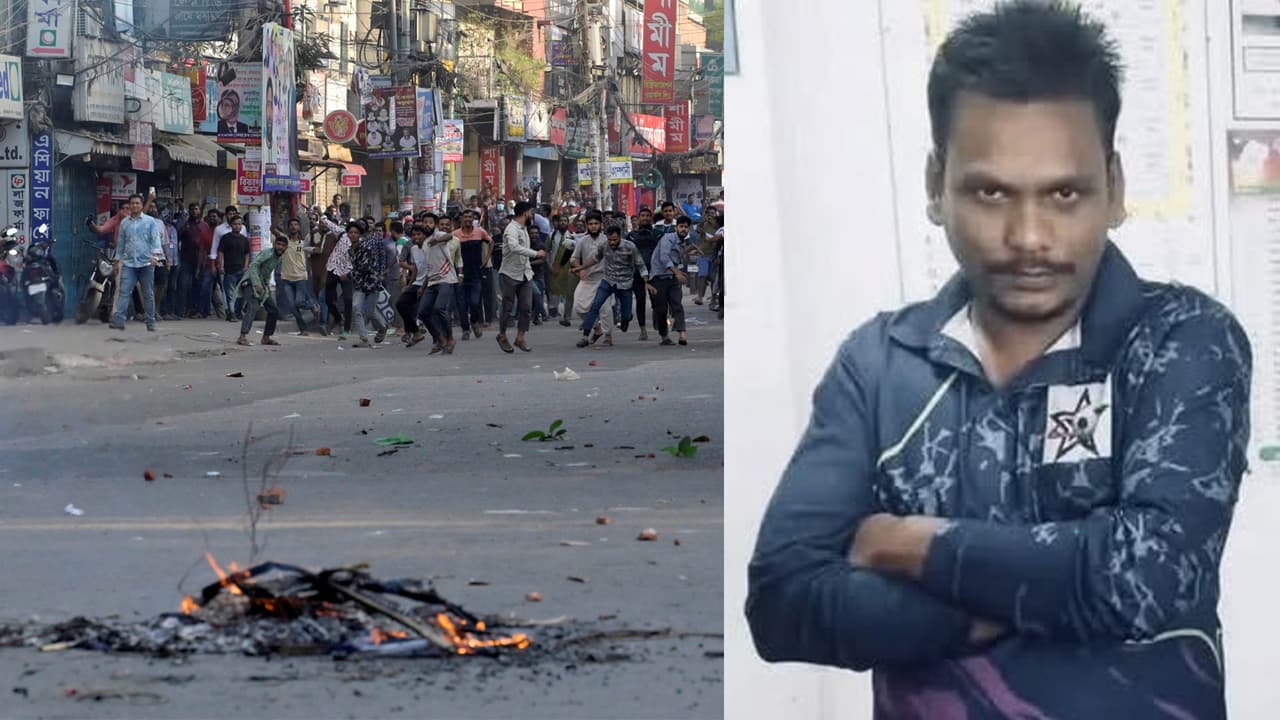
The increasing violence against Hindu minorities in Bangladesh has highlighted the trend of radicalization, blasphemy charges and mob justice. Many killings occurred amid political instability and weak administration. Experts are demanding preventive action and legal process.
Bangladesh Violence: The killings of Hindus across Bangladesh in December 2025 are not an isolated crime, but the latest example of the long-running oppression of the Hindu minority. In less than a month, at least 12 Hindus were murdered, many of them through mob violence and extrajudicial punishment. This shows that when political instability, religious fundamentalism and institutional failure come together, the result is violence against minorities.
Those killed in Bangladesh include Dipu Chandra Das, Amrit Mandal alias Samrat, Dilip Bormon, Prantosh Kormokar, Utpol Sarkar, Jogesh Chandra Roy, Suborna Roy, Shanto Das, Ripon Kumar Sarkar, Pratap Chandra, Swadhin Chandra and Polash Chandra. Although authorities have attempted to portray each death as an isolated criminal incident, the overall pattern clearly appears to be systemic weakness rather than coincidence.
deep roots of fundamentalism
The increasing attacks on Hindus in Bangladesh indicate that the roots of religious fundamentalism have deepened in the social and political structure of the country. Persistent anti-India rhetoric and communal speeches have created an environment in which the minority community feels unsafe. In public debate, hostility towards Hindus is not being presented as bigotry but as “opposition to ideology”. This is blurring the line between political mobilization and communal intimidation. The language of change and student movements has at times been used to push agendas that have allowed radical groups to become openly active. This has had a direct impact on the Hindu minorities of the country.
Blasphemy charges and pattern of mob violence
Blasphemy charges were leveled in several murders in December. Such allegations often come without concrete evidence, formal complaint or investigation. Yet these become a medium to incite the mob and justify violence. In some cases, victims were also accused of extortion or criminal activities, but in most cases the legal process was not followed. Instead of arrest and investigation, the mob took the form of “instant justice”, which is a serious challenge to law and order.
Mymensingh and Rajbari incidents
The murder of Dipu Chandra Das, a Hindu textile worker in Mymensingh district, took place in a similar environment. He was accused of allegedly making offensive comments about Islam in the workplace. The mob attacked them, tied them up and set them on fire. Later investigation found no concrete evidence of blasphemy. It shows how quickly allegations without verification can escalate into deadly violence. Similarly, Amrit Mandal was beaten to death in Rajbari district. Authorities later denied any communal angle and emphasized his alleged criminal past. Nevertheless, the deaths at the hands of mobs rather than arrests reinforced the perception within the Hindu community that minorities often do not receive equal protection of the judicial process.
Political instability and administrative pressure
These incidents occurred at a time when there were massive protests and political instability in the country. This put pressure on law and order and administrative capacity in many districts. Like the previous period of unrest, this time too the Hindu community appeared to be in a more sensitive situation. They either faced organized attacks or were considered soft targets due to lack of political protection.
Religious politics and identity-based mobilization
In recent years, radical Islamic groups and their affiliates, including student organizations, have increasingly emphasized religious nationalism to garner electoral support. When issues of solid governance and development weaken, identity-based politics intensifies. In such an environment, the Hindu community easily becomes the target of polarized politics.
Repeated Pattern
According to analysts, violence against Hindus in Bangladesh can be seen as a repeating pattern. When political instability, religious mobilization and anti-India rhetoric come together, the minority community becomes more vulnerable. Unless religious or criminal charges are dealt with through the legal process and protection of minorities is ensured above political expediency, lasting improvement in the situation will be difficult.