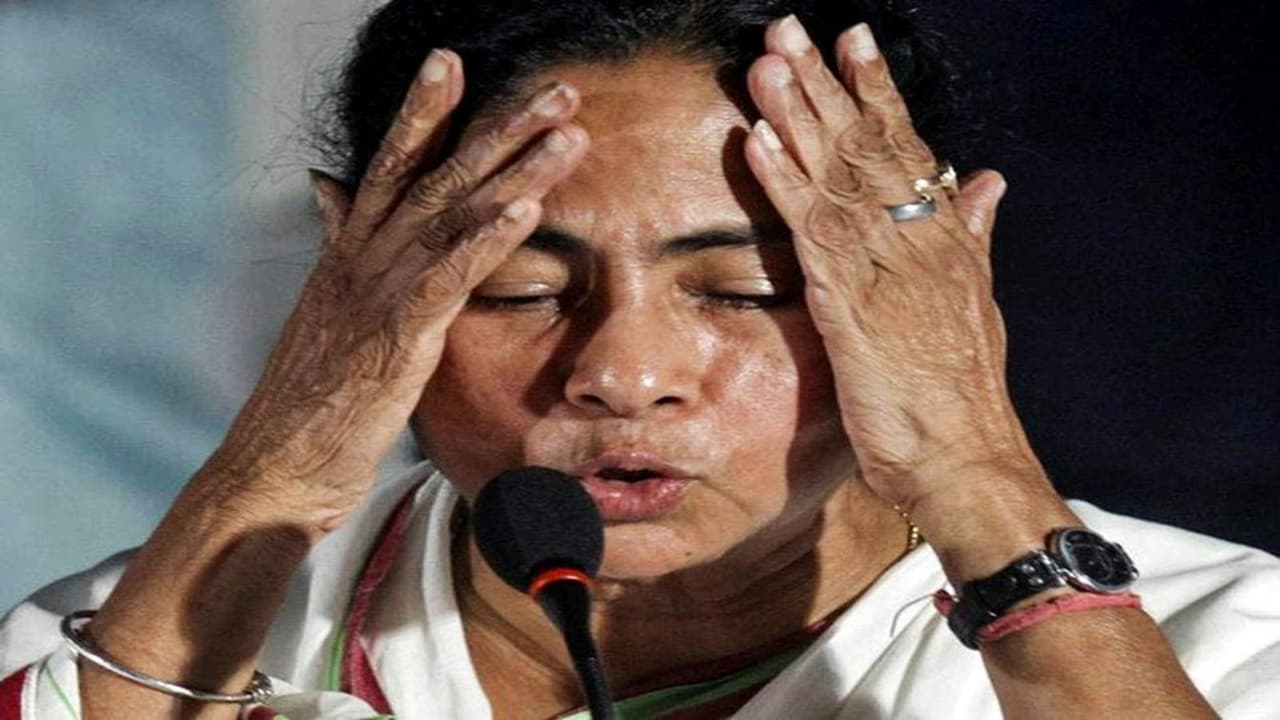
Is Mamata Banerjee’s TMC now starting to disintegrate due to internal rebellion? Is Abhishek Banerjee’s growing influence driving out old loyalists? Will the possible defection of 11 senior leaders create a big explosion in Bengal politics? Have corruption, factionalism and defeat put the biggest crack in “Didi’s fort”?
TMC Controversy: Trinamool Congress (TMC), which ruled the politics of West Bengal for decades, is today going through the most serious phase in its history. Mamata Banerjee’s party, which once destroyed the impregnable fort of the Left with the slogan of ‘Maa, Mati, Manush’, is today itself standing on the cusp of internal war and disintegration. This weakness has arisen not because of any external political opponent, but because of the cracks in the party’s own pillars. The heated debates taking place on public platforms among senior leaders and the spate of resignations have made it clear that the internal structure of Trinamool has become hollow from within.
When the loyalists turned rebellious: Kakoli and Shantanu’s unexpected step
The fire of dissatisfaction that was burning within the party for a long time has now fully erupted. The heated public spat between Lok Sabha MP Kakoli Ghosh Dastidar and Kalyan Banerjee has shattered party discipline. The sudden rebellious stance of Dastidar and her husband Sudarshan Ghosh Dastidar, who stood shoulder to shoulder with Mamata Banerjee since the days of the movement, is a big blow to the TMC. The matter did not stop here; Hours after Dastidar’s open disagreement, another senior leader Shantanu Sen also resigned from his post. When the most trusted faces of the years-old loyal network rebel, it is clear that the crisis is not just of factionalism, but of credibility and trust.
Why did Abhishek Banerjee factor increase internal restlessness?
The emergence of a parallel power center is considered to be the biggest reason behind this disintegration of the party. The growing stature of Mamata Banerjee’s nephew Abhishek Banerjee and his strong hold on organizational decisions have pushed old and experienced leaders to the margins. I-PAC and the politics of data: Veteran leaders allege that the organization that emerged from the movement is now controlled by corporate strategists, data operators and people pursuing ‘presentation politics’. Neglect of old loyalists: Even after the departure of senior leaders like Mukul Roy, Shubhendu Adhikari and Dinesh Trivedi, the party did not learn a lesson. In place of the hard-working workers on the ground, preference was given to glamorous faces and social media stars, which completely disappointed the grassroots cadre.
Fear of power or preparation for the future?
According to sources, at least 11 senior leaders—including four MPs and three former ministers—are now exploring political options. There are also reports of contacts of some leaders with other political camps. All this is happening at a time when the party seems to be losing its political grip after the recent electoral setbacks. Analysts believe that the biggest weakness of Trinamool Congress has been its ideological structure. The party’s organization remained based on power, influence and local networks for a long time. As long as there were victories, this model continued. But as defeat and dissatisfaction emerged, the same structure seemed to be disintegrating.
11 powerful leaders more in line: Will Trinamool’s empire collapse?
The news coming from within the party is extremely shocking and frightening. Insiders claim that at least 11 more senior leaders, including 4 sitting MPs and 3 former ministers, have decided to leave the party very soon. Many of these leaders are in backchannel talks with the ruling camp, while some have distanced themselves from the organization just waiting for the right political opportunity. After the recent election shocks, the illusion that Mamata Banerjee was ‘invincible’ has been broken. The leaders of this party, which is based on lack of ideology and only preservation of power, are now looking for new places to secure themselves. Will Didi be able to unite her disintegrating ‘factory of factions’ again, or is this churning that started after 2026 the beginning of the end for Trinamool Congress? Only time will tell.