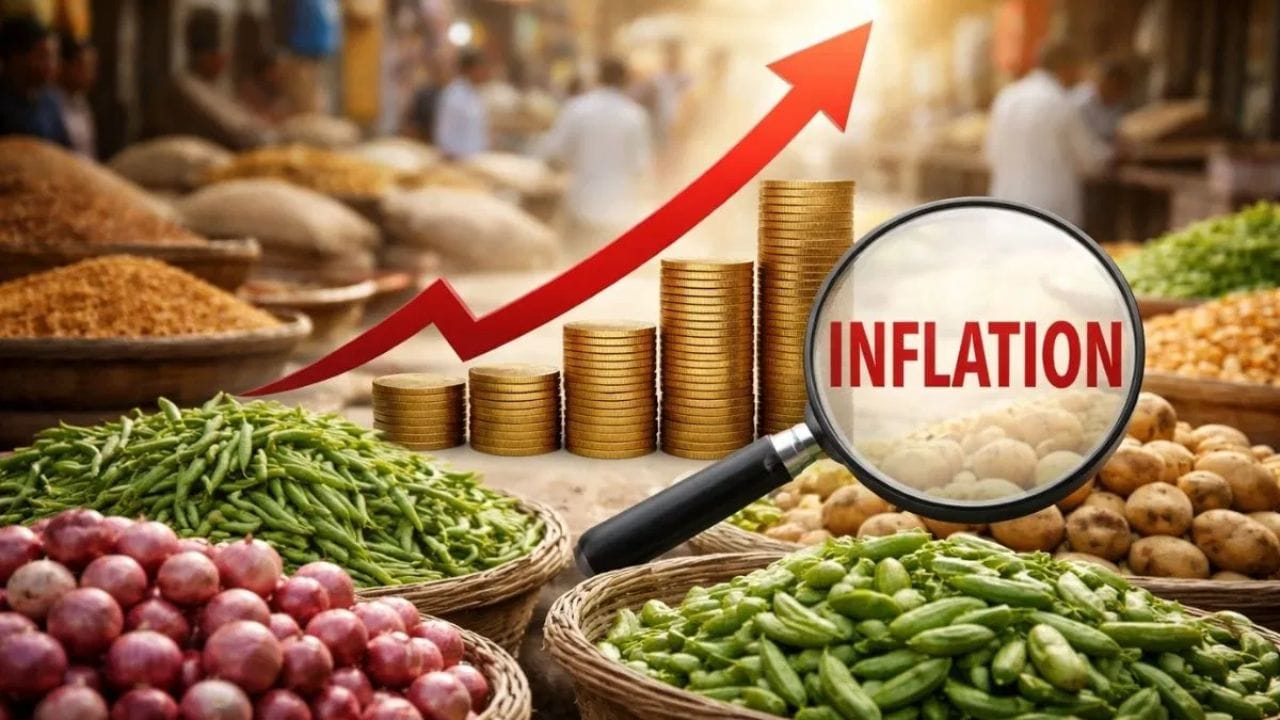
There has been an increase in wholesale inflation in the month of January.
After retail inflation, now the country has faced a big shock on the wholesale inflation front. Inflation rate in the wholesale markets of the country has reached its peak in 9 months. According to the data released on Monday, wholesale inflation (WPI) in India increased to 1.81 percent in January, which was 0.83 percent in December. Due to which wholesale inflation is at the highest level in 9 months. The main reason for the increase in inflation in January 2026 was due to increased prices in manufacturing of base metals, other manufactured products, non-food items, food items and textiles.
The special thing is that there has been a tremendous increase in food inflation. After remaining stable at 0.00 percent in December, food inflation increased to 1.41 percent in January. In a Reuters survey of economists, inflation based on the wholesale prices index (WPI), which has not yet been reassessed, was expected to rise to 1.25 percent annually from 0.83 percent in December.
Retail inflation also increased
According to the first data of the revised Consumer Price Index (CPI) series, taking 2024 as the base year, India’s retail inflation rose to 2.75% in January 2026 due to rising prices of food items and precious metals. Inflation was seen at 2.73 percent in rural areas and 2.77 percent in urban areas. Inflation of primary commodities increased to 2.21 percent in January, which was 0.21 percent in December. Fuel and electricity inflation was negative at 4.01 percent in January, whereas it had declined by 2.31 percent in December.
Increase in kitchen items
There was a rise in the prices of vegetables in January and an increase of 6.78 percent was recorded on an annual basis as compared to a decline of 3.50 percent in December. Onion prices continued to fall, but the rate of decline reduced significantly and it came down to 33.42 percent in January, whereas in December it was 54.40 percent. Potato prices continued to fall and recorded a decline of 38.84 percent in January, which is slightly more than the annual decline of 38.21 percent recorded in December.
Cereal prices continued to decline for the fourth consecutive month and in January they declined by 1.41 percent on an annual basis, whereas in December the decline was 1.18 percent. At the same time, the prices of pulses declined by 11.05 percent in January, which is less than the 13.88 percent decline recorded in December. Milk prices increased by 2.51 percent on an annual basis in January, which is less than the 3.23 percent increase recorded in December.
RBI’s stance on inflation
Earlier, the Monetary Policy Committee (MPC) of the Reserve Bank of India revised its inflation forecast for FY2027 upward, indicating that it had earlier estimated that the pressure on prices would gradually ease. The central bank is now estimating consumer price inflation to be 4 percent in the first quarter of fiscal year 2027 and 4.2 percent in the second quarter, which is marginally higher than its previous estimates.
For FY2026, the MPC has also revised its forecasts. Now core inflation is estimated to be 2.1 percent for the entire year and 3.2 percent for the fourth quarter. In its review in December, the committee had estimated inflation at 2.9 percent for the fourth quarter of fiscal year 2026, 3.9 percent for the first quarter and 4 percent for the second quarter. At the time of its meeting in December, the MPC had reduced its inflation forecast for FY2026 to 2 per cent from 2.6 per cent estimated in October, reflecting a strong downward trend in inflation.