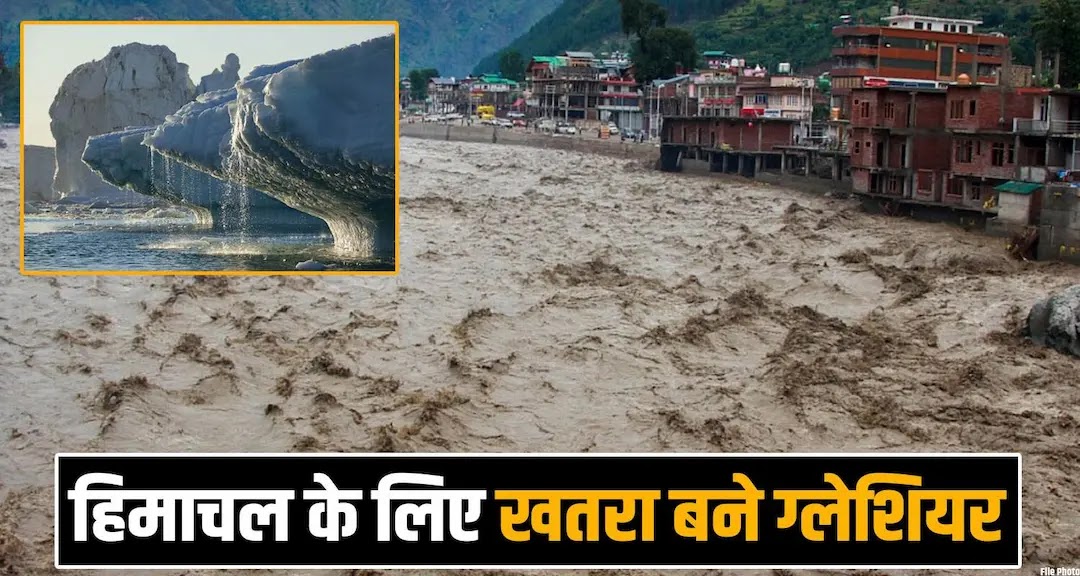
The impact of climate change is now clearly visible in the higher Himalayan areas of Himachal Pradesh. Glaciers that have been frozen for centuries are melting rapidly – which is now creating the possibility of a new disaster.
Melting glacier becomes a threat
Due to the melting of glaciers, four large lakes formed in Kullu, Lahaul-Spiti and Kinnaur districts are now at risk of possible Glacier Lake Outburst Flood (GLOFF). Experts believe that if the banks of these lakes weaken or suddenly a large part of the glacier breaks and falls into the lake, then a devastating flood can occur within a few minutes.
The alarm will sound before disaster strikes.
For the first time in the state, state-of-the-art satellite-based early warning systems are being installed on such lakes. The National Disaster Management Authority (NDMA) has started the process of identifying four high-risk lakes and setting up monitoring mechanisms there.
Many people’s lives can be saved
This step is considered important because the time for disaster in hilly areas is very limited – just a few minutes of warning can save lives. This initiative of the government is considered very important.
Danger looms on four lakes
Let us tell you that due to the melting of the glacier, four lakes of Himachal are in great danger. These lakes are included in this list – Vasuki Lake (Kullu)
Vasuki Lake situated in Parvati Valley of Kullu district. Vasuki Lake is near the Kheerganga area at an altitude of about 14,770 feet above sea level. Spread over an area of about 12.49 hectares, this lake is also sensitive in terms of tourism activities due to its proximity to the trekking route.
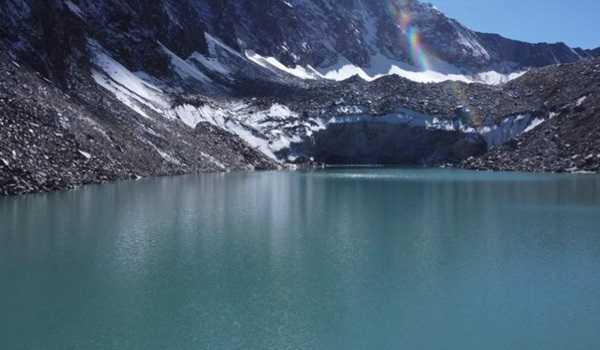
Gipang (Ghepal) Lake of Lahaul-Spiti – which is situated at an altitude of more than 13 thousand feet. This lake is expanding rapidly with an area of 92.09 hectares. Its increasing extent is a matter of concern for scientists, because the expansion of the lake directly reflects the movement of melting glaciers.
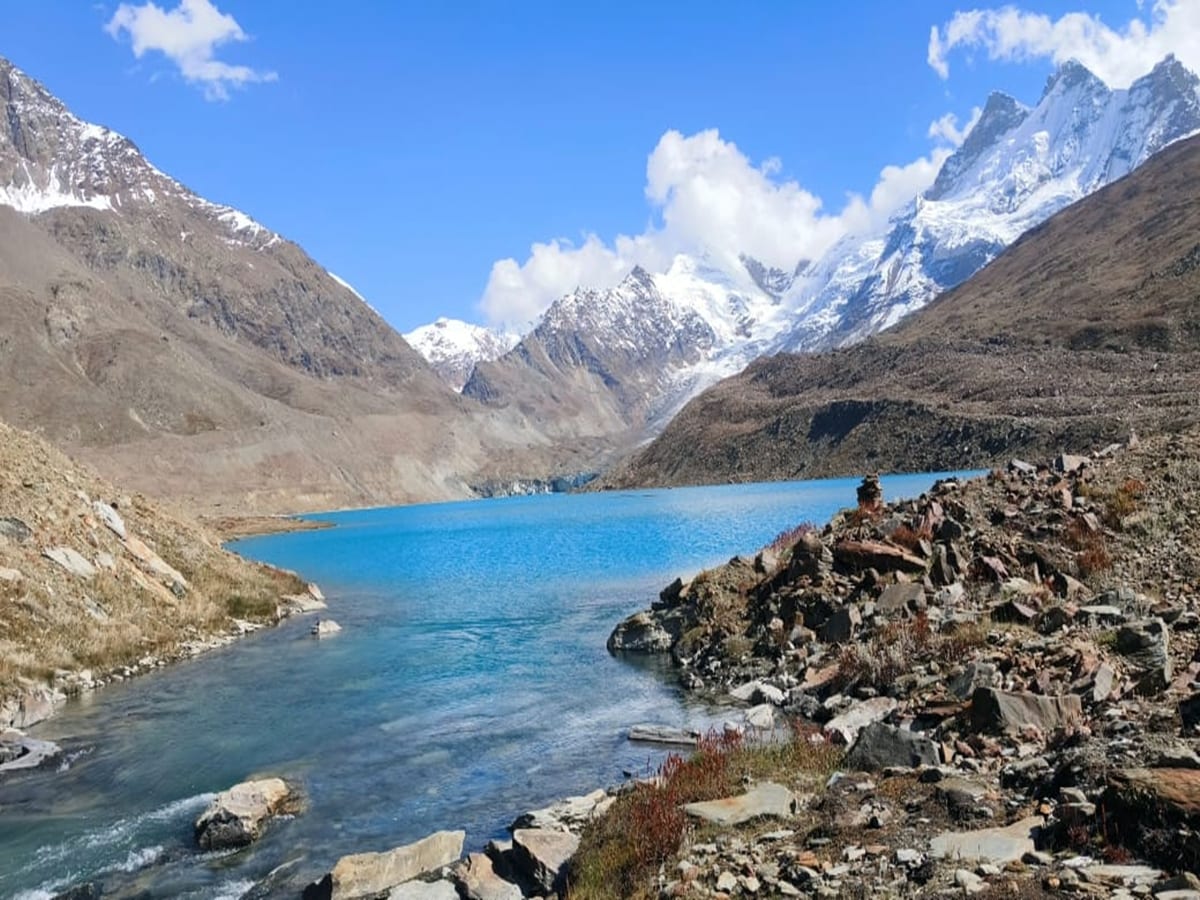
Baspa Lake (18.88 hectares) is situated at an altitude of 15,465 feet in the Sangla Valley of Kinnaur.
 Kalka Lake (Kinnaur)
Kalka Lake (27.89 hectares) located in the Kashang Gad area of Sutlej Basin is also in the potential risk area.

There will be damage due to bursting of lakes
In case of bursting of these lakes, water will flow rapidly into Chandra, Parvati and Sutlej rivers, which can cause huge damage to low-lying areas – villages, roads, bridges and hydroelectric projects.
The proposed early warning system will be completely satellite based. Sensors will be installed along the banks of the lake which will continuously monitor the water level, temperature, pressure and geographical movement. As soon as the water level rises abnormally or a situation like breaking of the glacier occurs, the system will immediately issue an alert. This information will directly reach the Meteorological Department, State Disaster Management Authority and the concerned district administration.
Special systems will be installed near lakes
It is difficult to reach high altitude areas during the winter season, so the installation work of the equipment will be started as soon as the snow subsides. The equipment of the system to be installed in Lahaul region has reached Kullu, indicating that the process is now in the final stages.
Kullu Additional Deputy Commissioner Ashwani Kumar has confirmed that an early warning system will be installed in Vasuki Lake of Parvati Valley. The administration believes that by getting timely warning, relief and rescue teams can be activated and there will be an opportunity to evacuate sensitive areas.
Why are glaciers melting?
According to experts, the average temperature of the Himalayan region has continuously increased in the last few years. Due to this, the rate of melting of glaciers has increased and the size of lakes is increasing. In many places the shores of lakes are formed only by temporary dams of debris and ice, which can break if there is too much pressure.

Danger of flood-landslide
If the lake bursts, the strong current of water carries away rocks, debris and trees, which increases the risk of floods and landslides in the areas below. This is a serious challenge for hill roads, bridges and hydroelectric projects.
195 lakes are in danger
NDMA has identified 195 high-risk glacial lakes under the Glavic Risk Reduction Program in the Himalayan regions. Earlier this number was 56, which was increased after the recent assessment.
There are more than 7,500 glacial lakes across the country, out of which 195 have been categorized as potentially dangerous. These lakes are mainly located in Himachal Pradesh, Sikkim, Ladakh, Arunachal Pradesh, Jammu and Kashmir and Uttarakhand.
Experts believe that technical monitoring alone will not be enough. It is also necessary to make local communities aware, conduct disaster management exercises and control construction activities in sensitive areas.
devastation can be prevented
This is also a warning for these districts situated in the lap of Himalayas and if alertness is taken in time, possible disaster can be prevented. Otherwise, the melting glaciers can turn the calm valleys of the mountains into devastating flash floods in the coming years.