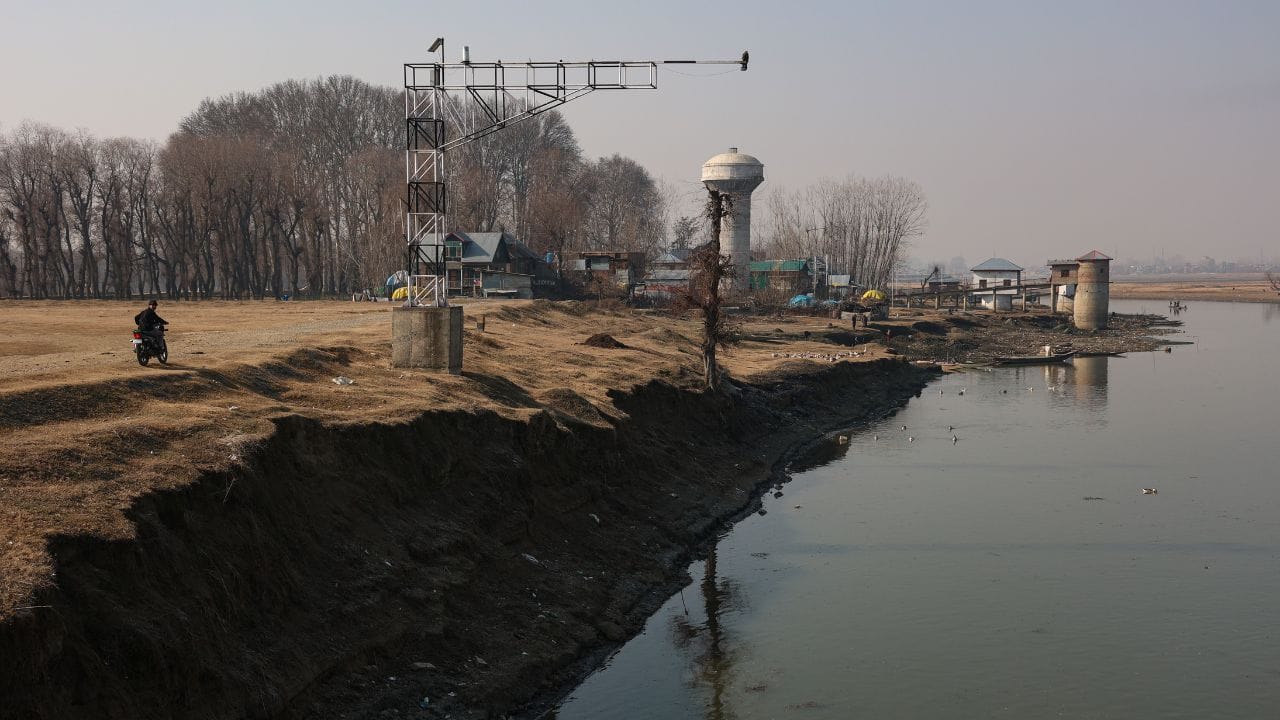
New Delhi: In a significant policy shift, the Jammu and Kashmir government has decided to revive work on the long-pending Wular barrage project months after India placed the 1960 Indus Waters Treaty in abeyance following the Pahalgam terror attack. As revealed by officials the construction will resume shortly in coordination with the Centre, marking a decisive turn in the region’s water management strategy.
The project is also known as the Tulbul navigation scheme and is designed to regulate water flow from the Jhelum River and also improve storage in Wular Lake. For decades, it remained caught in diplomatic disputes and security setbacks. Now, with New Delhi no longer treating the treaty as binding, the administration believes the legal and political hurdles that once blocked the project have eased.
Work on the barrage first began in the 1980s but was halted in 1989 amid rising militancy. It briefly resumed in 2010 before being stopped again in 2012 after terrorists targeted the construction site at Ningli in Sopore.
Local livelihoods at stake
The announcement brings cautious hope for the residents around Wular Lake. Many families depend on fishing and harvesting water chestnuts and lotus stems. In recent years, shrinking water levels and heavy siltation have left large stretches of the lakebed dry, disrupting traditional occupations.
Imtiyaz Ahmad, a fisherman from the area, says winter months have become especially difficult as the Jhelum’s discharge drops. “Our work depends on water in Wular. When there is no water, there is no income,” he said, adding that regulated storage could help restore livelihoods.
Depending on the seasonal flow, Wulhar’s surface area can shrink to about 20 square kilometres or expand to nearly 190. Supporters of the barrage argue that controlled water release would ensure year-round navigation on the Jhelum and provide economic stability to communities from Bandipore to Sopore.
Strategic and political implications
Under the Indus Waters Treaty, Pakistan has rights over the western river- the Indus, Jhelum and Chenab. Islamabad had consistently opposed the Wular project claiming it would allow India to manipulate the water flow downstream.
With the treaty now suspended, Chief Minister Omar Abdullah told the Assembly that work is underway with the Centre on two major water projects – the Tulbul navigation project on the Jhelum and a lift water supply scheme from the Chenab at Akhnoor to serve Jammu city.
Pakistan has warned that stopping water flow would amount to an act of war but India has maintained its stance. Alongside the Wular barrage, several hydroelectric projects on the Chenab have been accelerated.
For Jammu and Kashmir, the revival of Wular is more than an engineering exercise. It is tied to water security, livelihoods and a broader assertion of control over local river resources.