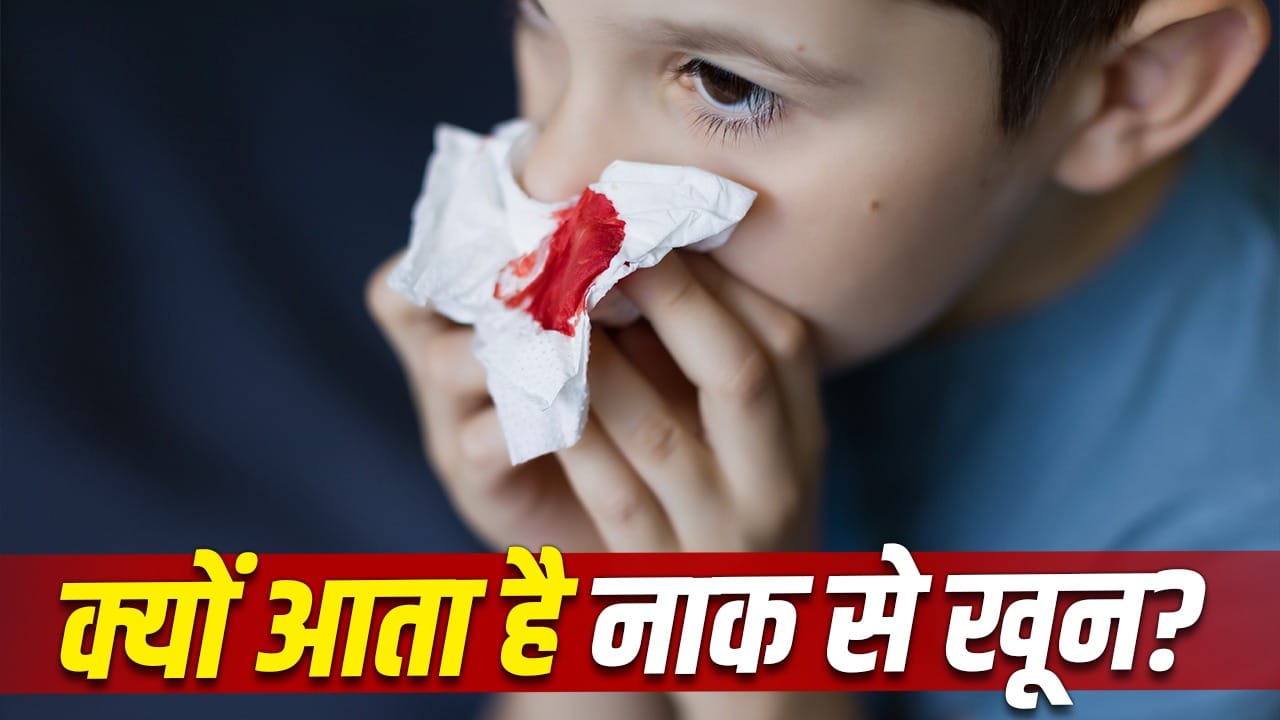
What to do and what not to do in case of nosebleedImage Credit source: Getty Images
Bleeding from the nose is called epistaxis. This problem can happen to a person of any age but more cases are seen in children. Most people start panicking or getting worried after seeing blood coming from the nose. Some people turn their head upwards or backwards. Is it right to do this? TV9 talked to Dr. Mansi Nigam (Consultant Physician, Kailash Deepak Hospital) on this topic.
According to experts, we should not panic at all if this happens. He says that in most cases it is not an emergency and can be handled at home.
If the nosebleed is not being controlled then one should go to the doctor or hospital in that condition. Let us tell you why this happens? Also, what should be done and what not to do in this situation?
What is nosebleed?
The condition of sudden nose bleeding is related to the small blood vessels in the lining of our nose. When they burst, bleeding starts and this common problem sometimes becomes serious. Experts say that the reason for this could be injury, dry air, allergy or high blood pressure. Be it a child or an adult… nose bleeding normally starts from the septum. It separates the chambers of our nose. When nose bleeding occurs, it becomes difficult to stop it. In such a situation, turning the head back can cause blood to flow from the throat to the stomach and vomiting of blood may also occur.
What not to do in case of nosebleed
First of all, sit and lean forward a little. Many people turn their heads back because they think this will stop the bleeding. But this should not be done. This causes blood to go to the back of the throat, which can cause cough, nausea or even vomiting if too much blood is swallowed.
What to do
In this condition, press the soft part of the nose, i.e. the part just below the bone, thoroughly with your thumb and finger. Keep pressing it continuously for 10 to 15 minutes. Do not leave it in between to see whether the bleeding has stopped or not. Because every time the pressure is removed, the blood clot that is forming can break and bleeding can start again.
If you want, you can also apply cold compress by wrapping it in a cloth and placing it on the nose or cheeks. This may help a little. But the most important thing is to keep the nose pressed continuously.
Even after the bleeding stops, for the next few hours, do not blow your nose forcefully, do not put fingers in the nose, do not stuff tissue deep inside the nose, and do not lift anything heavy. Give time to that small blood clot to settle properly, so that bleeding does not start again.