After the death of the Indian in Hormuz, India summoned Iran’s Deputy Chief of Mission. Was it an attack on UAE tanker or an accident? Contradictory claims of Iran and UAE increase mystery and tension.
Strait of Hormuz Attack: The spark of violence that erupted in the Strait of Hormuz, which is the lifeline of global trade, has now engulfed India as well. Following the tragic death of an Indian crew member and injuries to several others in a massive missile attack on commercial tankers in the United Arab Emirates (UAE), New Delhi has taken a tough stance. The Indian government has lodged its strict diplomatic protest directly putting Tehran in the dock on this serious issue.
That scary scene at midnight: What happened on the tanker?
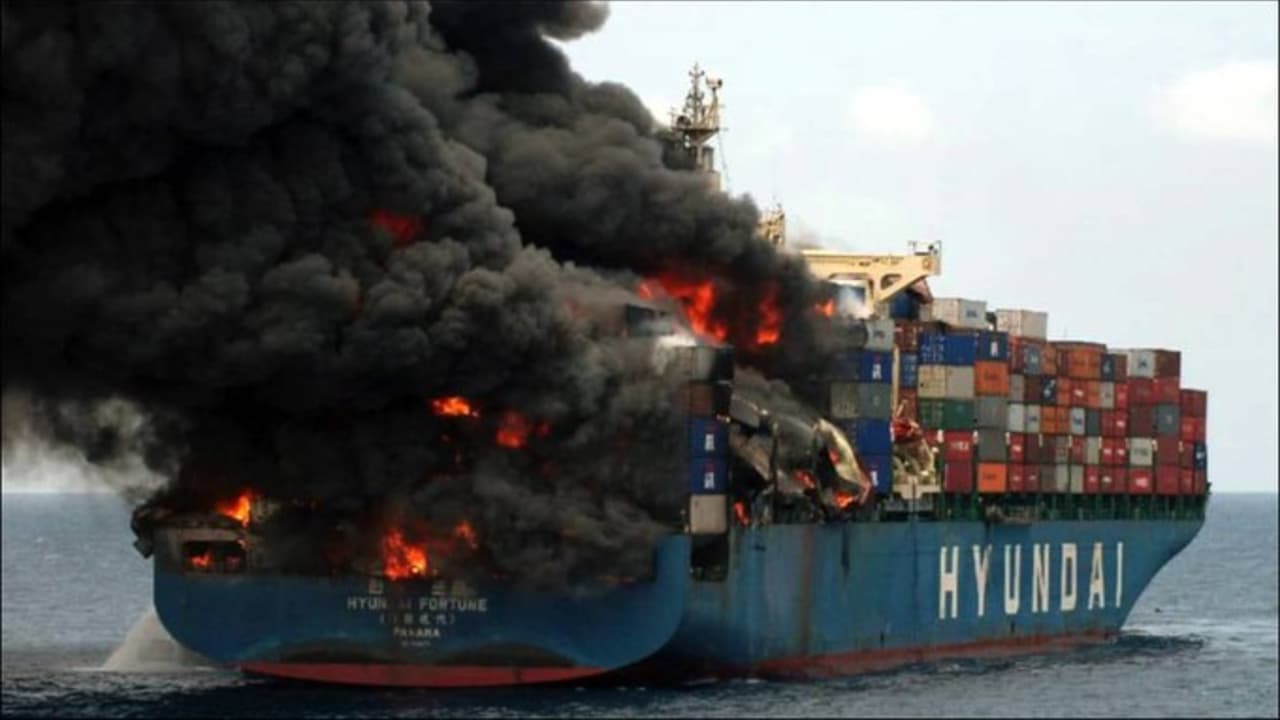
The incident took place in the southern shipping lane of the strait in Oman’s territorial waters, where two UAE national commercial tankers – ‘Mombasa’ and ‘Al Bahia’ – were passing through. Suddenly, breaking the silence, two Iranian cruise missiles fell on ‘Mombasa’. The explosion was so powerful that both the ships caught fire. Amidst this trembling scene, an Indian sailor aboard ‘Mombasa’ died on the spot, while eight other crew members were seriously injured. The injured include six Indians and two Ukrainian nationals, the condition of four of whom remains critical. Although the fire was later controlled, the attack has spread panic in the international maritime corridor. Calling it a “serious violation of international law”, the UAE has clearly said that it has every right to give a befitting reply.
Scroll to load tweet…
Strict action of South Block: Iranian diplomat summoned and sought answers
After this bloody incident, India has taken a big diplomatic step without wasting any time. The Ministry of External Affairs (MEA) on Tuesday summoned Iran’s senior diplomat and Deputy Chief of Mission, Mohammad Javad Hosseini, posted in New Delhi. Expressing deep anger over the death of its citizen, India has asked Tehran to immediately clarify the situation on this attack. This is not the first time that India has had to take such a step. Earlier in April too, Iran’s Ambassador Mohammad Fathali had been summoned following the firing on an Indian-flagged ship. India has been continuously pressurizing Iranian authorities to provide consular access to the Indian crew members detained in the troubled region.
Minefield pretext or deliberate attack? Iran presented a different story
On one hand, while UAE and India are blaming Iran for this attack, on the other hand, the Navy of Iran’s Islamic Revolutionary Guard Corps (IRGC) has rejected these allegations outright. Iran has given a different turn to this entire incident. The Iranian Navy claims that the two tankers deliberately switched off their navigation systems and completely ignored repeated warnings from Iranian maritime authorities. According to Iran, these ships lost their way and entered an active minefield, where they were rendered useless after colliding with the mines. This claim of Tehran is shrouded in mystery and the international community is not ready to believe it.
Scroll to load tweet…
Arena of war of superpowers: Will ‘Washington’s protector’ stop Tehran’s stubbornness?
The Strait of Hormuz has currently become the most sensitive center of the ongoing military conflict between America and Iran. US President Donald Trump’s announcement that Washington will take control of the waterway and act as its “custodian” has added fuel to the fire. In response, Iran’s Parliament has introduced a new law to assert its sovereign management over the waterway. India’s concerns are the biggest in this superpower game. India is most dependent on this sea route for its energy needs (crude oil imports). Also, thousands of Indian citizens are risking their lives working on commercial ships passing through this area. India has once again strongly appealed to all parties to exercise restraint and ensure the safety of international shipping lanes.
Safety of Indian sailors becomes the biggest concern
India has once again appealed to all parties concerned to respect international maritime laws and ensure the safety of commercial vessels passing through the Strait of Hormuz and the Indian nationals onboard. At present, diplomatic activities have intensified between India, UAE and Iran regarding this incident. After the death of an Indian citizen and injuries to several others, this issue is not limited to maritime security only, but has also become linked to India’s foreign policy, energy security and regional strategy. Now everyone’s eyes are on what further diplomatic and international steps are taken on this dispute.