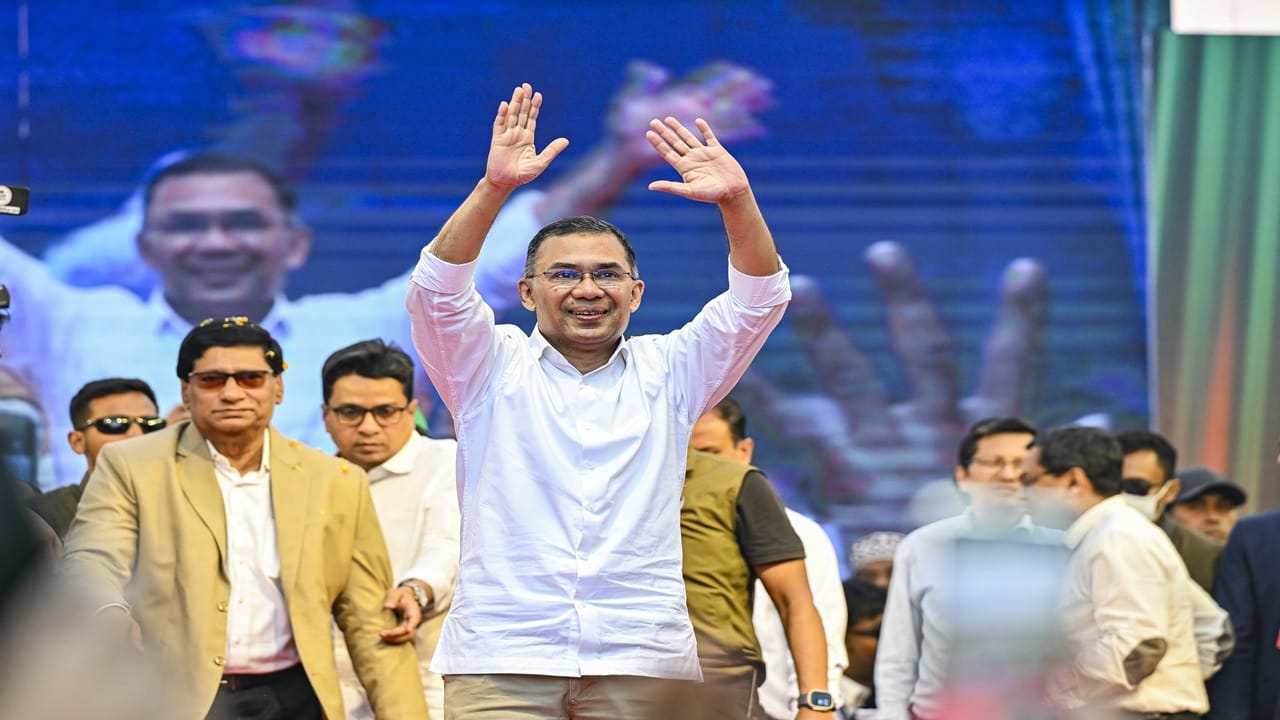
New Delhi: Tarique Rahman-led Bangladesh Nationalist Party (BNP) is set for a landslide victory in the crucial national election, paving the path for the 60-year-old to assume office as Bangladesh’s next prime minister.
It is a massive win for Tarique who returned to the country after 17 years in self-imposed exile in the UK following acquittal of life sentences and corruption convictions imposed during the Sheikh Hasina era. Tarique has been elected from both Dhaka-17 and Bogura-6 with huge margins.
Who is Tarique Rahman?
Tarique is the chairperson of the BNP. Less than two months after returning from exile in London, Tarique has re-emerged as the dominant force in Bangladeshi politics.
Born on November 20, 1965, in Dhaka, Tarique is the eldest son of Ziaur Rahman, the military ruler and seventh President of Bangladesh, and Khaleda Zia, the country’s first woman prime minister. Both played crucial roles in shaping Bangladesh’s post-independence political landscape.
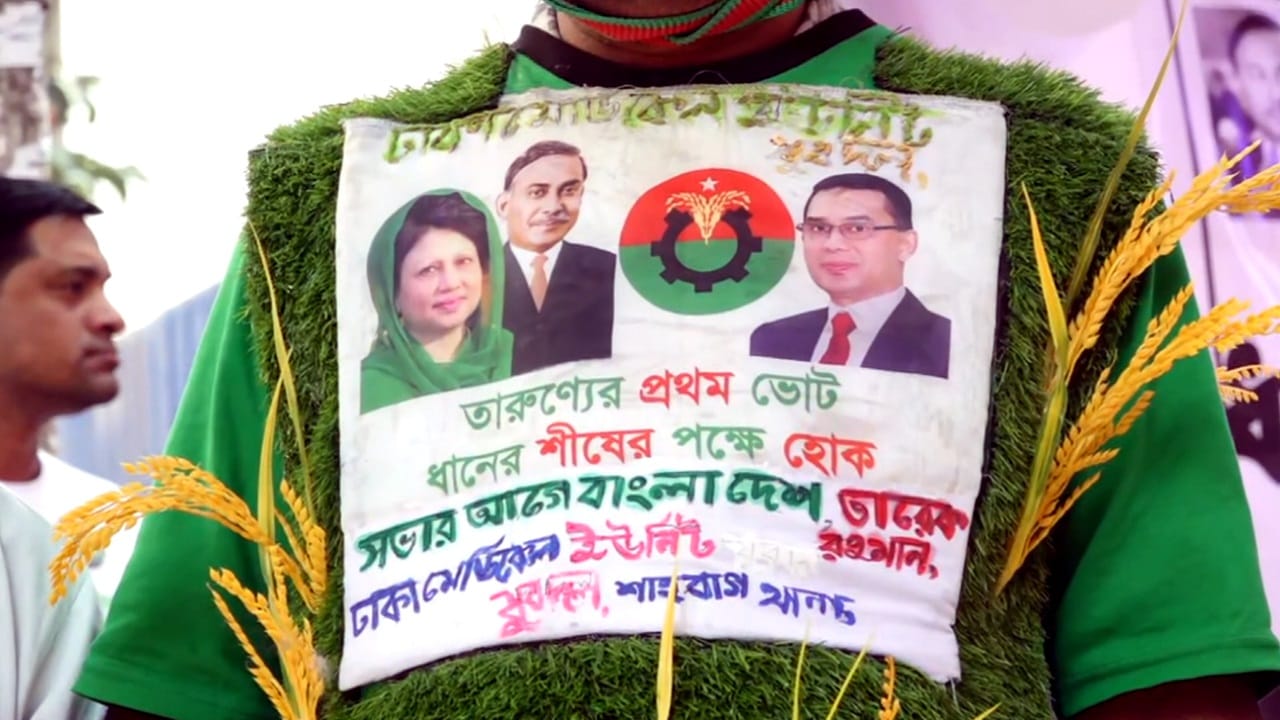
A supporter of the Bangladesh Nationalist Party wears a placard featuring party leaders during celebrations amid the party’s lead in the general elections, in Dhaka, Friday, Feb. 13, 2026. (PTI Photo)
Tarique studied at BAF Shaheen College Dhaka and later enrolled at the University of Dhaka in the Department of International Relations. He later moved away from academics to concentrate on business ventures in the textiles and shipping sectors.
Tarique embarked on his political journey in 1988 as a primary member of the Gabtali upazila branch of the Bangladesh Nationalist Party (BNP) in Bogra. He played an active role in the BNP’s campaign during the 1991 national election, particularly in constituencies where his mother, Khaleda Zia, was a candidate. The elections were held as Bangladesh transitioned from military rule to an elected government.
Tarique climbed through the ranks of the BNP, becoming senior joint secretary general. Later, he served as acting party chief when Khaleda Zia’s imprisonment and declining health kept her out of active politics. Tarique was elected BNP chief after Khaleda Zia’s death in December 2025.
In 2008, Tarique left Bangladesh while facing corruption charges. Before he departed, Tarique submitted a handwritten resignation letter at the airport, stepping down from his role in the BNP and announcing his withdrawal from active politics.
He was convicted in absentia and sentenced to life imprisonment for the 2004 grenade attack on an Awami League rally that killed 24 people and injured Sheikh Hasina. However, between August 2024 and December 2025, following Hasina’s ouster, Bangladesh’s judiciary acquitted Tarique of all charges. He returned to the country on December 12, 2025.
What his win means for India
India has been watching the elections in its neighbouring country very closely. After his win, Prime Minister Narendra Modi conveyed his ‘warm congratulations’ to Tarique on leading the BNP to a decisive victory. “India will continue to stand in support of a democratic, progressive and inclusive Bangladesh. I look forward to working with you to strengthen our multifaceted relations and advance our common development goals,” he said.
I convey my warm congratulations to Mr. Tarique Rahman on leading BNP to a decisive victory in the Parliamentary elections in Bangladesh.
This victory shows the trust of the people of Bangladesh in your leadership.
India will continue to stand in support of a democratic,…
— Narendra Modi (@narendramodi) February 13, 2026
Ahead of the polls, Tarique had admitted that there were “issues” with India and said he would only want “a relationship of mutual respect, mutual understanding”.
India had been enjoying friendly ties with Bangladesh in the 15 years of Sheikh Hasina’s Awami League government. New Delhi–Dhaka relations started deteriorating soon after the ouster of Hasina on August 5, 2024, followed by violence against minorities, especially the Hindu community.
Even though India’s relations with Khaleda Zia’s government were not always predictable, the dynamics are likely to shift under a regime led by Tarique. Tarique has reportedly called for a “reset” in ties with India and expressed his keenness to take up the thorny issues that are undermining their relationship.
He has reportedly vowed to continue counterterrorism cooperation, pursue a resolution to the Teesta water-sharing issue, and ensure the protection of Hindu minorities.
Under the interim government led by Yunus, India’s ties with Bangladesh had hit a nadir. With BNP’s win, New Delhi and Dhaka can initiate dialogues and reach negotiations on vital issues. Differences are more likely to be ironed out under Tarique’s leadership than they would have been had the Bangladesh Jamaat-e-Islami come to power.
India needs to seize the opportunity as Pakistan–China–Bangladesh axis could potentially dilute New Delhi’s strategic influence in South Asia, experts say. For Bangladesh, has to carefully balance its act. India will have to closely monitor how China and Pakistan respond to Tarique’s triumph, while simultaneously addressing border skirmishes, trade disruptions, and concerns over violence against the Hindu minority.