The Video Assistant Referee (VAR) continues to divide opinion across the football world, and the debate has intensified during the FIFA World Cup 2026. While many believe the technology improves accuracy, others argue that crucial decisions remain inconsistent, especially in high-profile matches.
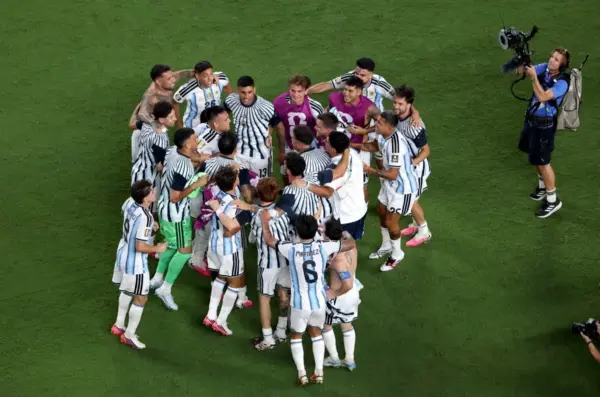
As the tournament heads into the semifinals, Argentina’s run has sparked widespread debate over several controversial VAR decisions. Following the defending champions’ Round of 16 victory over Egypt, members of the Egyptian camp publicly claimed the tournament was ‘rigged’ in Argentina’s favour.
The controversy continued in the quarterfinals after Switzerland’s Breel Embolo was sent off following a VAR intervention, with many fans and pundits questioning whether the review was necessary. Social media has since been flooded with claims that Lionel Messi’s Argentina has been the ‘most protected’ team at the World Cup when it comes to refereeing decisions. However, statistics compiled by Northeastern Global News present a more nuanced picture.
Teams benefiting most from VAR
Based on VAR intervention rates per 100 fouls from the group stage through the Round of 16, Mexico ranks as the team that benefited the most from VAR decisions.
Top 5 teams benefiting from VAR (per 100 fouls):
- Mexico – In favour: 7.8 | Against: 0.0
- Argentina – In favour: 6.7 | Against: 0.0
- Portugal – In favour: 4.6 | Against: 0.0
- New Zealand – In favour: 4.2 | Against: 0.0
- Saudi Arabia – In favour: 3.6 | Against: 0.0
Notably, neither Mexico nor Argentina had a VAR intervention recorded against them through the Round of 16.
Teams most negatively affected by VAR
Croatia tops the list of nations that saw the highest rate of VAR decisions go against them, without receiving a single intervention in their favour.
Top 5 teams most negatively impacted:
- Croatia – In favour: 0.0 | Against: 6.5
- Iran – In favour: 0.0 | Against: 5.4
- Qatar – In favour: 0.0 | Against: 5.1
- Germany – In favour: 0.0 | Against: 4.0
- England – In favour: 0.0 | Against: 3.5
Other teams experienced a more balanced distribution of VAR interventions throughout the tournament.
Why Argentina’s VAR decisions have drawn attention
The biggest controversy came during Argentina’s Round of 16 clash against Egypt in Atlanta. Egypt believed they were unfairly denied a second-half goal after VAR ruled a foul in the build-up. Despite leading 2-0 late in the match, Egypt eventually lost 3-2 after Argentina staged a dramatic comeback. Following the match, Egyptian players and coaching staff argued that officials scrutinized their actions far more closely than similar incidents involving Argentina.
Another contentious moment occurred during Argentina’s earlier match against Algeria, when some fans and analysts argued Lionel Messi should have received a red card for a studs-up challenge. The referee, however, chose not to issue even a yellow card. The latest debate emerged after Switzerland’s Breel Embolo was shown a yellow card following a VAR review under the ‘mistaken identity’ rule, adding further fuel to claims that controversial decisions have repeatedly gone Argentina’s way.
Does the data prove VAR is favouring Argentina?
While Argentina ranks second among teams benefiting from VAR based on intervention data, the statistics alone do not establish bias or preferential treatment. FIFA has consistently maintained that VAR decisions are made independently according to the Laws of the Game, although individual incidents continue to generate intense debate among fans, players and pundits. With Argentina preparing for the semi-finals, scrutiny of refereeing and VAR decisions is likely to remain one of the biggest talking points of the tournament.