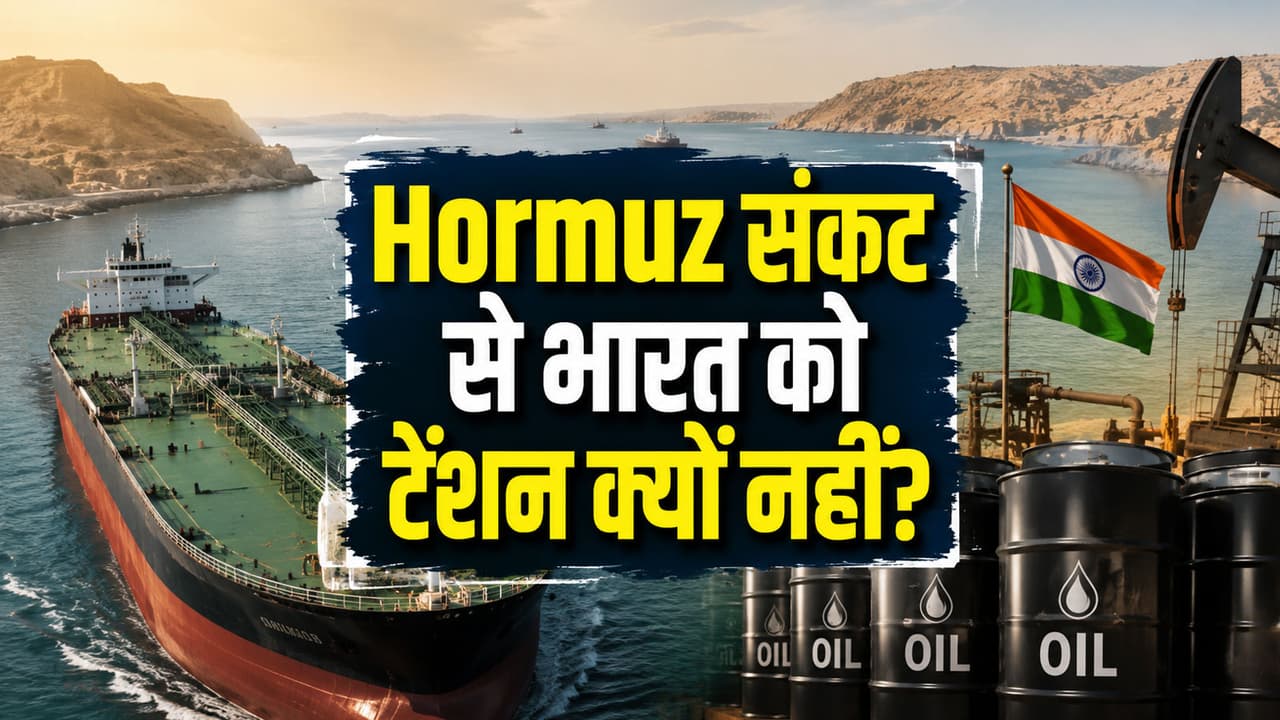
Hormuz Strait Crisis: The threat of closure of the Strait of Hormuz is once again looming, tension has increased across the world, but India is worried this time? Know why…
India New Oil Strategy: Tension has increased once again in the Middle East. The conflict between America and Iran has started again. There were American attacks on Iran on Sunday, Iran also retaliated on Monday and now again it is being threatened that the Strait of Hormuz will be closed. The world has come under tension due to this, but this time India is not worried, because now the situation is completely different from the crisis of March. In such a situation, the question arises that what game plan has New Delhi prepared backstage in the last 3 months, which neutralized the threat of Hormuz? Let’s know the inside story…
Why is India worried about the Hormuz crisis this time?
In the last 90 days, India has changed its entire oil purchasing strategy. Not only started importing oil from new countries, but also reduced dependence on long contracts. This is the reason why today India stands in a much stronger position than in March.
What happened in March?
In March, when there was a problem in oil supply from Gulf countries, India was directly hit by it. The reason was clear, India imports about 90% of its crude oil requirement from outside, that is, about 5 million barrels are supplied from outside every day. Most of this came from Middle East countries like Saudi Arabia and Iraq through long contracts. When supply disruptions occurred, India had no Plan B. The result was that the government had to send Foreign Minister S Jaishankar to UAE in emergency, and then PM Modi himself also had to visit. NSA Ajit Doval went to Saudi Arabia and Petroleum Minister Hardeep Puri had to go to Qatar.
What has India changed now?
After the March shock, India quietly changed its entire strategy. Government oil companies stopped relying only on Gulf countries and made three major changes.
first change
India is now also importing oil from countries like Russia, America and West Africa. In April, India also imported about 12.5 million barrels of oil from Venezuela, which was the highest after February 2020. This means that now India is moving rapidly towards purchasing crude oil not only from Gulf countries but also from Russia, America, West Africa, Brazil, Guyana and other suppliers. This can reduce the risk of the entire supply being affected if there is a crisis in any one area.
second change
Earlier, India used to depend on long-term contracts, in which oil was available at a price fixed years in advance. Now India is purchasing more from the spot market, that is, the oil which is already loaded in the ship is purchased directly at the market rate. The advantage of this is that oil is available immediately when needed and one does not have to rely on any one supplier.
third change
India has now started joining hands with big international trading companies instead of dealing directly with foreign suppliers. Reliance’s Jamnagar refinery bought Venezuelan oil from companies like Trafigura and Vitol. Bharat Petroleum also struck a deal with Trafigura, and Indian Oil even set up its own trading desk with Vitol Group. These trading companies store oil from all over the world, so they can supply immediately in times of crisis.
India is giving petrol to Russia
Since the start of Ukraine war in 2022, India has also been buying a lot of oil from Russia, because Russia was offering oil at cheap prices. In July, India imported about 2.7 million barrels of oil per day from Russia, which is much more than in May. But the interesting thing is that now Russia itself is in trouble. Ukraine is continuously carrying out drone attacks on Russian refineries and oil terminals, due to which there is a shortage of petrol in Russia itself. Even India itself has sold 60 to 70 thousand tonnes of petrol to Russia. For this reason, India did not just rely on Russia, but also opened other avenues.
So will the prices of petrol and diesel not increase now?
According to experts, if the Strait of Hormuz is completely closed for a long time, then worldwide oil prices may still increase, because this route is still very important for global energy trade. But India no longer has the same helplessness as before. India is in a better position to absorb shocks due to multiple suppliers, multiple routes and flexible purchasing.
What next for India?
This effort to strengthen India’s energy security is still going on. Recently, Commerce Minister Piyush Goyal has visited Spain, Belgium and Finland, so that new partnerships can be formed on renewable energy and supply chain. That means, not just oil, India is busy strengthening its entire energy strategy.