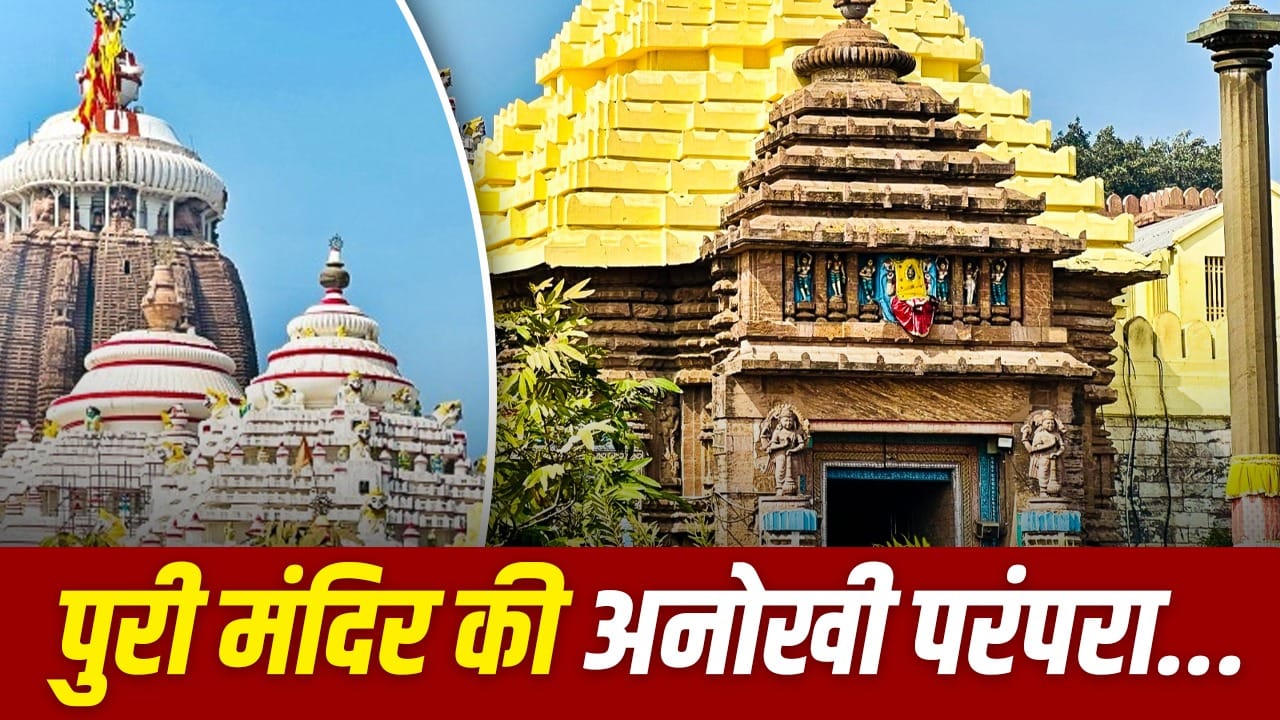
Mystery of Jagannath Dham TempleImage Credit source: Getty Images
Jagannath Rath Yatra 2026: Lord Jagannath Temple located in Puri, Odisha is counted among the most sacred pilgrimages of Sanatan Dharma. Every year lakhs of devotees reach here to have darshan of Lord Jagannath, Balabhadra and Mata Subhadra. Because the worship methods and traditions of the temple also have their own identity across the world. One of these unique traditions is that conch is not blown in the sanctum sanctorum of Lord Jagannath or in front of him. While in most of the Hindu temples the conch shell is blown at the beginning of the puja and during the aarti, the rule is different in the Shrimandir of Puri. Let us know about the religious belief and age-old tradition behind it.
Lord Jagannath’s Rath Yatra will start from 16th July
In the year 2026, the world famous Rath Yatra of Lord Jagannath will start from 16th July and will conclude with Bahuda Yatra on 24th July. During this time, crores of devotees from India and abroad reach Puri and get the benefit of divine darshan of God. On the occasion of Rath Yatra, many unique traditions related to Lord Jagannath become a topic of discussion. One of these is the tradition of not blowing conch shells in the temple premises.
Why conch is not blown in front of Lord Jagannath?
According to religious beliefs, Shri Jagannath Temple The service system of is considered very special and disciplined. Everything offered to God here should be completely pure and untouched. To blow the conch, one has to blow into it through the mouth. In Sanatan tradition, anything touched with the mouth is considered false. For this reason, according to the tradition of the temple, no such object is used in the service of Lord Jagannath, which has been previously touched with the mouth. This is the reason why blowing the conch in front of God inside the temple is considered prohibited.
Is blowing of shankha banned in the entire temple?
It is believed that conch is not blown in the sanctum sanctorum of the temple and during direct service of God. However, the tradition of blowing shankha may be different outside the temple or on other religious occasions. The puja rituals inside the temple are performed according to the traditions that have been going on for centuries.
The worship method of every temple is different
Different temples in India have their own traditions and rules of worship. At some places bells are not rung and at others special types of instruments are used. Shri Jagannath Temple of Puri is also famous all over the world due to its unique policies and service method. Various types of offerings are offered to the Lord in the temple daily and the traditional rules of Sevayat are followed with full devotion. The rule of not blowing the conch is also considered a part of these ancient traditions.
Some unique traditions of Lord Jagannath temple
Jagannath Temple of Puri is famous not only for the tradition of not blowing the conch but also for its many mysterious and unique beliefs. Here fifty-six offerings are offered to the Lord every day. The temple kitchen is counted among the largest temple kitchens in the world, where Mahaprasad is prepared for thousands of devotees every day.
Religious importance of Rath Yatra
Lord Jagannath’s Rath Yatra is not just a religious event, but a great festival of faith, service and equality. It is believed that on this day God himself comes among his devotees and appears before everyone without any discrimination. It is believed that participating in the Rath Yatra and having darshan of the Lord’s chariot brings special virtue.
Also read: Those 10 secrets of Jagannath Temple, which still amaze people!
Disclaimer: The information given in this news is based on religious beliefs and general information. TV9 Bharatvarsha does not confirm this.