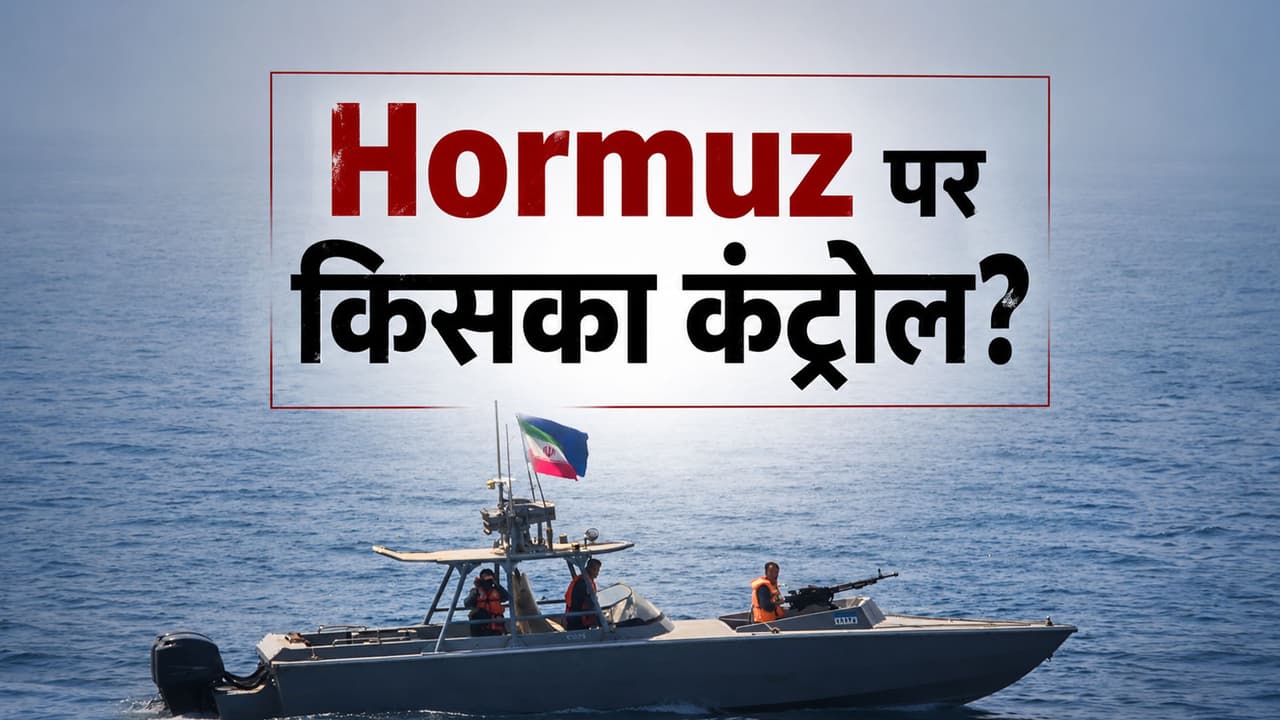
US-Iran War: Why has the dispute between Iran and America on the Strait of Hormuz increased? Know the importance of this 39 KM wide sea route, the claims of both the countries and its impact on the world.
Hormuz Strait Dispute: The war between America and Iran has started once again. On Sunday, the US Army attacked about 140 places in Iran with missiles and drones. Attacks took place in many big cities like Bushehr, Bandar Abbas, Qishm and Ahwaz. In response, IRGC also launched a major counterattack on Monday. Iran has claimed that it has targeted American military bases in Kuwait and Bahrain, where America’s most advanced ‘Patriot air defense system’, fuel tanks and drone control centers were destroyed. But the real reason behind this renewed war is believed to be the Strait of Hormuz. Big leaders of Iran are even saying that this path is more valuable to them than many nuclear bombs. In such a situation, the question is arising that what is there in this 39 kilometer wide sea route, for which both the countries are putting in all their strength? Let us know…
What is the Strait of Hormuz, where is it and why is it so special?
The Strait of Hormuz is a very narrow passage of sea, which is located between the two countries Iran and Oman. Its northern part is adjacent to Iran and the southern part is near Oman. At its narrowest point the route is only 39 kilometers (21 nautical miles) wide. This route is so special because a large part of the crude oil and gas that goes from one country to another through ships in the world passes through this narrow lane. If this route is closed, there can be a crisis regarding oil in the whole world.
Why is there controversy regarding the Strait of Hormuz?
Long ago there was a rule that only 3 nautical miles (about 5.5 kilometers) of sea adjacent to the border of any country was considered to be that country’s. At that time the middle path remained open. Later international rules changed. After this, Iran in 1959 and Oman in 1972 increased the limits of their respective maritime zones to 12-12 nautical miles i.e. about 22 km. When both countries staked their claims on 22-22 kilometers of sea, the narrowest part of the Strait of Hormuz, which is just 39 kilometers wide, came completely under the waters of Iran and Oman. However, so that world trade does not stop, a small safe route (transit lane) was created in the middle for the movement of ships.
Why is Iran claiming this?
The northern part of this sea route is with Iran, while the southern part is with Oman. Several decades ago, the maritime boundaries of both the countries were quite short, but later both increased their maritime boundaries under international maritime rules. After this, the narrowest part of the Strait of Hormuz started coming into the maritime zone of both the countries. For this reason, Iran says that it has rights over the security of this area and the activities taking place here. Recently, Iran also released a new map, in which it has shown its control over this narrow part. Iranian leaders say they will not accept any foreign military intervention.
Why is America not agreeing with Iran?
America’s perspective is completely different. He says that the Strait of Hormuz is not an international maritime route of any one country. Therefore, no merchant ship of the world can be stopped from passing through here. America claims that its navy and fighter planes are present in this area so that global trade remains safe and the supply of oil and gas is not affected. This is the reason why tension between the two countries regarding this area is continuously increasing.
Why is this path so important for the world?
The Strait of Hormuz is counted among the most important sea lines in the world. Every day, a large amount of crude oil and natural gas reaches Asia, Europe and other countries through this route. If ever the movement of ships here is affected, not only America and Iran but many countries including India may be affected. Oil may become expensive, prices of petrol and diesel may increase and the global supply chain may also be affected.