India on Saturday neither confirmed nor denied the Trump administration’s assertion that New Delhi has committed to stop buying Russian oil as part of a bilateral trade deal, with the government reiterating that energy purchases will be diversified on the basis of market conditions and international dynamics to ensure the country’s energy security.
After US President Donald Trump issued an executive order on Friday that removed the 25% punitive tariff imposed on Indian exports last year on the condition that India will not resume Russian oil purchases, the external affairs ministry reiterated a statement from earlier this week that the “supreme priority” in sourcing energy is protecting the energy security of 1.4 billion citizens.
Trump signs executive order announcing removal of 25% penalty tariff on India for buying Russian oil
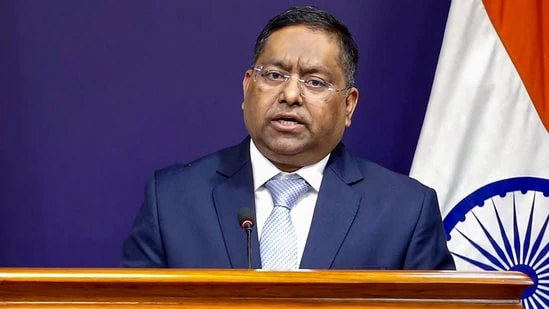
Commerce minister Piyush Goyal, while briefing the media on the India-US trade deal, responded to a question on US assertions about India stopping purchases of Russian oil by saying that the external affairs ministry could provide information on this matter. Subsequently, the external affairs ministry responded to questions by reiterating spokesperson Randhir Jaiswal’s statement at a media briefing on Thursday.
“Insofar as India’s energy sourcing is concerned, the government has stated publicly on several occasions that ensuring the energy security of 1.4 billion Indians is the supreme priority of the government,” Jaiswal had told the briefing.
“Diversifying our energy sourcing in keeping with objective market conditions and evolving international dynamics is at the core of our strategy to ensure this. All of India’s actions are taken and will be taken with this in mind.”
On Monday, when Prime Minister Narendra Modi and Trump unveiled the trade deal that cut US tariffs from an all-time high of 50% to 18%, the US President contended the Indian side had “agreed to stop buying Russian oil”. Trump doubled down on this issue in his executive order, which stated that “India has committed to stop directly or indirectly importing Russian Federation oil [and] represented that it will purchase United States energy products from the United States”.
Trump’s executive order further stated that the secretary of state, along with the treasury secretary, commerce secretary, homeland security secretary, US Trade Representative and other senior officials, will recommend additional action to be taken, including the reimposition of the 25% punitive levy, if India resumes importing Russian oil.
The government is wary of being seen as going against the executive order issued by Trump, especially given the whimsical and transactional decision-making by the current US administration. At the same time, sections of the government believe the US is close to a deal to end Russia’s war in Ukraine – the main reason for the tariffs linked to the energy buys.
Social media posts on Saturday by the PM and Goyal on the “framework for an Interim Trade Agreement” concluded by India and the US made no mention of energy sourcing. An India-US joint statement on the same framework only mentioned that India “intends to purchase” $500 billion of US energy products, aircraft, precious metals, technology products, and coking coal over 5 years.
India’s oil purchases from Russia fell to a 38-month low last December, while energy imports from the US grew almost 31% in the same month when compared to the figures for December 2024. Russian oil accounted for 35% to 40% of India’s total oil imports over the past year, but fell to less than 25% in recent weeks.
People familiar with the matter said India was diversifying energy purchases for geopolitical reasons, though there were no immediate signs of Russian energy purchases dropping to zero. India has also kept open the option of more oil purchases from Venezuela, where the Trump administration is playing a role in regulating the energy industry.