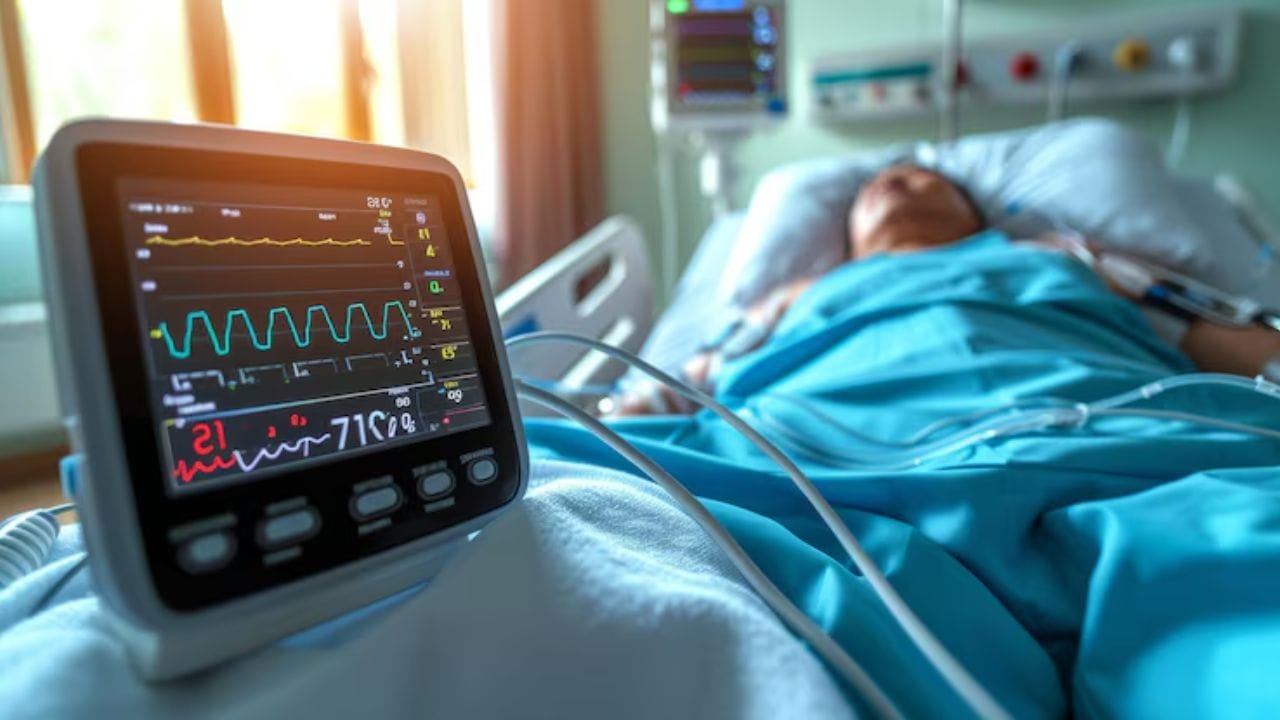
symbolic picture
Generally, if you are away from home and want to keep an eye on any activity in the house, then you install CCTV so that you can keep live updates. Have you thought that this is possible for your health also? India has launched the world’s first doctor-led AI Continuous Healthcare Ecosystem. Its purpose is to monitor your health away from the hospital.
Talking to TV9 Bharatvarsha, cardiosurgeon Dr. Rahul Chandola, the creator of this device, said that such a device is very helpful in early detection of the disease through predictive monitoring and significantly reducing hospitalization.
It is also approved by the FDA (Food and Drug Administration), a US federal agency within the Department of Health and Human Services, responsible for protecting public health by ensuring the safety, efficacy, and reliability of drugs, biological products, medical devices, foods, and cosmetics.
what is this device
Senior Interventional Cardiologist Dr Viveka Kumar told TV9 Bharatvarsh that the world’s first doctor-led AI healthcare ecosystem is designed to provide real-time medical supervision even outside the walls of the hospital.
At the heart of iLive Connect is a small wireless biosensor patch attached to a wearable wristband that continuously captures vital physiological parameters. These include two-lead ECG, heart rate, respiratory rate, oxygen saturation (SpO2), body temperature, blood pressure trends, physical activity and heart rate variability. The data is sent wirelessly to a secure cloud-based platform and then to a dedicated medical command center.
The patient is monitored 24 hours a day
Dr Rahul said that the command center is staffed round the clock by highly specialized doctors who actively monitor the patients in real time. Unlike traditional monitoring systems that respond only after symptoms appear, it includes AI-powered predictive analytics, enabling the detection of subtle physiological changes that may indicate the onset of disease long before clinical symptoms develop.
Medical emergency prevention
Dr. Viveka said that decisions are taken based on the way the data comes to the command center. He told that if someone is unable to sleep and he needs to sleep for a fixed period of time. In such a situation, this device also tells that on a particular day his sleep has been lacking by so many hours. Any medical emergency can be avoided by studying such small health related data. Due to which the need for frequent hospitalization is reduced.
Which patients need more
Dr. Rahul Chandola said that when a patient goes home from the hospital, there is a need for constant medical supervision. In such a situation, this device is capable of detecting any kind of physical deterioration before it occurs. This allows timely medical guidance and prevents it from turning into a serious illness.
What do the statistics say?
According to the information, a study of data of more than 410 patients during a 10-week observational study showed a 76% reduction in frequent hospitalizations. In which risks related to cardiovascular conditions, blood pressure instability, metabolic disorders and post-discharge complications were identified early. This technology has especially benefited senior citizens living alone, patients with chronic diseases and those recently discharged from hospital, for whom the transition from hospital care to home is a critical time.