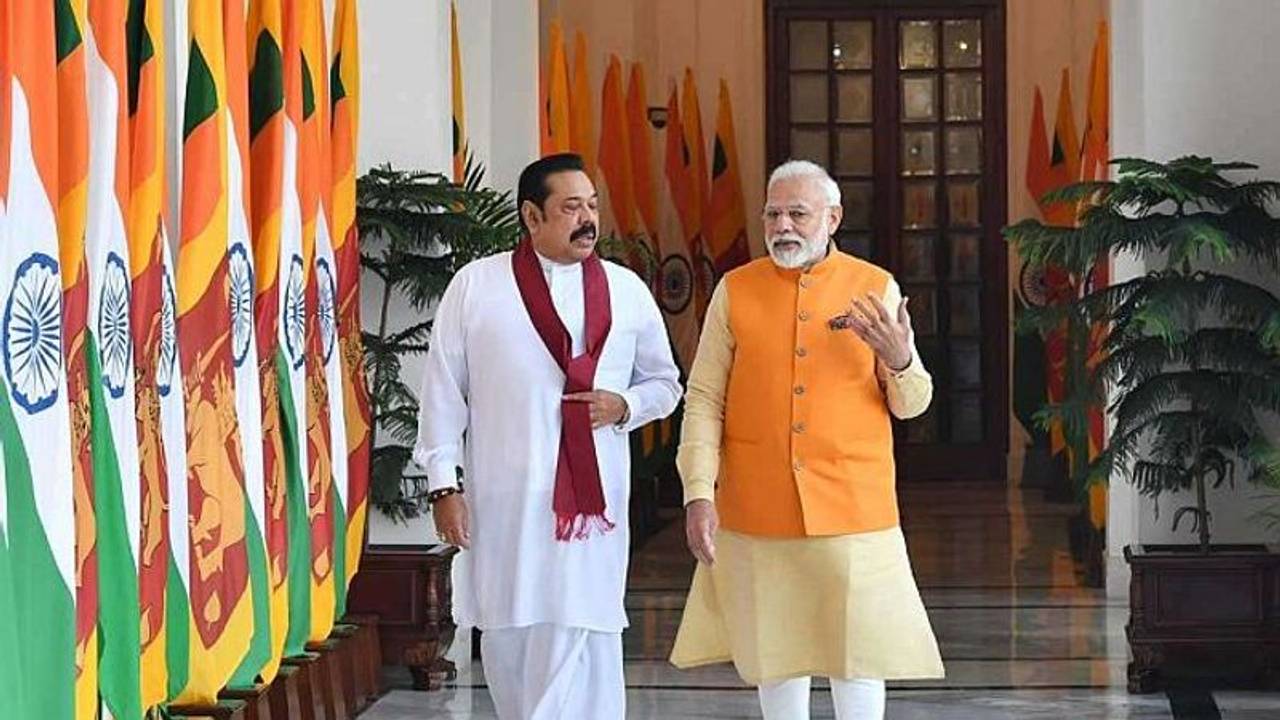
Friendship between India and Sri Lanka stands as a beacon of stable, mutually beneficial partnership, further exemplified by the forthcoming exposition of the Holy Buddha Relics from Devnimori, Gujarat, in Sri Lanka from 4 to 10 February 2026.
By Prof.(Dr.) Sriparna Pathak: In an era of geopolitical turbulence and shifting global alliances, the enduring friendship between India and Sri Lanka stands as a beacon of stable, mutually beneficial partnership, further exemplified by the forthcoming exposition of the Holy Buddha Relics from Devnimori, Gujarat, in Sri Lanka from 4 to 10 February 2026. This landmark spiritual and diplomatic event, facilitated by India’s Ministry of Culture and accompanied by a high-level delegation including the Governor and Deputy Chief Minister of Gujarat, underscores the profound civilisational and Buddhist ties that bind the two nations. The relics, transported with full state honours and to be enshrined at Gangaramaya Temple in Colombo amid ceremonial receptions and public veneration, along with accompanying exhibitions on sacred heritage and bilateral Buddhist cooperation, highlight how shared Dhamma legacy continues to serve as a powerful bridge for faith, harmony, and people-to-people connectivity in contemporary times.
Rooted in over 2,500 years of shared civilisational heritage, geographical proximity, and deep cultural affinities, particularly through Buddhism, India and Sri Lanka have cultivated ties that transcend mere diplomacy. This bond has evolved into a model of cooperative neighbourhood relations, characterised by trust, goodwill, and people-centric engagement.
India’s Neighbourhood First policy has been instrumental in this dynamic. During Sri Lanka’s severe 2022 economic crisis, marked by depleted reserves, debt default, and shortages of essentials, India extended swift, unconditional assistance worth approximately USD 4 billion in credit lines, grants, and humanitarian aid, including fuel, food, and medicines. This “lifeline” support helped stabilise the island nation without coercive conditions, contrasting sharply with debt-heavy models elsewhere. India further endorsed Sri Lanka’s debt restructuring with international lenders and restructured nearly USD 931 million in credit lines in 2025, demonstrating pragmatic solidarity.
This commitment to rapid, reliable support was vividly reaffirmed when India acted as the first responder to Sri Lanka following the devastating Cyclone Ditwah in late November 2025, launching Operation Sagar Bandhu on the very day of landfall, on November 28 last year, to deliver immediate humanitarian assistance and disaster relief (HADR) through naval assets, relief materials, medical teams, engineering support, NDRF units, field hospitals, and airlifts; mobilising ships like INS Vikrant, aircraft, and over 300 tonnes of aid in the initial phase alone, while later committing a USD 450 million reconstruction package for roads, bridges, housing, and connectivity.
Economic integration forms a cornerstone of this friendship. The India-Sri Lanka Free Trade Agreement (ISFTA), effective since 2000, has boosted bilateral trade significantly, reaching levels where Sri Lanka benefits from preferential access to India’s vast market for exports like tea, apparel, and textiles. India ranks among Sri Lanka’s top trading partners for both imports and exports, fostering supply chain integration and export growth. Ongoing efforts aim to address non-tariff barriers, simplify rules of origin, and expand product coverage to maximise mutual gains.
Development cooperation highlights India’s grant-based, people-focused approach. Projects like the Sampur Solar Power Project (a joint venture adding renewable capacity) exemplify sustainable collaboration in energy, reducing Sri Lanka’s reliance on imported petroleum. Capacity-building initiatives through the Indian Technical and Economic Cooperation (ITEC) programme, scholarships, and training for civil servants, teachers, and others enhance human resources. Cultural landmarks, such as the Jaffna Cultural Centre, and shared Buddhist heritage, now further reinforced by the upcoming 2026 relic exposition deepen emotional and spiritual connections.
Strategic cooperation respects sovereignty while addressing shared interests. The balanced joint development of Trincomalee oil tank farms and port facilities, with Sri Lanka retaining majority control, contrasts with less sustainable models and positions both nations for energy security and regional connectivity. High-level exchanges, including President Anura Kumara Dissanayake’s state visit to India in December 2024 and Prime Minister Narendra Modi’s visit to Sri Lanka in April 2025, have reinforced convergence in defence, energy, digital, and maritime domains, with frameworks advancing for deeper ties.
As Sri Lanka sustains its remarkable post-crisis recovery, with GDP growth, rising reserves, and export upticks, India’s non-coercive support in green energy, rural electrification, climate-resilient agriculture, debt resilience, and now cyclone recovery offers a pathway to sustainable prosperity. This partnership avoids debt traps, prioritises local needs, and builds long-term resilience.
Ultimately, India-Sri Lanka friendship thrives because it is built on mutual respect, shared destiny, and a commitment to collective progress in a tumultuous world. By deepening trade, connectivity, cultural exchanges, epitomised by events like the Devnimori relics exposition, and swift humanitarian solidarity in crises like Cyclone Ditwah, both nations can transform proximity into enduring prosperity for their peoples.
(About author: Sriparna Pathak is a Professor of China Studies, OP Jindal University)
Disclaimer: The opinions expressed are solely those of the author and do not reflect the views or stance of the organization. The organization assumes no responsibility for the content shared.