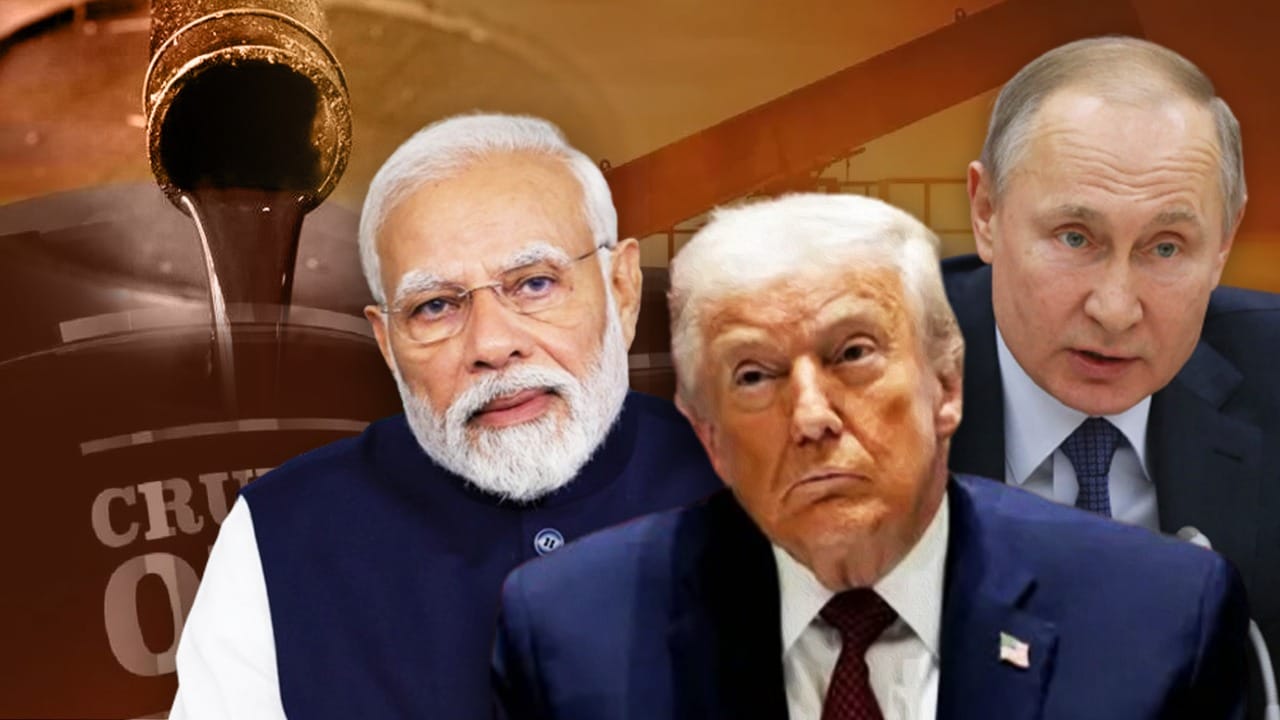
US President Donald Trump on Friday took the step to remove the additional 25 percent tariff imposed on the purchase of Russian oil by India. This step has been taken towards implementing the trade deal announced this week. According to an executive order signed by Trump, India has committed to stop direct or indirect import of oil from the Russian Federation.
The order also said New Delhi has said it will continue purchasing US energy products and “recently agreed to a framework with the United States to enhance defense cooperation over the next 10 years. The additional 25 percent US tariffs will be removed at 12:01 am Eastern Time on Saturday.”
This executive order comes days after Trump announced a trade deal to reduce tariffs on India. Trump had said that Prime Minister Narendra Modi has promised to stop purchasing Russian oil due to the Ukraine war. Under this agreement, Washington will reduce the so-called “reciprocal” duty on Indian products from 25 percent to 18 percent. The process of implementing this cut is still pending.
agreed upon
Other terms of the agreement include the removal of tariffs on some aircraft and their parts, according to a separate joint statement issued by the White House on Friday. The statement also said that India intends to buy US energy products, aircraft and their parts, precious metals, technical products and coking coal worth $500 billion over the next five years. This agreement has brought some relief to the tension that has been going on for months regarding the purchase of oil by India. Washington says India’s oil purchases fund the conflict it is trying to end.
Modi-Trump relations improved again
With this agreement, close relations have been re-established between Trump and Modi. Modi, also a right-wing populist, has been described by the US leader as “one of his best friends”. Wendy Cutler, senior vice president of the Asia Society Policy Institute, said this week that the 18 percent tariff level gives Indian exporters a slight advantage in the U.S. market over regional competitors, who have received tariffs of about 19 percent to 20 percent.